Specialist fees: Inside the health department’s struggles to define a greedy doctor

How can we define a greedy doctor?
The language is more restrained, but this is the question at the heart of the Department of Health, Disability and Aging consultation paper released yesterday.
Running to 30 pages, it’s called Options to Address Excessive Fees. It does exactly what it says on the tin.
To save wasting a lot of time, the options it lists run as follows:
- Publish and flag excessive fees on the Medical Cost Finder website.
- Identify the specialists who regularly charge excessive fees.
- Strengthen informed financial consent.
- Send “nudge” letters to high-fee specialists to make them feel guilty.
- Introduce peer review of those charging excessive fees.
- Set maximum fee caps for individual MBS items.
- Apply penalties (or other consequences) for excessive charging.
- Offer bulk-billing or low-fee incentives to specialists.
But before the paper gets into the good, the bad and fiscally ugly, it asks the fundamental question of what constitutes an excessive fee.
One option is the Grattan Institute’s suggestion.
This is where an excessive fee is defined as three times the MBS schedule fee or more.
The paper acknowledges, somewhat reluctantly it seems, that “some” people may believe that the MBS fee does not actually reflect costs of the service provided and that this may be a flaw in the idea.
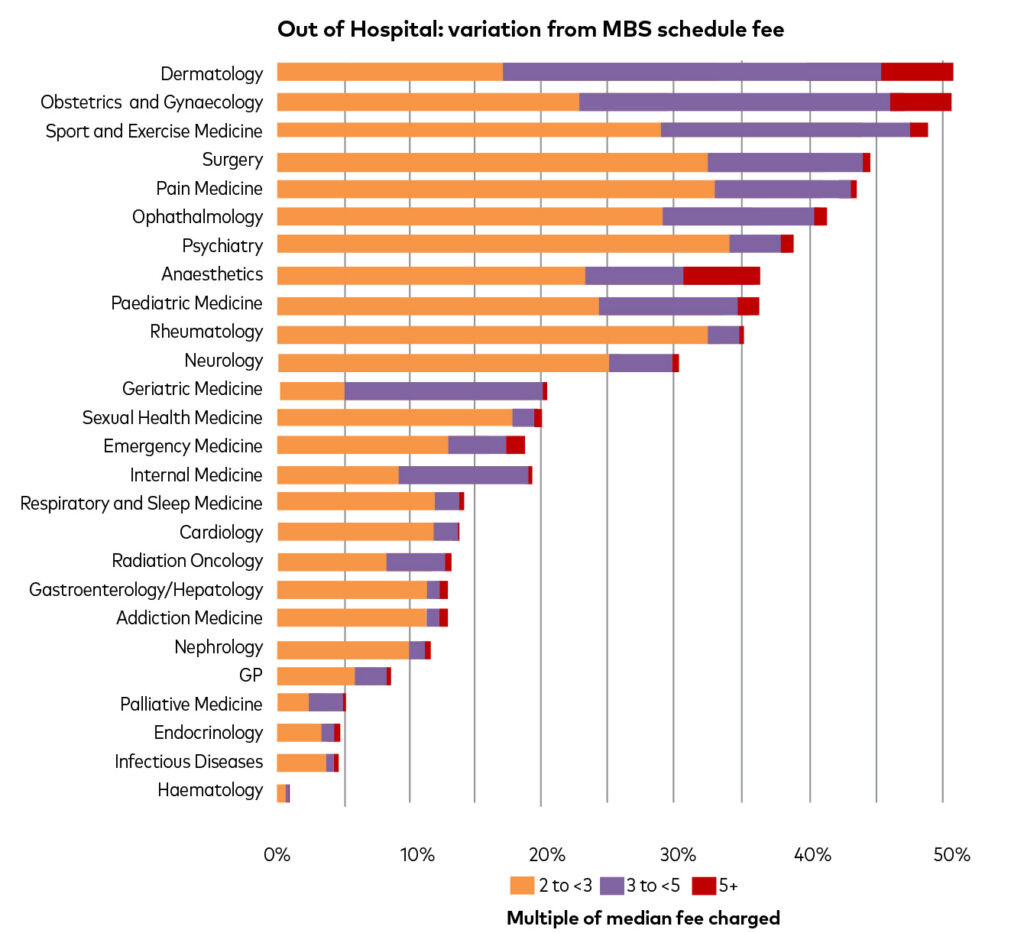
The clue to this truth not always universally acknowledged, is that there are some specialties (O&G for example) where large numbers are charging more than three times the MBS fee and others (cardiology and nephrology) where the proportions are tiny.
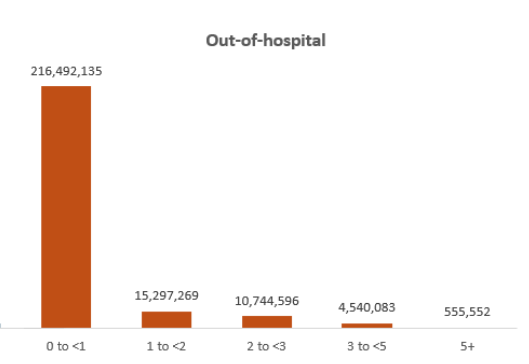
But using this metric, the department says more than 4.5 million (1.8%) out-of-hospital specialist services had fees at 3 to 5 times the MBS fee, and more than 550,000 (0.2%) at 5 times the MBS fee.
So, what about doctor-to-doctor comparisons, those charging way more than their peers?
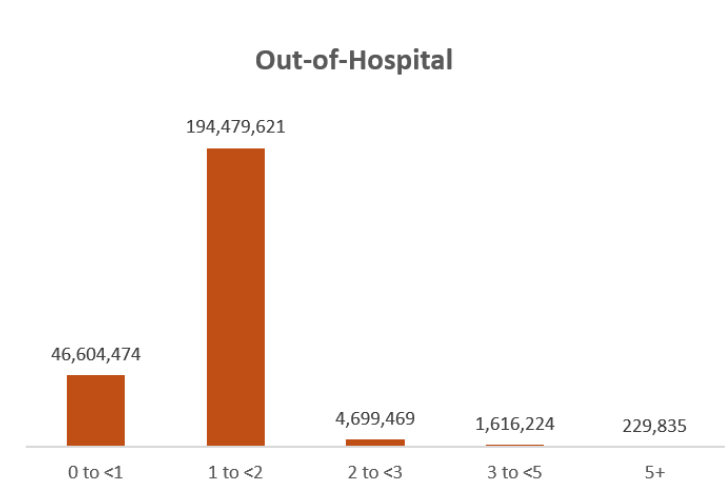
The paper says more than 1.6 million (0.7%) out-of-hospital specialist services were charged with fees between 3 and 5 times the median, and more than 220,000 (0.1%) were charged with fees more than five times the median.
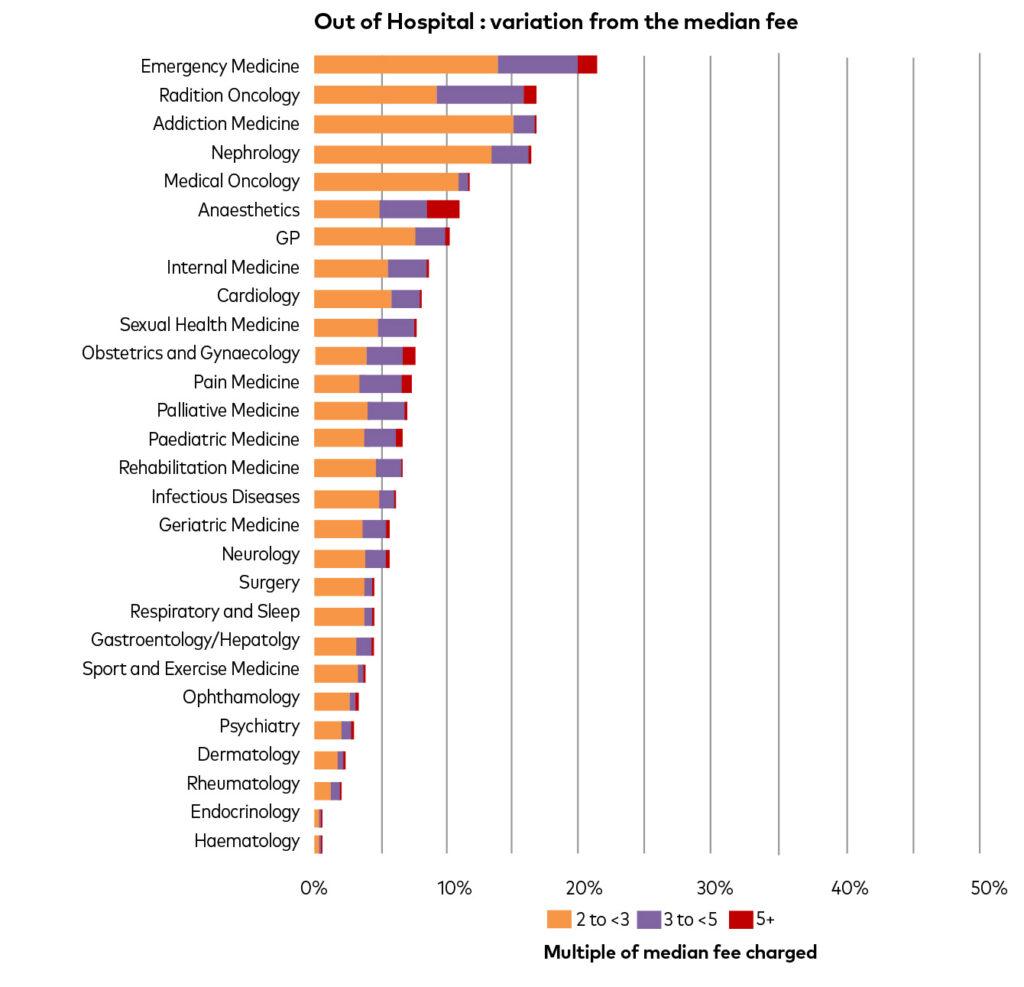
It is a bit of an information dump, but the department attempts to give a breakdown by each speciality.
Below we include an edited version of its graphs. It is worth reading to get a sense of the “crisis” in specialist fees.
As reported in AusDoc, the Federal Health Minister Mark Butler recently fronted the AMA conference to bemoan the specialists charging at the 95th percentile, saying that this was the launch point for fees to “take off like a rocket”.
He said this was most evident with particular procedures, including colonoscopies and knee replacements. His argument was simply that there was no obvious reason for it.
The consultation paper talks about using a “reasonableness” definition, one which will give greater consideration to individual circumstances.
But it then admits reasonableness isn’t great because it doesn’t give a clear definition of “excessive” for patients, doctors and regulators. This makes “understanding, compliance and regulation more difficult and resource intensive”.
What’s the conclusion?
It’s a bit mealy-mouthed. It sort of suggests that basing the greed definition on departures from the median market fee is a better option than the MBS fee.
But it stresses: “These challenges do not mean that development of a definition should be abandoned. Rather, it demonstrates that a combination of approaches, greater nuance or additional criteria may be necessary.”
So, what are the options to deal with specialist fees?
First up, there is very little discussion of actually boosting the Federal Government’s support for patients by increasing MBS rebates that were permanently eroded under the now-forgotten Big Freeze.
And certainly no discussion of fixing the wait lists for outpatient appointments in the public hospitals.
1. Name and shame.
This means allowing patients to search the Medical Cost Finder website where all practitioners would be listed.
The website would indicate where an individual specialist’s fees are excessive relative to other providers delivering the same service.
It would also flag providers who have regularly charged excessive fees in a relevant reporting period. This would be linked to strengthened measures already being considered by the department to ensure patients are in a position to give informed financial consent.
2. Nudge letters
Sending letters to those charging higher fees. The consultation paper mentions the health department’s highly successful nudge campaign of 2017, where selected GPs were sent letters about their high antibiotic prescribing rates measured against their peers.
“Compared to GPs who did not receive a letter, the ‘nudge’ letters (nudging providers to change behaviour) caused a 9.3% to 12.4% reduction in antibiotic prescription rates,” the consultation paper notes.
“A nudge campaign to induce a similar effect for high fee chargers would be simple to implement; however, it may have a smaller benefit than observed in the antibiotic campaign.”
3. Peer assessment (or the PSR doppelganger)
The paper refers to Support at Home (SaH) aged care program which publishes details of the range of prices being charged.
While anything above the 75th percentile is not labelled as ‘excessive’, the health department monitors what is going on and seeks justification from those who appear to have “unreasonable” prices.
Where a provider’s prices appear “unreasonable”, they may be referred to the Aged Care Quality and Safety Commission for compliance and/or enforcement action.
The paper adds the caveats when it comes to specialist fees.
“However, peer assessment is based on subjective judgement. Where a fee is judged reasonable by one group, it may be unreasonable for another.’
It also admits that establishing mechanisms to ensure assessments are fair and consistent without an upfront definition of excessive represents a challenge.
“Another limitation for this intervention is the potential delay between the patient being charged an excessive fee and the reasonableness of that fee being considered by a peer review body.
“Retrospective consideration of excessive fees by a provider’s peers offers little immediate support to those patients being asked to pay excessive fees in the moment and may not result in any patient recompense.”
4. Cap excessive fees for individual MBS items for each service
Of course, this is premised on a clear definition of excessive.
“There are a broad range of actions that could be considered where providers have charged above the caps, including warning letters, monetary fines, withholding Medicare benefits/considering excessive fees to be Medicare ineligible, recovering the MBS benefit from the provider, or removing future Medicare eligibility from the provider,” the paper says.
The paper points out that rebates belong to the patient and are usually paid to them after they have paid the specialist’s fees.
“Therefore, it is challenging in existing Medicare regulatory infrastructure to prevent an excessive fee from being charged/apply fee caps before a service has been billed.
“This means regulatory enforcement of fee caps would likely need to occur after the patient has been charged an excessive fee.”
It says there has been discussion about denying the payment of a Medicare rebate for a service where an excessive fee has been charged. But the consultation paper is not keen.
“This would result in the withholding of the MBS benefit from the patient, placing them further out-of-pocket while the provider would retain the full amount of the excessive fee.”
“With all enforcement options, consideration needs to be given as to whether consequences for breaches of caps would only involve penalties for the provider or if there should also be remediation options for the patient.”
5. Review specialist billing over a year
This would mean tracking specialists who routinely charge over an agreed fee cap for items, with the cap based on an agreed definition of excessive.
For those caught, remedial action could include warning letters, monetary fines, recovering the MBS benefit from the specialist’s bank account, or removing their future Medicare eligibility.
“Under this model it would be unlikely individual patients who have been charged excessive fees could be compensated due to the use of average fee ratios to identify where a provider is excessive, rather than individual services.”
The paper also says specialists may continue to charge a subset of excessive fees but “offset these with a sufficient volume of low-fee or bulk-billed services elsewhere in their practice to not exceed the fee cap on average”.
“To mitigate this risk when using aggregate or average billings, a lower cap may be required to generate a greater effect for more individual patients. This may, however, increase the risk of providers charging excessive fees completely outside of Medicare.”
6. Incentives for lower out-of-pocket fees
Perhaps unsurprisingly, this is last on the options list. It could be bulk-billing incentives or low billing incentives. It mentions the $7.9 billion made available to GPs through the expanded bulk billing incentives.
But what could be the disadvantages here? No prizes for guessing.
“GP bulk billing rates are higher than specialists (84% vs 37%) and out-of-pocket variance above these amounts is small in comparison to out-of-pocket variance observed in non-GP specialists.
“This means the same incentive approach for specialists would require significantly more investment to achieve the same outcomes.”
So yes cash. It would be fascinating to know the necessary scale of bulk-billing incentives for non GP specialists for it to work. How many zeros in that budget number?
But it is notable that the paper doesn’t waste time doing the computations. Let’s quickly move on, it seems to suggest.
The paper ends with lots of questions for people, including doctors, to complete.
They are of the form “On a scale of 1 to 5, do you think fee regulation will address excessive fee charging?”
You can read the consultation paper here. The deadline for responses is 19 October.
Specialist fees in graphs – who’s charging what?
The first graph shows the proportion of specialist services where the total fees was <3, 3 to <5, and more than five times the median fee charged.
The second second graph shows the proportions measured against the MBS fee.
Read more: