ACRRM vs the RACGP — do we still need two GP colleges?
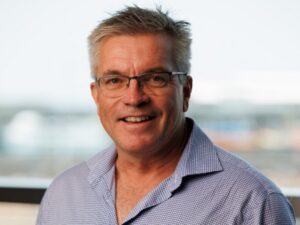
Three decades after an uprising split Australian general practice, an old question is beginning to resurface.
Does the profession really need two GP colleges?
Back in the late ’90s, a group of senior rural doctors walked out of the RACGP. It was like something from the protestant reformation.
Angry and frustrated, they claimed that the college’s training was excessively metro focused and inadequate for the complexities of rural practice, where hospital care was not an ambulance ride away when things went badly wrong.
There are doctors who, given the right triggers, will talk long into the night about what happened. On both sides of the rural–urban divide, the debate cut deep psychological wounds that, for some, have never really healed.
And this is largely because many of those who walked out to set up ACRRM in 1997 believed rural medicine was then, and is now, a specialty distinct from general practice.
In his current tenure as ACRRM president, Dr Rod Martin says, as the hostilities have faded, it has been nice to be able to “look forward, rather than sideways, for the first time in forever”.
But he acknowledges there is “still very much a competitive environment”.
“There will still be people within the RACGP who say, ‘ACRRM does not need to exist and we should subsume the ACRRM training program’,” Dr Martin tells AusDoc.
“There will be some people who have that take at the expense of the innovation, the retention and the cultural shift that has happened.”
He says the schism happened because the rural doctors were reacting against the RACGP’s apparent lack of interest, motivation and effectiveness in training doctors for a life in rural generalist medicine.
“Depending on whom you talk to, all of the proposals were dismissed, so they said, ‘Fine. We need to form something different because rural Australia is entirely missing out.’”
The ACRRM founders pressed on, establishing a fellowship criteria and rural training pathway. It proved a success: registrar numbers eventually grew beyond 500, and the new college went on to lodge a submission to the Australian Medical Council (AMC) for recognition of rural medicine as a specialty.
After a lot of high-level analysis, the move was rejected in 2005 on the advice of the AMC by the then federal health minister Tony Abbott.
This may seem like a boring taxonomy.
But ACRRM’s existence provoked shifts within the RACGP, which has come to embrace rural generalism as a modern-day version of old-school general practice — comprehensive general practice care across the life span, combined with advanced training in obstetrics, anaesthetics and emergency medicine.
Rapprochement came in 2018 when the Federal Government committed $62 million to a national rural generalist training pathway — long advocated for by ACRRM.
That paved the way for a truce of sorts.
At the Collingrove Homestead in SA’s Barossa Valley, the two colleges agreed to work together on a national framework.
It was the end of the cold war.
Their combined efforts resulted in health ministers giving the green light for rural generalism to become a general practice subspecialty last September. Both colleges have now submitted their rural generalist fellowship training programs to the AMC for accreditation.
“The advantage for us was there was hardly anything we needed to change,” Dr Martin says.
“Over 15-20 years, the program we have built, tested and refined — from selection right through to final assessment and support — has always been the same product.
“So it is easier for us in one way; we have only got one product to create: a rural generalist.”
The RACGP’s rural training model, by contrast, has undergone several iterations over the years — from a graduate diploma in rural practice to the Fellowship in Rural General Practice in 2006 and finally its own rural generalist fellowship qualification, introduced in 2022.
Chair of the RACGP Rural Council Associate Professor Michael Clements admits that it took a while for the college board to endorse the concept of rural generalism, but he says it is there now, “with gusto”.
“I think the college has been on a journey,” he tells AusDoc.
“Years ago, it would not even acknowledge the term ‘rural generalism’ and would not step into this space.
“If it was not for ACRRM doing the hard yards, rattling the cages and, to be honest, to an extent forcing us into this space, then we would not be here.
“But those times are gone.
“The preconditions that were there for the split no longer exist.”

So, what does he believe is special about the RACGP’s rural generalist offering?
He says it’s the flexibility of its training programs and the fact the college scored highest for GP registrar satisfaction in the latest national survey that make it a worthy choice for junior doctors.
“We unashamedly do have an emphasis on community-based medicine and GP-based care.
“That is a point of difference. We know that ACRRM — its examinations, assessment and curriculum — has more of a hospital focus than ours.
“But we are certainly focusing on the GP/community space because we believe small rural towns are most desperate for a GP right now.”
For Dr Martin, ACRRM continues to differentiate itself by “training from the ground up” through its rural immersion model, with trainees “serially exposed” to living and working in rural areas.
This includes the requirement of 12 months’ work in areas classified 4-7 under the Modified Monash Model (MMM), whereas the RACGP fellowship’s equivalent stipulation includes MM-3.
“With us, there is no quibbling and not really much of an opportunity to do your training anywhere but the rural areas you are going to be serving,” Dr Martin says, “because that gives doctors a very clear, deeply embedded, contextual understanding of how they are going to practise as a rural generalist anywhere across the country.”
Every now and then, ACRRM does cop some flak for this, he adds.
“There are people who say, ‘What about someone who can only train in an MM-2 area?’
“Well, MM-2 is not rural, notwithstanding the fact there are some pretty obscure places that are now treated as rural in MM-3.
“It is pretty hard to be in MM-7, a place where you can be 1000km from the nearest tertiary centre, if the only places you have ever trained and practised medicine have been in MM-3, which tend to be larger highway towns, often with a hospital with anywhere between 80 and 100 beds.
“One thousand kilometres is a very long way when you need a neurosurgeon.
“I would argue it is almost impossible if you have done that work in MM-2 areas, which are typically large coastal cities.”
He says 80-85% of ACRRM fellows remain working in MM-5-7 areas five years after fellowship.
This number carries valuable political currency when governments, bemoaning the rural workforce crisis, resort to filling holes with the mass import of IMG labour.
For Dr Martin, workforce retention is one of the strongest arguments for his college’s continued independence.
He says he wants more transparent head-to-head comparisons: hard end points so taxpayers and pollies know what they get for their training dollars.
“When the government says, ‘Let’s have a comparison between ACRRM and the RACGP’s pathways in three years’ time to see what everyone is up to’, it will be interesting at the very least,” he says.
Professor Clements says the RACGP does not calculate a comparable retention rate, nor is it seeking to.
“For many of our members, the postcode that we mail letters to is different to the postcode they work in. And many of our doctors live in urban or semi-urban areas but provide remote services.
“So how we define that has been difficult for us, and it is not a statistic we have been targeting.”
He adds that ACRRM’s high retention is because its sole focus is on rural and remote areas and it “deliberately does its best” to attract people who want to work in those places, while the RACGP is mainly working with urban-minded trainees.
“I think it is far more of a success to get a doctor who lives and trains in an urban area to think about doing a rural placement and get excited about it as opposed to taking people who are already rural, want to stay rural and need a bit of support to stay there,” he says.
Public tensions between the colleges occasionally resurface.
ACRRM was recently excluded from Federal Government discussions that awarded the RACGP an additional 306 Australian General Practice Training posts.
“I said at the time, ‘Well, if there is the ability to give the RACGP another 300 places, then I reckon there is definitely the ability for us to have another couple of hundred places,’ — because of our return on investment, retention and this higher level of service delivery that we know we do,” Dr Martin says.
He argues that rural Australia needs 750-1000 additional training places to address workforce gaps and worsening health outcomes.
Asked whether ACRRM has become a victim of its own success, in that it has indirectly pushed shifts in the RACGP that mean the distinct reasons for its existence are fading, Dr Martin says it has always been the one to do the innovation.
“We have also been very open source because our target is to make sure rural communities get the best doctors with the right training.
“I will get killed for saying it, but there were lots of things that were meat and potatoes, business as usual, for us that with time became almost business as usual for the RACGP.
“That innovation required the separation.”
He says people will still talk about mergers and takeovers and that surely the government would prefer to have one college to deal with.
“The evidence is to the contrary because they have approved rural generalism as an end point.”
For Dr Martin, the distinction remains cultural as much as structural.
“Unlike the RACGP, we just train towards rural generalism, and we are also inextricably linked to the definition of a rural generalist,” he says.
“The breadth of practice that I always thought was involved in medicine, I can only find that in ACRRM.
“And it is not just that you can find it; there is this expectation that you go and exercise your fellowship to the fullest, wherever you can and wherever possible.”
The RACGP veterans of ACRRM’s birth pains will disagree.
But Professor Clements says that without two pathways, maybe neither college would be working quite as hard to offer something good.
“One of us makes Pepsi; one of us makes Coke. We each think that we make a great product and that we have the better product,” he says.
“In reality, we are both happy as long as people drink more cola.”
Read more: