‘They discovered backyard abortion was run by organised crime’: Professor Zoe Wainer’s remarkable activist parents
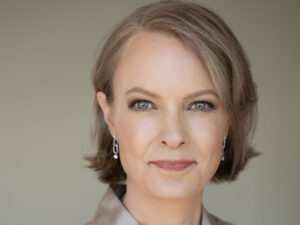
You quickly get the sense talking to Professor Zoe Wainer that she has journeyed right across the vast geography of medicine through her career.
Early on, during a placement at Flinders University medical school in Adelaide, she became enthralled by cardiothoracic surgery.
“The moment as a medical student I saw a patient go on bypass,” she says. “I saw the heart stop, the surgery occur and then to then put blood back into the heart and for it to start beating again — I was completely mesmerised by that.”
The inaugural director-general of Australia’s Centre for Disease Control, she continues: “As a result, I pursued cardiothoracics quite actively and got onto the training program relatively quickly.”
Over five years of surgical training, she undertook several outreach trips to countries including Fiji and Timor-Leste, operating on children with congenital disorders and rheumatic heart disease.
So the question is how she went from N=1 medicine — one patient, one organ, one intervention — to the population-level interventions running the country’s Centre for Disease Control.
She is quick to stress her interests were there from the start too, but it may have been her decision to examine sex differences in lung cancer for her doctorate that first pushed her along path away from the operating theatre.
Her PhD studies had drawn her to the wider questions about how women had been neglected in medical research.
“That got me really interested in big system levers and how I might be able to contribute at that system level,” she says.
“It was towards the end of the PhD that I thought I just had this calling to do a different kind of work.”
She eventually left surgery to become deputy director of medical services at Melbourne’s Peter MacCallum Cancer Centre, followed by a series of roles at Bupa while completing a master’s in public health.
But there is another influence, however, and it is related to her remarkable parents, the Melbourne GP Dr Bertram Wainer and Dr Jo Wainer (PhD).
Both were campaigners for the legalisation of abortion back in the 1960s.
“The work that Mum did, that Dad did, was profoundly brave,” Professor Wainer says.
“Dad had women dying on his doorstep — because he was a GP — through backyard abortions, and he just thought this isn’t right.”
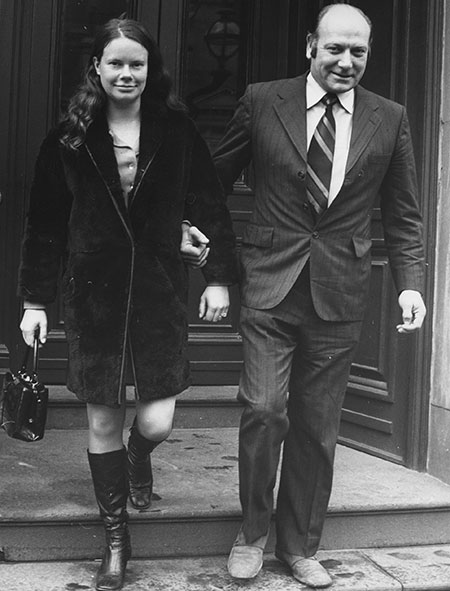
They faced the machinery of the justice system and the vocal opposition of Right to Life activists.
But they also faced the wrath of those carrying out the terminations which came in the form of death threats and violence.
Dr Bert Wainer was reportedly stabbed, the couple were shot at and his sister’s house was firebombed while he was staying there.
“He would raise issues with police because he knew the abortions were illegal and harming women, but nothing would happen,” Professor Wainer says.
“Eventually, they realised that backyard abortion in Victoria was being run by organised crime and they were paying off the homicide squad large amounts of money to look the other way.
“So my parents both very bravely challenged the system and forced the first judicial inquiry into police corruption in Victoria’s history. It was known as the Kaye Inquiry and police went to jail because of what they were doing.”
In 1969 came the landmark R v Davidson ruling. This Supreme Court of Victoria decision stated that an abortion could be considered lawful if the doctor believed the procedure was necessary to preserve the woman’s health for physical, mental or socioeconomic reasons.
At this point, Professor Wainer’s father had never performed abortions, a decision that allowed him to remain politically active since he could not be accused of committing a crime.
But he decided to test the ruling, notified the media and surrendered himself to police after taking responsibility for an abortion himself. He was not prosecuted, and proceedings being mounted against other doctors at the time were dropped.
The Wainers went on to establish Australia’s first public abortion service, the Fertility Control Clinic.
“The clinic was raided by the police on multiple occasions,” Professor Wainer says.
“As a kid going to visit my parents at their workplace, I would be harassed by protesters outside the clinic when I was at the age of 10 or something like that.
“So I grew up in a household with this deep, deep commitment to social justice.”
And that partly explains Professor Wainer’s path less travelled.
The Australian CDC has been some 40 years in the making, but it took the COVID-19 pandemic, which exposed the weakness of the existing arrangements around surveillance, data-sharing, stockpiles and national co-ordination, to make it a reality.
Professor Wainer says she had expected her first few months in her new job to involve a few “desktop” exercises, a few dry runs before the real work began.
That has not happened. She and her teams have been dealing with diphtheria outbreaks, hantavirus and polio wastewater detection in WA.
Then there is the high pathogenicity avian influenza that has arrived on the country’s shores and the quarantining of cruise passengers exposed to hantavirus in a facility built for COVID-19 patients.
She says she jumped at the opportunity to become the CDC’s director-general.
“To lead these nationally renowned experts, that is a genuine pleasure. We have medical officers, we have epidemiologists, we have environmental health officers, experts in communications, experts in evidence synthesis,” she says.
“We also have a remit to collaborate really widely. We are an organisation whose role is to collaborate and connect.”
She says Australia did “a really good job” during COVID-19 and she believes there is still significant trust in public health, something that has not been true of other countries.
Professor Wainer was just 13 when her father died of an MI in 1987. He was only 58. But her mother is about to turn 80 and is, she says, “as bright-eyed, bushy-tailed and feisty as ever”.
Their legacy, through their daughter’s career, continues.