Doctors in the death chamber: a ‘botched’ execution and the inmate backlash that followed
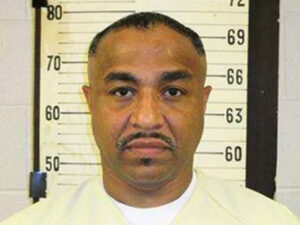
The doctors in the US who stand at the end of death row ready to oversee a punishment with no possibility of redemption are usually hidden in the shadows, their identities never revealed.
But that has not been the case for Dr Mark Walton Fowler, whose involvement was unmasked last August after a Tennessee prison warden “inadvertently” let his name slip at the execution of death row inmate Byron Black.
Witnesses had said that following the lethal injection, Black started breathing and sighing loudly, and after several minutes groaned in agony, saying, “It hurts so bad”. It took ten minutes before he was declared dead.
The 68-year-old former ED doctor has since found himself at the centre of public debate on the state’s use of the death penalty — and the controversial participation of doctors.
Two months after his name was released, Dr Fowler was deposed as part of a lawsuit challenging Tennessee’s lethal injection protocol.
The questioning exposed some detail of his medical background, including that he had apparently only placed a central IV line “a dozen or more times”.
He had also not done so since 2013, when he stopped working as an ED doctor.
Then a few months ago, Dr Fowler hit the headlines again over his involvement in an allegedly failed execution.
The inmate in question was 57-year-old Tony Carruthers, who has spent 30 years on death row for his involvement in the 1994 kidnapping and triple murder of Marcellos Anderson, Delois Anderson and Frederick Tucker in Memphis, Tennessee.
He has consistently maintained his innocence, and no forensic evidence has ever connected him to the crime.
It is claimed that Dr Fowler allegedly stepped in after prison staff had failed to insert a backup IV line that would allow them to proceed with the lethal injection.
His task was to place a central line in Mr Carruthers’ chest — a last resort measure under Tennessee’s lethal injection execution protocol, to be used only when the primary IV team fails.
To be clear, a doctor’s role in the death chamber is meant to be a passive safeguard unless something goes wrong — their main responsibility to confirm that the inmate has been successfully executed.
But after more than an hour of Dr Fowler and the IV team “repeatedly piercing” the prisoner in vain, the execution was called off.
“The doctor gave him a shot of lidocaine in his chest and told him it would feel like a bee sting,” Mr Carruthers’ attorney wrote in a guest essay in The New York Times.
“Before the doctor did that, he asked whether ‘the patient’ was allergic to the drug. He referred to Mr Carruthers as the patient, as though this room existed to heal.
“Eventually, the doctor said he was not able to set a central line. Mr Carruthers was in agony. By then, an hour had passed. It is claimed that the execution team continued probing his body for another access point.”
Mr Carruthers was given a one-year reprieve.
But that was not the end of the story.
A public backlash followed. Mr Carruthers’ sister filed a medical malpractice complaint with the Tennessee Department of Health against Dr Fowler. She alleges that her brother had a stroke and paralysis on the right side of his body.
A group of 40 doctors and other medical professionals also wrote to Tennessee governor Bill Lee, calling for the state to pause executions until the Tennessee Department of Correction improve the process.
“The horrifyingly botched attempt to execute [Mr] Carruthers … confirmed that [the] Tennessee Department of [Correction] is not presently able to conduct an execution that complies with law, its own protocol or basic human decency,” they wrote.
The doctors said that Tennessee’s requirement that medical professionals participate in executions — which has been in place since 1999 when lethal injection was established by law — was a major part of the problem, because it goes directly against medical ethics.
“Numerous national and state-level organisations have made clear that healthcare practitioners cannot facilitate executions consistent with their professional obligations,” the letter said.
“This means that the healthcare professionals who agree to take part in Tennessee’s executions are those willing to set aside their professional ethics.
“The problems that we have seen, such as in Mr Carruthers’ case, are the predictable result of working with such unscrupulous actors.”
Last year, Dr Fowler explained in the deposition how he came to take on the role, saying he was a friend of the state’s previous death penalty physician, who had asked him to accompany him to an execution in 2018 “so that I might take over when he retired”.
It is reported that he has been involved in four executions so far.
He has declined to discuss Mr Carruthers’ case publicly with the media, aside from an interview with US media outlet NBC News, in which he said: “Every attempt was made to minimise the defendant’s discomfort. No-one wants Carruthers to suffer.”
But a few weeks ago his name resurfaced again, when another death row inmate, Anthony Darrell Hines, applied for a stay of execution citing severe medical issues.
Mr Hines has been on death row for four decades for the 1985 robbery, rape and murder of then 54-year-old grandmother Catherine Jean Jenkins, who was working as a motel maid at the time.
In an application to the court, his lawyers stated: “Mr Hines has demonstrated that the state intends to execute him utilising a grossly underqualified physician.
“This physician has already botched the execution of [Mr] Carruthers, in whom he was unable to obtain IV access despite numerous attempts.”
It said Mr Hines’ medical condition, which included experiencing ischaemic strokes in late 2025 and early 2026, meant he was at higher risk of a “botched” execution.
One of Mr Hines’ attorneys, Kit Thomas, said it would be a “grotesque spectacle” for Tennessee to move forward with his execution, given his debilitated medical condition and the “many unanswered” questions following Mr Carruthers’ previous execution attempt.
But the courts ultimately disagreed — and Mr Hines was executed on Thursday 13 August.
Dr Fowler has not publicly confirmed his precise involvement in the execution, but he told NBC News that he declared Mr Hines’ time of death.
Now, another matter is before the courts: the upcoming execution of Christa Pike, Tennessee’s only female inmate on death row. She is scheduled to be executed on 30 September.
Ms Pike was just 18 years old when she participated in the alleged torture and murder of her 19-year-old classmate Colleen Slemmer. She was sentenced to death in 1996.
Her attorneys filed a motion in June 2026, which again references Mr Carruthers’ botched attempt.
Her attorneys requested that hanging be used as an alternative because of her medical conditions, which include thrombocytosis, bipolar disorder, PTSD and “small, compromised veins”, or that lethal injection proceed only if a central line is placed by a “qualified, trained and certified medical doctor who has placed a central line this decade”.
Dr Fowler has confirmed that he will oversee Ms Pike’s execution.
“Inmates condemned to die are treated with utmost courtesy, respect and professionalism by staff,” he said in a statement to FOX 17 News.
Read more: Nitrogen hypoxia execution of death row prisoner branded inhumane by anaesthetist
If you or someone you know is experiencing domestic, family or sexual violence, support is available. In an emergency, call triple zero:
- 1800RESPECT: 1800 737 732
- 13YARN: 13 92 76
- Kids Helpline: 1800 55 1800
- Elder Abuse Help Line: 1300 651 192
- Rainbow Sexual, Domestic and Family Violence Helpline: 1800 497 212
- DVConnect Womensline: 1800 811 811
- DVConnect Mensline: 1800 600 636
- MensLine Australia: 1300 789 978
- Men’s Referral Service: 1300 766 491
- Lifeline: 13 11 14
State and territory crisis services:
- ACT: 02 6280 0900
- NSW: 1800 656 463
- NT
- Queensland: 1800 811 811
- SA: 1800 800 098
- Tasmania
- Victoria: 1800 015 188
- WA: 1800 007 339
Clinical resources: