Dr Pethidia Mango: The GP who visits towns without a female doctor
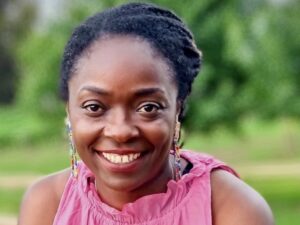
“If you educate a woman, you educate a nation” is an African proverb that has stuck with Dr Pethidia Mango since she moved from Zimbabwe to Australia over 20 years ago.
“I have always been aware that looking after women, enhancing their quality of life and their health, has a ripple effect for their families and their children,” the NSW GP tells AusDoc.
In 2020, Dr Mango had the chance to deliver a female GP outreach service, funded by the NSW Rural Doctors Network, going to towns without a female doctor.
Once a fortnight, she would drive from her home in Dubbo to Gilgandra, a town of 2600 people.
“Initially, my son was in daycare, so I would drop him off at the daycare in the town, spend the day doing my clinic and then drive home, which was only 45 minutes away.”
Word quickly spread that “the lady doctor comes here every fortnight”.
The local hospital and Aboriginal medical service began referring patients to her. Other patients started making the 30-minute trip from Gulargambone, a nearby town of just 400 people, to see Dr Mango in Gilgandra.
She originally planned to focus solely on women’s health to avoid encroaching on “the very competent work” of local male GPs.
However, a strict divide became harder to enforce over the years.
“I would end up managing patients’ diabetes because it affected their women’s health issues as well. A few patients ended up just being my patients.”
Many of her early patients were teenagers.
“Local farmers would send their kids to boarding school. The mums would bring in their teenage daughters who had started their periods, and we would talk about periods.
“Then over time, they would come on their own, and we graduated to talking about STI screening and contraception.”
Dr Mango also works at Dubbo’s family planning clinic, where patients from Gilgandra come to see her.
“For example, I would do an IUD assessment in Gilgandra, and then the only travel the patient had to do was coming to Dubbo for me to put it in.
“We usually see a patient again after six weeks, and those from Gilgandra or Gulargambone could see me at the Gilgandra practice.”
Infertility was another common topic. One couple had waited two years to seek help.
“The male partner was flying in and out to different farms, and they never had time to go to Dubbo for thorough investigation,” Dr Mango says.
“When I started in Gilgandra, the woman said it was the first time she could pin him down to come to the doctor.
“She ended up having ovulation stimulation, and they were able to have a baby. Their story still warms my heart.”
The tougher cases were those that could not be managed in a small town because they required specialist O&G input.
“Sometimes, patients would come and see me thinking they could have all their care there, but I would suspect a condition such as endometriosis, which meant they needed to travel,” Dr Mango says.
“It was also the case for early pregnancy losses, where the patients needed to be monitored.
“If I was only there once a fortnight, we needed to liaise with other people at Dubbo Base Hospital and the local midwife so these women could be followed up.”
A particularly difficult case was a miscarriage, and not the patient’s first, that was confirmed when Dr Mango wasn’t there.
“We had a pregnancy and were happy. It went up to 12-14 weeks, then she started bleeding.”
Dr Mango was not in town when the patient’s hCG levels were tested.
“To hand that over to someone else when she had been following up with me was very hard.
“You form this bond with someone, that continuity of care and safety in your hands, then I come back again for her to tell me what had happened.”
In good news for Gilgandra, a permanent female GP came to the town in early 2025, bringing Dr Mango’s six-year stint to an end.
She had seen 1508 patients over 153 clinic days.
She now provides a similar service in Rylstone, a town of 900 people two hours’ drive from Dubbo.
“The more I went to Gilgandra, the more it opened my eyes to the need for this service.”
Dr Mango says that, without a female GP, patients who are uncomfortable seeing a male GP end up placing some health concerns in the too-hard basket.
“Then, when women do get access, diseases might be more advanced or there are things that could have been prevented.
“Patients would say to me, ‘I can only come and see you about my women’s health. I can only talk to you about these things. My GP does not know about this.’
“I realised that women sometimes need other women in order to open up.”
She says it also helped close the health gap for Gilgandra’s large Aboriginal community.
“Midwives do a fantastic job doing cervical smears, but when things needed to be done by a doctor, there had been no-one for these women.”