Dr Tatum Maybir: The inspiring story of a mum of six who made it into medicine
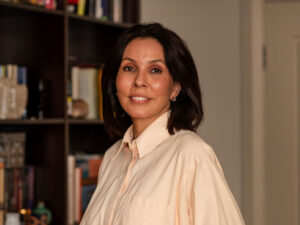
During a childhood of constant upheaval, Dr Tatum Maybir never imagined she would become a doctor, let alone do it while raising six children.
The eldest of five, she and her siblings moved every few years between NSW and Queensland with their single mother, chasing fresh starts.
Dr Maybir recalls living in public housing, changing schools at least nine times and enduring some tough days at school in rural Australia.
“Depending on where we were living, as an Indigenous kid, I did experience racism going to school, especially in Australia in the ’80s, when you could be the only dark-skinned person at school,” she tells AusDoc.
“I used to come home crying to my mum, saying ‘They’re calling me Aboriginal.’
“You can imagine starting over constantly — new homes, new schools, new communities — it’s hard. I have school photos where my uniform is different from the other kids.”
But she was a good student.
The issue was simply that further education was not on her radar. No-one in her family had been to university and some of her siblings did not finish high school.
Today, the proud Dharawal and Wiradjuri woman works as a GP at an Aboriginal medical service. The further twist is that three of her children have also made it into medicine.
“My first thought coming out of high school was, I’m going to get a job, pay rent and feed myself. It was simple stuff,” says the 45-year-old. “So the idea of university came later in life.”
She married at 18 and then devoted herself to raising her six children as a stay-at-home mum, but when her youngest turned four, she began to wonder what was next.
“I wanted to do something that was going to be fulfilling for the rest of my life,” she says. “And what I wanted was to do something where I could give back to my community.”
So she worked at the Aboriginal medical service in Mount Druitt in western Sydney and then she enrolled in a medical science degree. It was after than that she secured a place at Western Sydney University’s medical school.
“I gave that medical science degree everything I had. It cemented that I could do this. I could get great grades while balancing being a mum, a wife, a sister, a friend, an auntie,” she says.
Taking medicine one semester at a time, she had two important mentors who supported her through her studies. One was Professor Annemarie Hennessy, dean of medicine at the university, and the other was her tutor Dr Sarah O’Brien, a fellow Indigenous doctor.
“These strong women supported and guided me and they showed me humanity and clinical excellence could coexist.”
She also leaned on friends and family for practical help with school pick-ups and childcare.
Lectures were often during school hours and when at home, she was present as a mum, being there for homework, meals, costumes, heartbreaks and triumphs.
“How did I do it? I’ve got a very supportive husband. He would say, ‘If that’s something that you really want to do, we can support you.’
“Then I also have a huge network of family and friends, and so I can honestly say it’s taken a village to raise my children.
As it turned out, three of her children went into medicine. With her sons, Jamaal and Abdul, their academic lives even overlapped at Western Sydney University: she was in her fourth year while they were in their first.
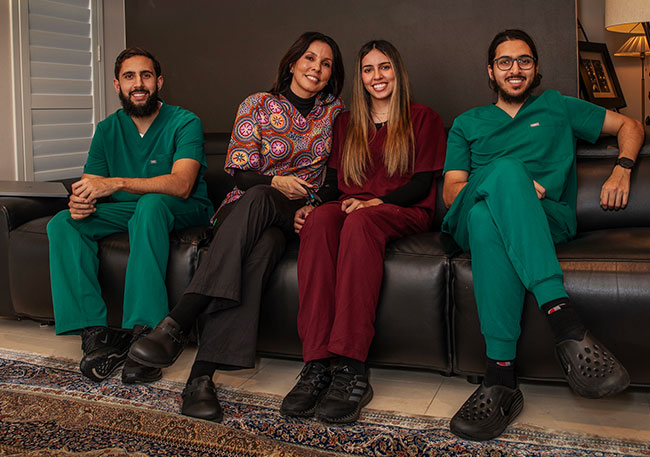
Today, both are junior doctors, and her daughter Ieesha is in her first year Western Sydney University.
Dr Maybir laughs that she is now reliving medical school through her daughter.
“Every exam they sit, I’m sitting it with them in my heart and in my head, even if I’m at work and they’re at uni.”
After two years of hospital training, Dr Maybir chose general practice. She liked the idea of being the first link between the community and the health system and of building long-lasting relationships with patients.
“Giving back has been a very important part of my journey and my decisions because I am an Indigenous doctor.
“It’s part of my identity. I have a great respect for my culture, my elders, my community and being able to share experiences I’ve had is meaningful.
“It’s fulfilling. I really enjoy looking after my patients and feel privileged to be in that position.”
She began at a general practice in Sutherland in southern Sydney before moving to continue training as a GP at Tharawal Aboriginal Medical Service in the south-west, where she is one of two Indigenous doctors among 10 practitioners.
Her experiences of instability, racism and financial hardship may have helped her connect with patients as they have given her insights into their lives.
“I’ve lived some of the things my patients have lived. I haven’t experienced everything, but I understand what hardship feels like. I know what it feels like to think there isn’t a way out.”
Closing the health gap will take generations, she says, so she views her role as one doctor contributing to a bigger picture, building trust one consultation at a time.
“I often have entire families in my room. The most I had I think was eight people, including aunties, uncles and nan. Everyone is invested in working out what’s going on.
“We have a good laugh. They tell me stories and sometimes it’s not always medicine, sometimes it’s more of a social visit, just to check in and make sure everything’s still going to plan.”
Although Indigenous medical student numbers are growing, she acknowledges that progress is slow.
“I didn’t feel pressured to give back, but being trusted by Indigenous patients and families has been amazing,” she says.
“My values, my sense of identity and my commitment to community has been the most rewarding thing that I could have done. To think, my ancestors walked on this land.
“And here I am in this position, able to give back, able to help my community and able to hopefully contribute to more positive health outcomes for our people.”