Dr Coleen Wood had an MI in a consult with a patient — and didn’t realise
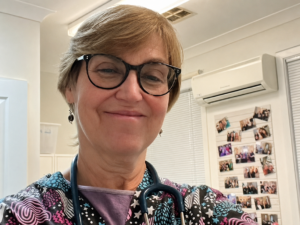
Dr Coleen Wood was at the start of a busy morning clinic early in the COVID-19 pandemic when she felt a niggle that she assumed was indigestion or heartburn.
The discomfort was not dramatic, at least at first. She carried on with her appointments.
But it was getting worse, and when she experienced “horrible” jaw pain, the unwanted diagnosis fell into place for the Melbourne GP.
“I had that moment of realisation that what I’d had over the last couple of hours was a cardiac problem, that I was probably having an MI.
“And I thought, ‘Okay, now what do I do?’”
It was the middle of a difficult consultation.
The patient before her had presented with a breast lump she suspected could be cancer.
“I had this horrible dilemma in my head, going, ‘Do I finish this consultation — look after her, talk to her about the problem, follow through — or do I just get up and leave and go get myself checked out?'”
To the surprise of few doctors, Dr Wood opted to complete the consultation, telling the patient the follow-up appointment would be with a colleague.
She took aspirin and a dose of glyceryl trinitrate spray from the practice’s emergency kit and, thinking the ambulance would take too long due to COVID-19, she got in her car and drove herself to Box Hill Hospital, 10 minutes down the road.
“I’ve been told off by every single person I know for doing that.”
By the time she reached the ED, her symptoms felt anything but subtle, with pain, clamminess and cold sweats.
“I remember sitting there staring at the triage nurse and doing this strange kind of hand signalling, letting her know that I had chest pain and that it was pretty bad.”
Following an ECG and blood tests, she was diagnosed with a non-ST-elevation MI and underwent coronary angiography. A stent was not required.
“It wasn’t relevant in my case, so now I’m on a bucketload of medication and have a lovely cardiologist.”
Dr Wood, 58 at the time, has spoken about what happened to her to raise public awareness of the different symptoms that men and women can exhibit.
Yes, chest discomfort is still the most common presenting symptom. But for women it can also be upper back discomfort, nausea, sweating and dyspnoea and, as with Dr Wood, jaw pain.
The first major study to identify the issue came out in 2000: a JAMA paper looking at the characteristics of those with MI who present atypically, without chest pain.
After assessing over 400,000 cases, researchers found that half of women with MI presented without chest pain, compared with 38% of men.
But the scientific knowledge still seems to be percolating down to common knowledge.
Dr Wood says she missed the symptoms in herself but really should have known better, given she has a father and brother with a history of cardiac problems.
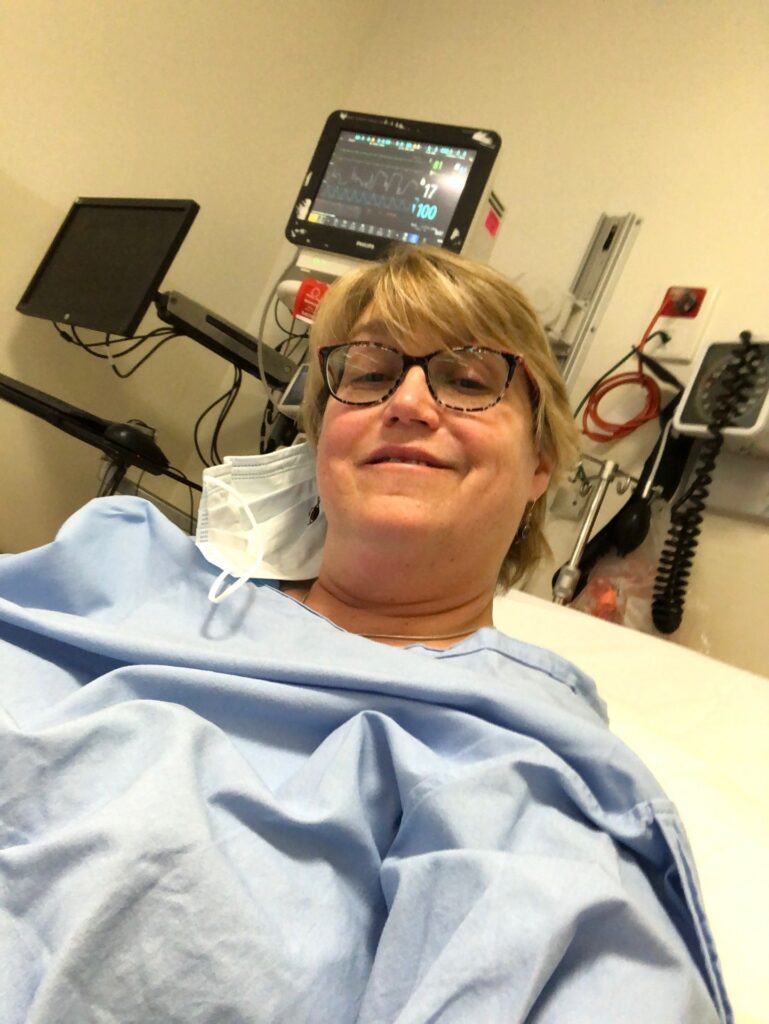
“It did present in this mildish, non-descript way, which I know is easy to ignore when you’re busy.”
She is now more proactive with her patients in encouraging preventive screening where appropriate and discussing the sometimes subtle ways MI can present in women.
“If something’s persistent and you’ve done everything you have for reflux or heartburn, and you have a family history, and you are stressed, and you are overweight, don’t disregard these things.”
She also believes more practical resources are needed.
“Certainly, we need some information that can be printed off and handed out to women, which could also be really helpful, particularly for women with a family history or more complex cardiac history.”
Dr Wood also works in urgent care clinics where she says triage processes may need updating to reflect the atypical symptoms women can experience.
Under the current urgent care clinic treatment criteria, patients with classic crushing chest pain are directed straight to ED. Those presenting with what appears to be reflux or indigestion can be treated in the clinic.
Perhaps they should be sent straight to ED, Dr Wood says.
“If their symptoms are milder, or the reflux type presentation, but they are actually cardiac, they end up being in the wrong place.
“You could pop the ECG leads on and suddenly think, ‘Oh my God, this is cardiac.’
“There’s a potential problem in the future until this is resolved.”
She says she has changed her lifestyle, losing 40kg, exercising more and drinking less, but still counts herself lucky.
“I feel like I was very fortunate, both on that day not to make things worse for myself, and in the sense that I haven’t done any permanent damage to my heart.
“Obviously, there have been many situations where people are not as fortunate as that.”