‘He had a weapon and threatened to kill me’: Dr Marie Bismark on the home visit that changed her life
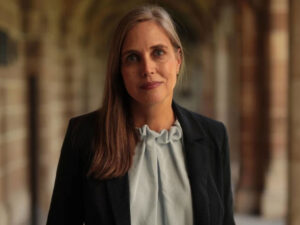
To many, Professor Marie Bismark is best known for her academic work investigating the complex mix of factors that can bring doctors to the attention of regulators.
And she has been a key voice in the debates on ways to identify and support doctors before their patients’ safety becomes an issue.
But she is also a practising psychiatrist who has had to deal with her own health conditions, which required her to seek mental health care and take leave from work.
“It was a home visit to a patient who was very unwell with psychosis,” the University of Melbourne professor explains to AusDoc. “He had a weapon, threatened to kill me and said I would be dead by the afternoon.”
The incident, which lasted over an hour, sparked an armed offender response by police.
She escaped physical harm but not the trauma.
“Once everyone was safe, I went straight back to the clinic. I walked in the door and our receptionist said, ‘Your next patient is waiting’.
“It actually took a while for me to fully realise the impact the incident had on me.”
She says, like many doctors going through a similar roller-coaster, she tried to simply keep going, but that strategy soon began to unravel — she was sleeping poorly, was haunted by nightmares and found it almost impossible to leave the house other than for work.
“If I went into a supermarket, I couldn’t walk around the end of the aisle because I didn’t know who might be there, waiting. My body was in a state of hypervigilance.”
Few of her patients would have had any idea she was struggling. Professor Bismark says she could still show up for them, professionally dressed, focused on their care and with a smile on her face.
“But I think that’s quite a common experience of unwell doctors, that you prioritise your work and continue to sustain your functioning at work, even when your health is deteriorating,” she says.
It took a compassionate mental health nurse at her work and a brave GP to suggest that she might need psychiatric help.
A few months after the incident, she was diagnosed with PTSD and received treatment that included medication, time off work and, at one point, a hospital admission.
It has now been two years since the event, and she says it has taken her that long to be able to talk, beyond a very small circle of family and friends, about what happened.
The experience, however, has made her more empathetic towards doctors who are struggling. It also underlines the importance of creating a culture where doctors feel they can reach out and seek help.
Professor Bismark is the lead author of a new study examining the rates of notifications to AHPRA related to health impairment between 2012 and 2022.
Published in The Medical Journal of Australia last week, it is significant because it stands as the largest study in the world to examine the frequency, influencing factors and outcomes of health impairment notifications to a medical regulator.
On one level, its findings provide some reassurance — health impairment notifications are relatively small in number — just 1250 across the 10-year study period.
But it shows that rates of impairment notifications are higher for GPs, for psychiatrists, for those in rural areas, for men, for those over the age of 70.
She says it is the identification of these risk factors that she hopes can lead to targeted strategies to ensure these groups of doctors have access to timely and trustworthy healthcare.
However, as her paper says in the conclusion, the big question is how to best identify and intervene with older doctors whose fitness to practise is falling.
Given the Medical Board of Australia recently abandoned its idea of mandatory health checks for late career doctors, she says that question is in need of further investigation.
Professor Bismark stresses both her academic research and her experience show how important it is for doctors to access help as soon as possible, and to not be frightened by the prospect of regulatory involvement.
“What we really saw with our research and all the interviews we did with impaired doctors is that it’s often the doctors who are so scared of medical board processes that they try to conceal their illness.
“Or they avoid seeing a doctor, or they won’t take medication, or they self-prescribe so that they don’t need to see a doctor.
“Ironically, some doctors will do that to try to reduce the risk of medical board involvement.
“But then they become more unwell, and paradoxically, they can end up being the doctors who then end up having regulatory involvement.”
She says she is fully recovered from her own experiences, and as a result she feels she is a better doctor.
She feels grateful to the mental health nurse and the GP who were both courageous enough to point out that she was struggling.
“For a GP to suggest to a psychiatrist they might need medication and might need hospital admission, I think full credit to my GP for being willing to have that conversation,” Professor Bismark says.
“I’m really grateful that she was able to treat me like a patient. I really did not need to be treated like a psychiatrist at that time.
“I’m full of praise for GPs!”
Professor Bismark says she then received wonderful care under a psychiatrist, having inpatient treatment with EMDR (eye movement, desensitisation and reprocessing therapy) and seeing an exercise physiologist who specialised in mental health care.
“It was interesting when I went into hospital for my trauma processing therapy, how many health practitioners were in hospital at the same time as me,” she says.
“We would sometimes joke that there were enough health practitioners there to form a full multidisciplinary team meeting — which I think tells you something about levels of exposure to occupational violence and psychosocial stress at work among health practitioners.”
But the most powerful moment in her recovery came not from medical therapies she was trained in, but her experiences with an indigenous Māori healer in New Zealand.
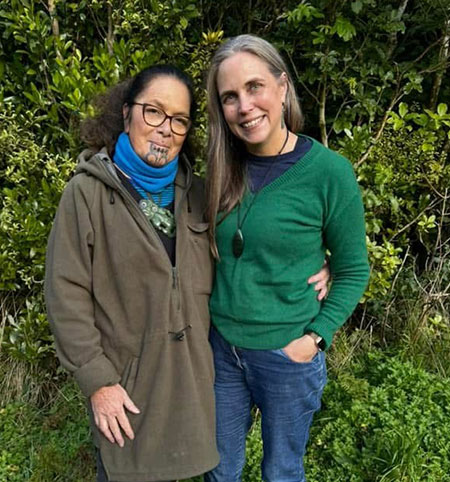
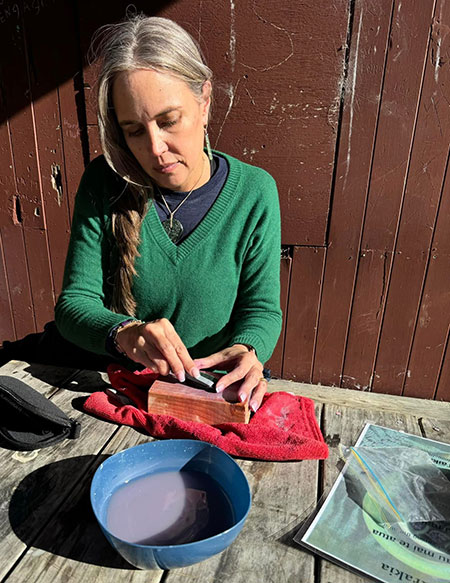
“An older Māori woman took me onto her ancestral lands, and she had partially carved a Pounamu (greenstone pendant) for me,” Professor Bismark says.
“And we sat under the trees beside a river, and I spent hours polishing the greenstone while we talked.
“That was such a turning point in my healing. After 14 years of medical and psychiatry training, it turned out that it was indigenous wisdom that made the biggest difference in my recovery.
“So I guess it’s made me feel very humble about the way that I practise medicine.
“I have worn the pendant every day since.”
On reflection, she says the violent incident came on top of other events during her registrar training and her early work as a psychiatry consultant where she was abused or assaulted at work.
“I’m really well now. I think I’ve got some clearer boundaries around the kind of clinical work that I do, and it’s really important for me to work in environments where I feel safe and protected by the organisation. That is a real priority for me.”
But she says it is important for doctors to look out for each other too because when she was at her lowest ebb, she was not able to reach out for help.
“I think many of my colleagues didn’t realise the extent to which I was struggling, but a couple of mental health nurses did.
“The fact that they had the courage to have that conversation with me was so helpful.
“I think it’s easy for us to turn a blind eye, but actually the most compassionate thing we can do for a colleague who’s struggling is to talk about it honestly.”
Read more: Stephen Douglas: The tragedy exposing the complexity of mental health care
More information: Med J Aust 2026; 14 Jan.