Evil in the inkblots? What happened when Nazi war criminals took the Rorschach test
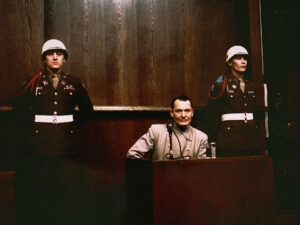
In August 1945, armed with a few inkblot cards and his intuition, a psychiatrist from California undertook one of the most morbidly compelling missions in the history of his field: the probing of the Nazi mind.
US Army Major Douglas M Kelley had arrived in Nuremberg a few months after Germany formally surrendered.
Twenty captured Nazis — including Hermann Göring, Rudolf Hess and Robert Ley — were awaiting trial for war crimes, and Dr Kelley was the chief psychiatrist tasked with determining whether they were unfit to appear in the dock by reason of insanity.
Dr Kelley also saw another opportunity: “To learn the why of the Nazi success so we can take steps to prevent the recurrence of such evil.”
So, over five months, Dr Kelley, along with his colleague, the prison psychologist Dr Gustave Gilbert (PhD), spent more than 80 hours assessing the personalities of some of Adolf Hitler’s closest confidants.
This involved the standard paraphernalia of psychology — interviews, personal essays and IQ tests. But they also used the Rorschach test.
Developed back in the early 1920s by a student of Jungian psychoanalysis, Hermann Rorschach, it was used primarily as a tool for diagnosing ‘psychotic disorders’ like schizophrenia.
But by the time Dr Kelley — an apparent expert in the inkblot field — adopted it, proponents believed it could discern motivations, personality and perceptions, rooted in the belief that subjects ‘projected’ their subconscious emotions and conflicts through their interpretations of the blots.
This was done by tracking they way they identified colour, space, movement, shading and human and animal figures in the blots.
Such was the apparent power of this tool, it could also be used to determine whether the subject was insane.
So, what about Hermann Göring? Mad or bad?
On the ground floor of Nuremberg Prison, in solitary confinement, the one-time Supreme Commander of the German Air Force submitted to multiple Rorschach tests.
“Oh, those crazy cards again,” he had laughed to Dr Gilbert.
“You know, one of the old gents [in the prison] said you showed him a lot of vulgar pictures.”
Göring, for much of the Nazi years, had been Hitler’s second-in-command. He was also a military leader known for his self-indulgent opulence, his silk suits adorned with pearled swastikas, and his country palace furnished with the looted antiquities of Europe’s finest museums.
He was described by Hugh Trevor-Roper, the UK historian tasked in the months after the war with proving that Hitler was actually dead, as “a voluptuary, a scented Nero fiddling while Rome burned”, a sybarite who feasted, hunted and entertained in “scenes of Roman luxury”.
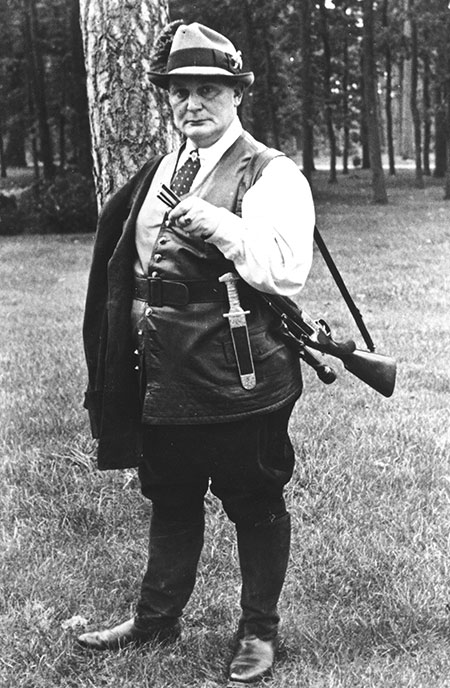
Along with various war crimes, Göring was to face trial in Nuremberg for his role in creating the Gestapo, his oversight of the forced-labour factories across occupied Europe, co-ordinating anti-Jewish laws and authorising the development of the Final Solution, responsible for the murder of six million Jews.
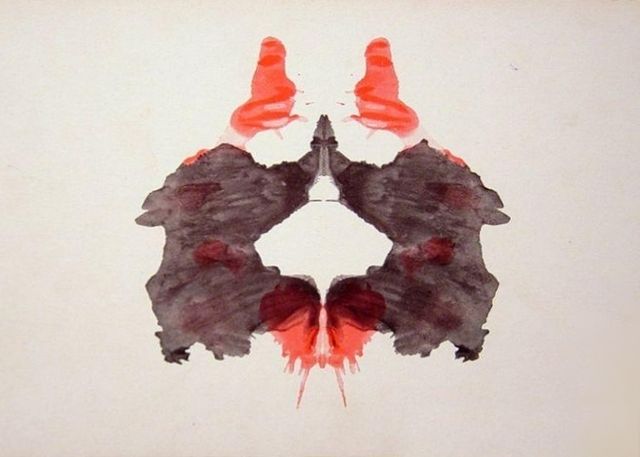
When Dr Gilbert placed Rorschach Card II before him, Göring laughed, as he usually did during the test, and said: “Two dancing men.
“A fantastic dance. Two men, here are their heads, their hands together, like whirling dervishes,” he added, placing the card face down — his usual sign that he had nothing more to say.
But Göring also noted the “red hats” in Card II, beginning a pattern of observing clothing and uniforms in many of his responses.
To Dr Kelley, this was significant. He had noted that prior to his imprisonment, Göring only wore the finest suits and silk underwear. He had also carried a leather cosmetics bag filled with 72 different hair and skincare products.
He had even managed to keep some of these products with him during his confinement, along with three large, bejewelled rings.
“[Göring] was able to describe every scar and every irregularity on his skin in detail,” Dr Kelley wrote of his obsession with his body.
“When we spoke about the injuries he had suffered in 1916 during aerial combat, when he was shot down, he precisely gave the length and width of the remaining scars in centimetres and enumerated the various ones individually.”
Göring seemed to have escaped the deprivations faced by many of his countrymen in the last months of the war.
He weighed 127kg when he arrived at Nuremberg.
Dr Kelley, presumably concerned about the impact on his health despite the shadow of the hangman’s noose cast across Göring’s future existence, convinced him to lose weight.
“I pointed out that he would make a better appearance in court should he lose some weight,” Dr Kelley wrote.
Unsurprisingly, given his colossal vanity, Göring agreed — his only condition being that some German prisoners would take in his uniform after he lost weight so he could still wear it.
His sartorial obsessions seemed to imbue his inkblot response to Card III. In this Göring saw “two caricature figures with high collars” whom he said resembled his much-disliked parliamentary predecessor, Hjalmar Schacht.
“But the red spots … I can’t figure that out,” he added, flicking at the red blots on the card.
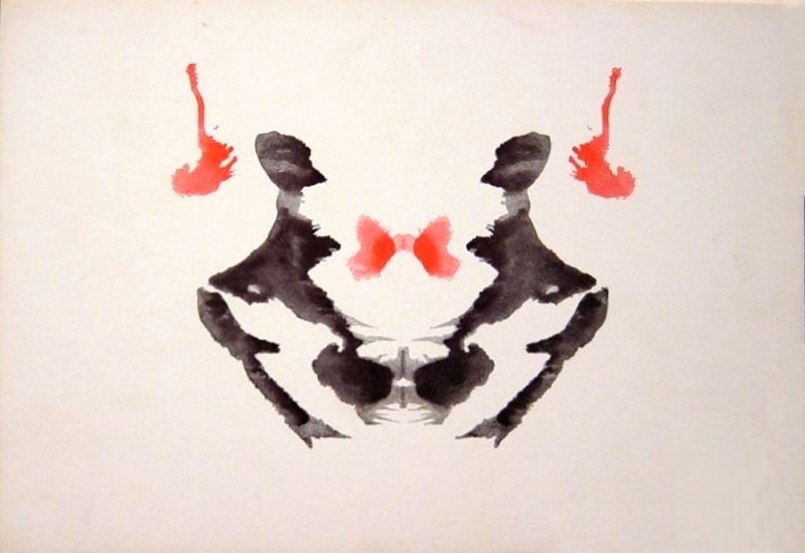
For the psychologist Dr Gilbert, this gesture caught his attention, less for any insight it offered through Rorschach interpretation but for its Shakespearean quality.
“You tried to flick it off with your finger, as though you thought you could wipe away the blood with a little gesture,” Dr Gilbert later said to Göring.
“You’ve been doing the same thing all through the trial — taking off your earphones in the courtroom, whenever the evidence of your guilt became too unbearable.
“And you did the same thing during the war too, drugging the atrocities out of your mind” — referencing Göring’s former morphine addiction.
“You didn’t have the courage to face it. That is your guilt.”
Göring apparently glared at him and remained silent for a while.
“Then he said those psychological tests were meaningless, and he didn’t give a damn what that double-crosser, [Albert] Speer, said [about him].”
Dr Kelley, however, found Göring’s Rorschach responses largely normal. There were no deep pathological issues. They were also indicative of high intelligence, Dr Kelley said.
In the Rorschach test, such intelligence could be exhibited when the subject’s responses integrated the entirety of the inkblot and identified movement within the blot.
By this time however, Dr Kelley had been spending hours sitting on Göring’s bed discussing the war and, it seems, formed some kind of attachment — even admiration for him. While he acknowledged Göring’s brutality and apathy towards human life, he found their conversations fascinating.
“He was a brilliant, brave, ruthless, relentless and clever man of action,” Dr Kelley later wrote.
At one point, Göring even offered one of his huge rings to Dr Kelley as a parting gift. The psychiatrist refused. Göring instead gave him something which he suggested was “just as good”; a signed photo of himself.
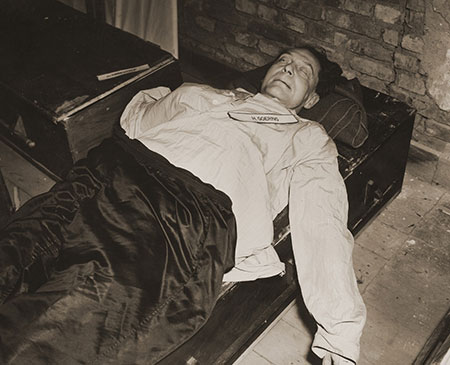
Convicted on all counts and sentenced to hang on 1 October 1946, Göring killed himself the night before his execution by swallowing a potassium cyanide capsule.
“At first glance, his action may seem cowardly — an attempt to escape the punishment meted out to his compatriots,” Dr Kelley later wrote in his book 22 Cells in Nuremberg.
“Careful examination of his actions, however, reveals that here is the true Göring, contemptuous of all man-made rules and regulations, taking his own life at his own convenience and in a manner of his own choosing.
“His suicide, shrouded in mystery and emphasising the impotency of the American guards, was a skilful, even brilliant, finishing touch, completing the edifice for Germans to admire in time to come.”
Rudolf Hess
When Dr Kelley first met Rudolf Hess, he encountered a thin, hysterical man who suffered sporadic memory loss and hoarded globs of marmalade he believed had been poisoned by his captors.
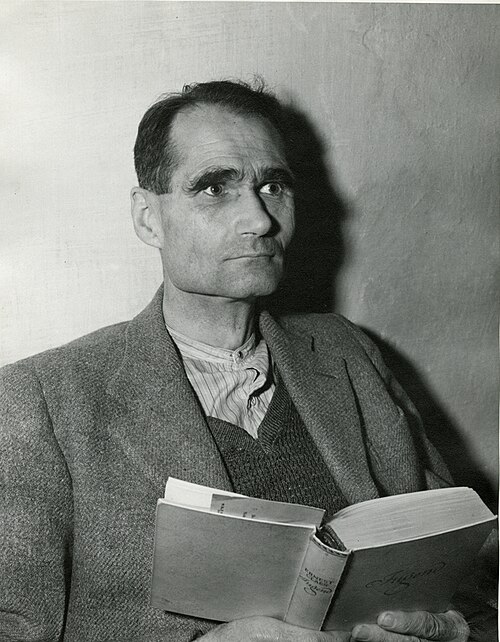
But five years earlier, Hess had been Deputy Führer of the Nazi Party and one of Hitler’s oldest friends. He had helped approve the Nuremberg racial laws, was involved in the invasion of Poland and other military strategy, but by 1941, as the German military machine swept across Europe, Hess found himself sidelined from decision-making.
He was also growing depressed over his seemingly incurable stomach problems — which Dr Kelley later believed to be psychosomatic.
It was in this mental state he flew to the UK on his own secret mission — organised without Hitler’s approval — to broker peace with the Allies. He piloted a Messerschmitt out of Berlin, crash landing on a farm south of Glasgow.
He was promptly arrested by a pitchfork-wielding local farmer who took him to his farmhouse before alerting the authorities.
But rather than being treated as an envoy as he expected, Hess was taken prisoner by the UK and interrogated for the remainder of the war. Back in Germany he was dismissed as a ‘deranged’ traitor.
It was in custody in England that Hess’ paranoia around food poisoning and his apparent amnesia first appeared.
By the time he was under Dr Kelley’s care, Hess was claiming he could not remember his own birthday or any of his duties while in the Nazi Party.
At the same time, he began keeping samples of his food to be ‘sent for testing’ and requested a box of chocolates he received while in England be brought to Nuremberg as evidence the Allies were poisoning him.
The Rorschach tests offered only partial insight into Hess’ amnesia, apparently, with the doctors finding his responses brief, flat and unimaginative.
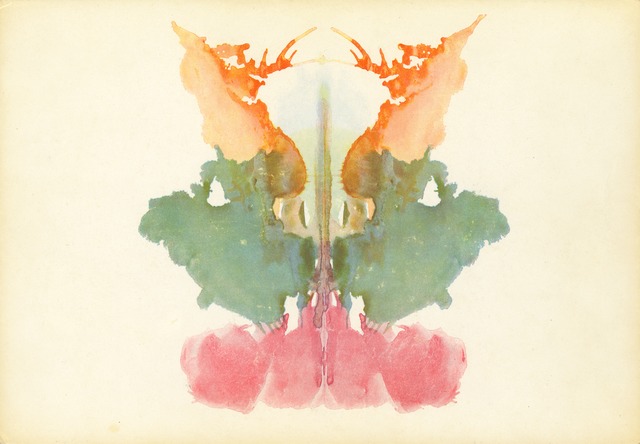
In Card IX Hess saw “a technical representation of the cross-section of either a carburettor or a fountain”. In response to the same card, Göring had seen trolls from Norwegian theatre.
Hess’ response to Card II of the Rorschach test — “two men discussing a crime and thinking about blood” — was deemed significant.
It prompted Hess to go on a tangent about bloody thoughts, confirming for Dr Kelley that despite the claimed memory loss, he still had ‘bloody memories’.
Ten days into the trial, Hess claimed his memory loss was entirely fabricated as a ‘strategy’ for his defence.
“How did I do? Good, wasn’t I?” Hess asked Dr Kelley after revealing his ‘ruse’.
“I really surprised everybody, don’t you think?”
But Dr Kelley was not convinced. Though he believed Hess was exaggerating some elements of his memory loss, he found the very fact that Hess suddenly dismissed his symptoms so publicly was characteristic of a genuinely mentally ill person.
He subsequently admitted to Dr Kelley that his mind was weak, and his memory loss was in fact real.
He was sentenced to life in prison, eventually taking his own life while the sole inmate of Spandau Prison in 1987, aged 93. He remained a loyal Hitler supporter to the very end.
Robert Ley
Of all the Nazis assessed, Robert Ley was the Nazi subject of most interest to Dr Kelley.
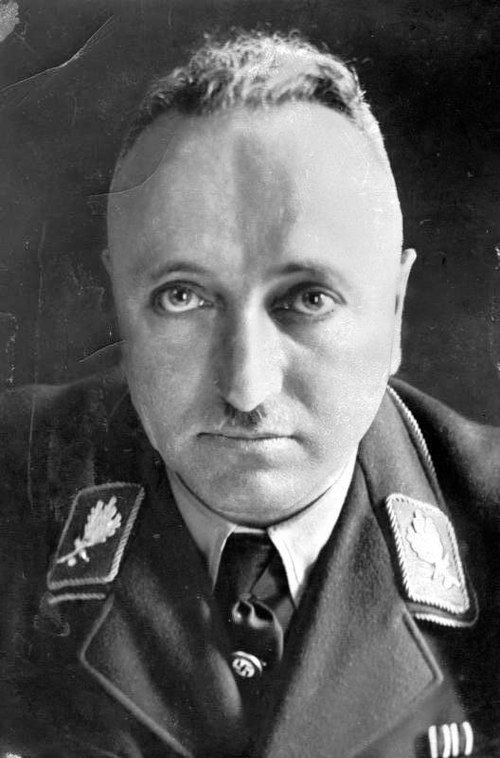
As the leader of the German Labour Front, Ley was to face the Nuremberg tribunal over his role in the arrest and disappearance of union leaders and the use of foreign slave workers.
His behaviour in prison had been erratic and often unintelligible. He would begin conversations with Dr Kelley calmly, and then suddenly “stand, then pace the floor, throw out his arms, gesticulate more and more violently and begin to shout”.
The tribunal was concerned Ley would be unfit to stand trial. He had suffered two head injuries prior to the war that Dr Kelley believed had damaged his frontal lobes, causing emotional instability and suicidality.
For Dr Kelley, Ley’s Rorschach records only confirmed this as he was frequently unable to project any interpretation on to the inkblots, noting only their colours or describing them as clouds.
“Definitely that of an individual suffering from damage to his frontal lobes,” Dr Kelley wrote.
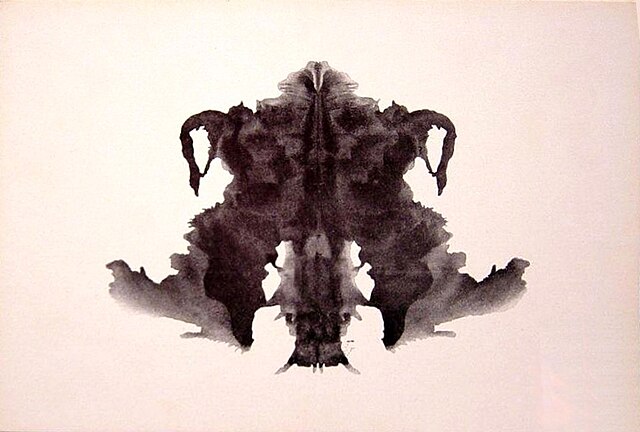
Ley could identify a bear in Card IV, but when prompted to elaborate he described a “head and teeth with terrific legs”.
Ley continued: “It has shadows and peculiar arms. It is alive and represent[s] Bolshevism overrunning Europe”.
The Nazi then tried to convince Dr Kelley of his idea for a US-German alliance that would allow for a new Nazi Party, but without the “evil spirit” of anti-Semitism.
This, according to his vision, would be managed by the surviving Nazis from their cells in Nuremberg, with its task to fight the spread of ‘bolshevism’ in Asia.
The biggest provocation to Ley’s self-identity was the fact he was being branded a criminal.
“Stand us against a wall and shoot us, well and good, you are victors,” he told Dr Kelley.
“But why should I be brought before a tribunal like a c-c-c-[criminal] … I can’t even get the word out!”
According to Dr Kelley’s inkblot analysis, Ley could be judged insane.
In the Rorschach test, this was usually based on uncommon or illogical responses to the inkblots that bear no resemblance to their actual form.
When Ley took his own life two weeks after receiving his indictment by strangling himself with a towel, Dr Kelley saw a rare opportunity to verify these findings.
Ley’s brain was removed and analysed by a neuropathologist who confirmed a degenerative atrophy of the frontal lobes, although he was uncertain whether a brain injury was the cause.
A second opinion, however, was less certain of “any definite pathology in this case, at least such as would lead one to suspect a clinical organic condition”.
Dr Kelley’s reaction to this is unknown; regardless, the media had already enthusiastically taken up the ‘brain-damaged Nazi’ line, with newspapers across the world claiming this caused Ley to “lose his sense of relative values”.
Rorschach revisited
When Dr Kelley first shared his findings in a paper presented at the 1946 annual meeting of the Rorschach Institute, his conclusions were not quite what people were expecting.
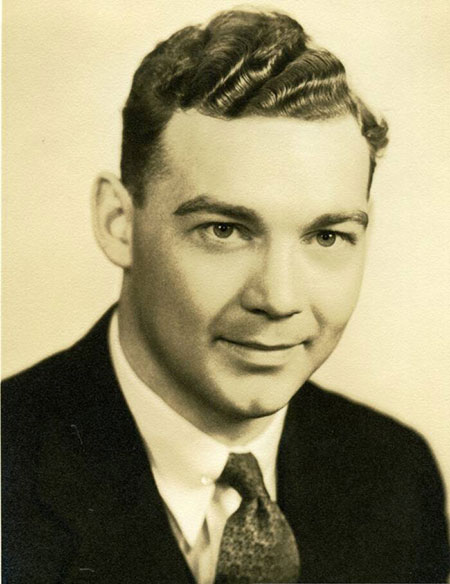
Although he was writing more than a decade before Hannah Arendt wrote about the ‘banality of evil‘ in relation to the Eichmann trial, the idea that the Nazis were a product of catastrophic but fundamentally human failings rather than a monstrous satanic force, Dr Kelley was saying the same thing.
“We must conclude not only that such personalities [of the Nazi war criminals] are not unique or insane but also that they could be duplicated in any country of the world today,” he wrote.
While Nazis like Göring were “strong, dominant, aggressive, egocentric personalities”, it is a personality Dr Kelley said you could find “anywhere in the country — behind big desks deciding big affairs as businessmen, politicians, racketeers”.
Not only were the Nazis not insane, Dr Kelley argued, but there was no ‘Nazi pathology’ that could explain how so many otherwise ‘ordinary’ men could commit and endorse such atrocities.
Published in 1947, 22 Cells in Nuremberg went on to sell poorly. This was in contrast to the book written by his colleague; Dr Gilbert’s Nuremberg Diary published in the same year.
It had argued the Nazi war criminals were a psychiatrically disordered group of narcissistic psychopaths.
Göring, Dr Gilbert wrote, was a “psychopath trying to make a mockery of all human values”, with an obvious “pathological egotism and inability to stand anything but flattery and admiration for his leadership”.
There was clearly a willing audience for such an assessment back in 1947.
By 1958, Dr Kelley had spiralled into alcoholism and depression. He took his own life one evening by swallowing a potassium cyanide pill — the same as Göring had done 12 years earlier.
In the decades since, there have been some attempts to reanalyse or replicate the Nazi Rorschach responses.
An analysis by Rorschach experts in the 1970s which utilised Dr Gilbert’s primary notes arrived at a similar conclusion to his own.
However, multiple subsequent studies, some even using a newer and more robust systematised approach to scoring Rorschach responses, were unable to determine a unique Nazi pathology.
To many physicians, the Rorschach test is at best an occasionally useful self-reflection tool and at worst a relic of psychoanalysis’ murkier past — perhaps even a complete pseudoscience.
“Seventy years after the Nuremberg trial, we are still fighting over what these Rorschachs mean,” psychiatrist Dr Joel Dimsdale wrote in his 2016 book on the Nazi Rorschach tests.
“If you knew what you were looking at, you could discern a menace lurking in the prisoners’ responses.
“If not, well, they were just — more inkblot responses.”
Read more: The dark history of medical illustrations and the moral dilemma facing all doctors