‘You are members of an uncaring profession’: The GP addicted to pethidine who changed Dr Roger Sexton’s life
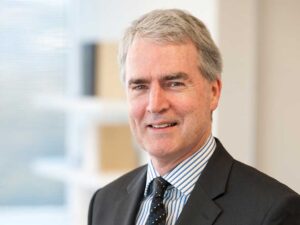
Dr Roger Sexton remembers the solo GP who ignited his passion for doctors’ health.
It was the mid-1990s. The GP was sitting before Dr Sexton as a patient, having been suspended for self-prescribing pethidine.
He said he had first self-injected pethidine from his doctor’s bag after waking with another work-related tension headache — a “super blinder”.
He described a working life that was painfully familiar for Dr Sexton, himself a busy rural GP.
The GP was booked out two weeks in advance and felt unable to take a day off despite the headaches, heavy workload, late nights and on-call duties.
He told Dr Sexton that he did not want to let his patients down. The pethidine had worked, so when the headache returned the next day, he took more.
He was addicted by the week’s end.
“He came to see me because he wanted to express anger towards the profession,” Dr Sexton tells AusDoc.
“I said, ‘I am not sure what this has got to do with me.’
“He said, ‘Doctors like you did nothing. Doctors like you were not there when I needed help. You are members of an uncaring profession.’”
“I never saw him again.
“The chilling thing, what really motivated me, is that he was describing my working day to a tee.
“His workload and work ethic were so similar to mine and probably for so many other rural doctors.
“Then I started to hear about rural doctor suicides, or doctors leaving their practices very suddenly without saying goodbye to anybody.
“I thought, ‘We’re expecting so much of doctors to be self-sufficient, self-reliant, unhelped because that’s the way it’s always been.’
“It underlined my determination to ensure the profession was one that cared for its own.”
In 1999, Dr Sexton founded Dr DOC (it stands for ‘duty of care’), a rural-specific health program that included doctor retreats, peer phone support, GP visits and even a rural doctors long service medal.
Doctors’ Health SA followed in 2010, with Dr Sexton the inaugural medical director — the position he retired from last month after 16 years of service.
Initially, it provided statewide 24/7 phone support. But Dr Sexton realised doctors wanted a GP-led, face-to-face, confidential service — so that’s what Doctors’ Health SA created in 2011.
“It is this unique after-hours GP assessment clinic, with extended appointments, using holistic physical, mental health, lifestyle and work-related assessment protocols,” he says.
“It is staffed by very experienced and well-trained doctors who are comfortable seeing doctors as patients.”
The service expanded to include telehealth consultations and face-to-face outreach visits for rural doctors in SA and the NT.
“The remote GP is geographically isolated, with limited access to a choice of doctor,” Dr Sexton says.
“So where do they go? They don’t have their own GP in the city or a nearby centre.
“They might self-treat, self-diagnose, self-prescribe, self-investigate. They might have illnesses they don’t even know are there.
“Outreach visits are both moving for the visiting doctor and powerful for the doctor receiving the service.”

But he says doctors’ health across Australia remains patchy.
Each year, $18 from each doctor’s registration fee supports state and territory doctors’ health programs via the AMA subsidiary Drs4Drs.
However, Dr Sexton believes that $2.3 million a year is insufficient to grow the services, especially in smaller jurisdictions with particular needs, such as the NT.
He wants, within five years, a $50 levy on doctors to grow doctors’ health programs, collected and administered separately from registration fees or AHPRA.
“We could triple the existing funding ourselves,” he says.
“A quarter of the profession goes to work with physical and/or mental symptoms. We found with the after-hours clinic and the doctors’ health program that if you build it and they trust it, and it’s promoted well — word of mouth is important in medicine — it’s the preferred model for doctors who have not had a checkup, who need additional time and who don’t have their own GP.
“We want a minimum standard model that is replicable across Australia, brings the best ideas from the state and territory doctors’ health programs and is truly independent of the Medical Board of Australia and AHPRA.”
AHPRA could put the cash it currently collects towards faster resolution of complaints, he suggests.
In his experience, while vexatious complaints are being resolved faster, other complaints are taking longer.
“That’s the issue that doctors find extremely distressing. Sometimes it can be associated with thoughts of suicide, even completed suicide,” he says.
While he has retired as the Doctors’ Health SA medical director, Dr Sexton still works part-time at Corporate Health Group treating business executives, which he says has taught him new lessons.
A corporate executive’s focus on health and fitness can filter down to junior staff, he says. And in the corporate world, having a support team — from psychologists to financial advisers — has been normalised.
In contrast, doctors are still expected to rely only on their internal fortitude, he says.
“Other professions seem to understand it better than we do.
“The prime minister has 70 people in his department. He’s not sitting there doing everything himself.”
He is enjoying the slower pace of the one- or two-hour health assessments. Unlike rural doctoring, there are no death scenes in corporate healthcare — no farm accidents, car accidents or deaths in hospitals.
Yet Dr Sexton says dealing with death was often his best clinical work.
“There is a real art to it, but no textbooks are written about how to do it.
“People in the same room are often at different stages of grief. I’ve seen it when grandpa dies on the farm, in his armchair in front of the fire.
“His wife knew it was coming. She’s grieved already about losing him.
“But the daughter hasn’t seen much of grandpa. She’s been interstate. She rushes in and says, ‘What the hell’s going on here? No-one told me he was this sick.’
“She’s angry about it.
“You have to look around at everyone and think, ‘You’re shocked by this. You were expecting it. You’ve already worked out this was going to happen. You’re in denial.’
“Doing that quickly, responding differently to each person — that takes a lot of clinical skill.”
He says the most joyous part of clinical work has been listening to patients.
“Medicine is interesting, but people are more interesting.
“It’s when you probe a bit and get a sense of why this person has become ill at this time with this illness — their family history, life stressors, lifestyle choices.
“For many doctors, the one-to-one — sitting down with a suicidal teenager or a depressed husband who’s lost his job and has a sense of hopelessness — is the most satisfying.
“Maybe it’s a young child who’s had a cancer diagnosis. You sit down, talk to the family and realise you can make a difference — give them hope, guidance, support.
“You can’t always cure them, but you can be with them.
“That’s where most doctors would say they’ve done their best work.”
Clues like being unable to keep pace with change will guide any future decision to fully retire from medicine, he says.
“If you feel the world around you moving forward and you’re not keeping up — whether it’s IT, people’s attitudes, your work or the workplace changing — and you feel like you’re resisting that change too much, that’s a warning sign.
“I know some doctors keep working because of necessity. They’ve been married and divorced several times and they’re trying to recapture wealth they’ve lost. They’re not financially well off.
“Others have nothing else to do.
“They have nothing to replace what medicine delivers in spades: sense of purpose and achievement, contact with people, being highly valued.
“Some find their self-esteem is so strongly linked to their work they can’t give it up.”
Others continue at an unrealistic pace, he says.
Doctors aged in their 60s who attend doctors’ health clinics may work five days a week, some Saturday mornings and see four or five patients an hour.
“To somebody in their late 60s, I say, ‘I know you feel on top of your game, but why are you working like that?’
“They should be seeing two patients an hour, enjoying the ride, being thorough, practising great medicine and working three days a week — not working like they did when they were 35.”
Succession planning, allowing fresh ideas and leadership, informed Dr Sexton’s decision to leave Doctors’ Health SA.
Other factors were outside medicine: his board roles, becoming a grandparent, his sheep farm and his passion for writing and recording music.
Some of his compositions are inspired by patients.
“I wrote a song recently about someone losing their partner to cancer and all that was left to remember them by were their clothes.
“It’s based on a patient who told me they still set the table for their wife, two years after she died.
“He always set the table for two cups, two glasses and two plates. Her clothing was still in the bedroom. It was the lingering memory of her.”
Read more: Dr Nick Carr on retiring, doctor-shoppers, a Molotov cocktail attack and bulk-billing
If this article has raised issues for you or you are concerned about someone you know, you can call the following support services 24 hours a day, seven days a week:
State- and territory-based doctors’ health services:
- ACT: 1300 374 377
- NSW: 02 9437 6552
- NT: 08 8366 0250
- Queensland: 07 3833 4352
- SA: 08 8366 0250
- Tasmania: 1300 374 377
- Victoria: 1300 330 543
- WA: 08 9321 3098
Mental Health Support Line (telepsychology):
- 1300 374 377 (Drs4Drs)
Other services:
- Suicide Call Back Service: 1300 659 467
- Lifeline: 13 11 14
- Beyond Blue: 1300 224 636