The GP with a 500km commute to work: Meet Dr Mary-Anne Lancaster
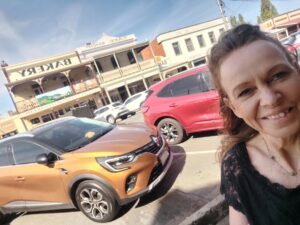
As Dr Mary-Anne Lancaster steers her Renault Captur off the Hume Highway and heads for Victoria’s High Country, at least the most “deadly dull” part of her journey is done — the first 250km.
She will soon stop for a bite at the picturesque town of Beechworth, with its famous bakery, but her final destination is Corryong, 500km from her home in the Melbourne suburb of Balwyn.
“The last part of the drive is the most beautiful, but it is also the hardest for me because it’s through the mountains,” she tells AusDoc.
“I’ll be starting to get quite tired but I need to concentrate, especially during winter when there’s black ice on the roads.”
She has made the 5.5-hour commute every six weeks for 15 years.
While she also runs a GP practice in Balwyn with her husband, this job ultimately started with the classifieds section of Australian Doctor.
In the early 2000s, Dr Lancaster noticed an ad and took a job with the Royal Flying Doctor Service, providing outreach for women in remote locations.
It took her to Hopetoun in Victoria’s Southern Mallee region, a 4.5-hour drive from home, and later to Tallangatta near the NSW-Victoria border, a similar distance.
“When my youngest, Rebekah, was born 22 years ago, my mum started coming up with me to Hopetoun to look after her, so the drive up was actually an adventure.
“It was fantastic. It was a chance to be with Mum and Rebekah.”
When she started the Corryong commute, doing three clinic days each time, the trio would leave home at around 6am in her husband’s Land Rover Discovery.
Breakfast would be at Beechworth at around 9.30am.
“My Rebekah has hugely fond memories of getting to the Beechworth Bakery, having massive pieces of toast with jam.”
When Dr Lancaster’s father retired aged 80, he joined the expedition.
“He said, ‘Well, if everyone’s going up to Corryong, I may as well come with you.’
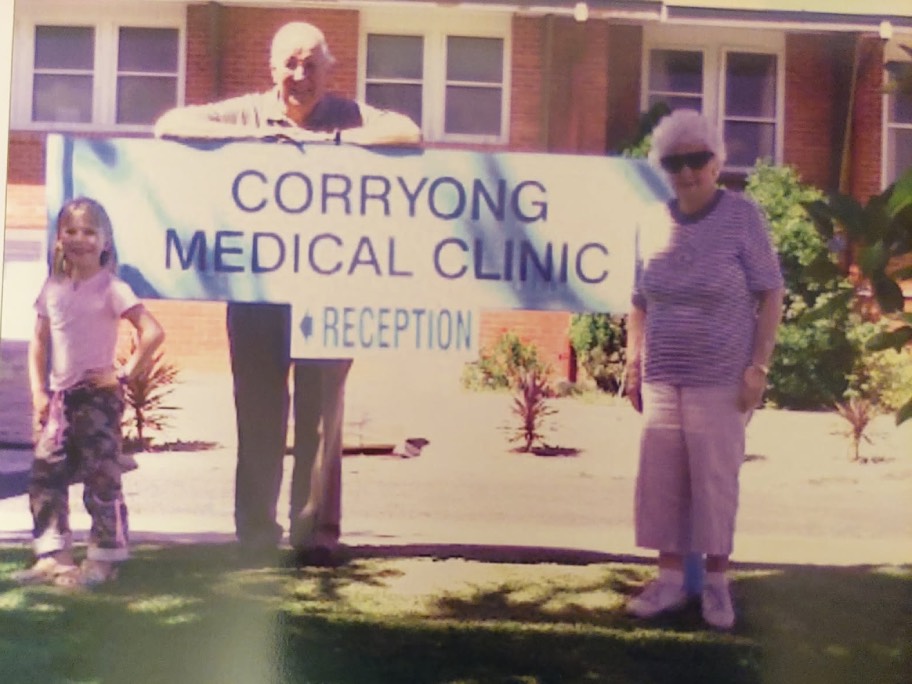
“Dad was a great fisherman, so he would drop me at the clinic, keep the car, and the three of them would go out fishing together on the Murray River.”
One day, Dr Lancaster’s mother fell in.
“The first I knew about it was Rebekah running through the door of the clinic.
“She was shouting, ‘Mum, Mum, you need to help Nanny,’ and my mum walked in covered in blood.
“She’d bashed her head in the Murray, and I was the only doctor on duty, so I ended up having to shave her head and sew up the big cut in it.
“Mum had her hair coiffured every week, so she was mortified!”
After her father’s death 10 years ago, and after Rebekah reached her teenage years — so “going to the country became a bit passé” — Dr Lancaster’s mother continued making the trip.
“I remember it as a time of being able to sit and talk about all sorts of things, about friends, the state of the world, the kids.
“It was a special time.”
Dr Lancaster says her mother, in many ways, came to know the Corryong locals better than she did.
“She was taken in by the local people. They were absolutely fantastic with her.
“As soon as they knew we were in town, word went out on the street, and they would all take Mum out to properties and on drives.”
About 1300 call Corryong home, as does the Man of Snowy River Bush Festival. It has NSW’s Snowy Mountains on one side and the Victorian Alps on the other.
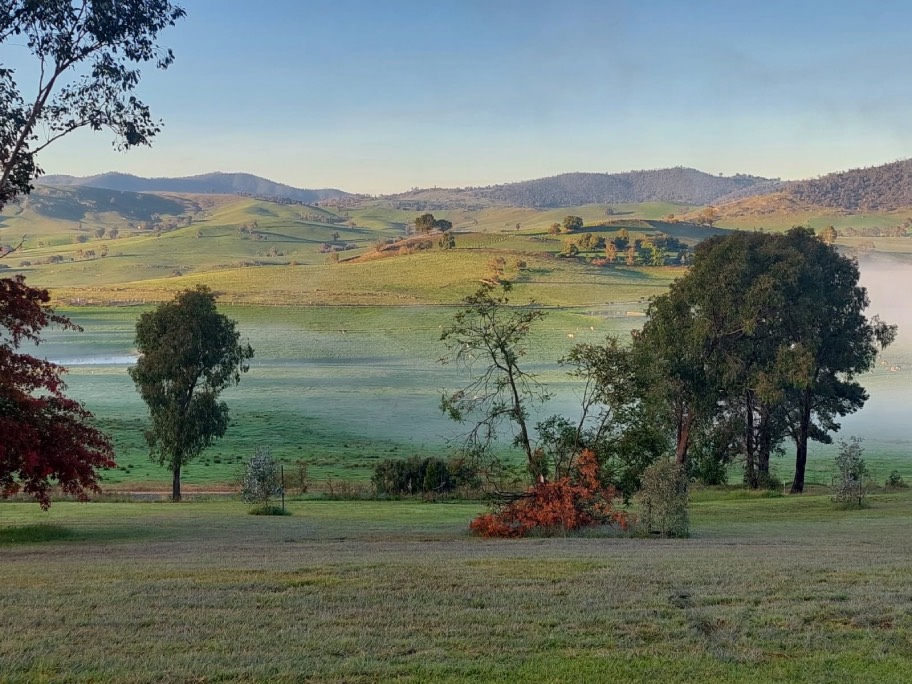
“In winter, you see the snowcapped mountains all the way around you,” Dr Lancaster says.
“It’s freezing, but beautiful.
“Sometimes the fog does not lift literally for three or four days because no wind comes through. It’s pea soup … you cannot see two feet in front of yourself.”
Over the years, she has seen the landscape change. Corryong was decimated by fires in January this year, as it was during the Black Summer.
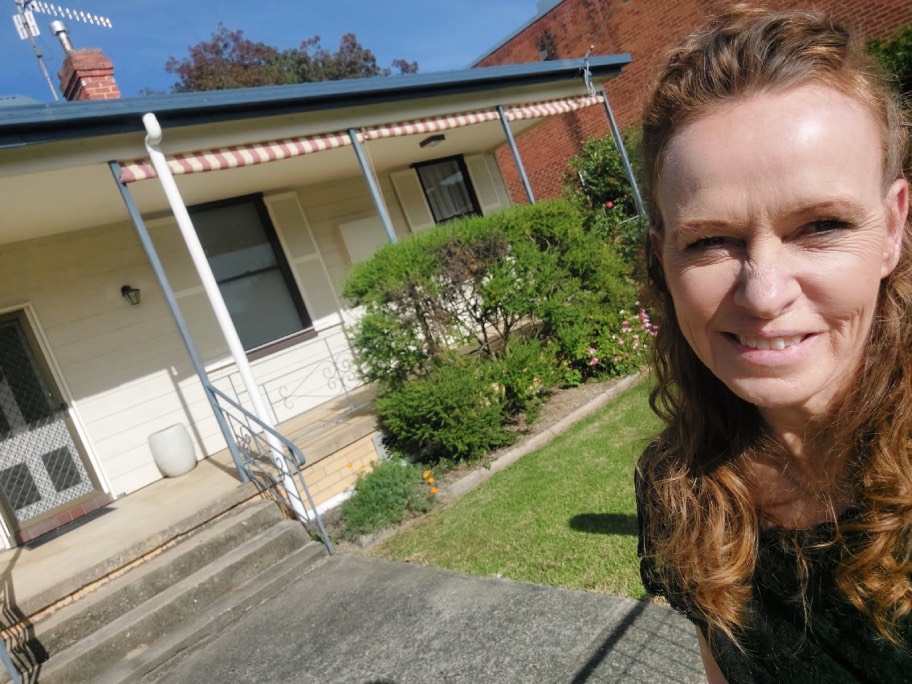
“The last time I did the drive, the stretch from Tallangatta to Corryong was like a lunar landscape,” she says.
“There are huge plantations of pine trees as you go through a part called Shelley, right up the top, that had been completely decimated.
“It might be different next trip. It’s amazing how nature comes back.”
The scope of her work has also changed.
Six years ago, a female registrar qualified and decided to stay in Corryong.
It meant Dr Lancaster’s outreach posting should have finished, but the town fought to keep her on.
“They banded together and demanded that I be maintained.
“So now I’m paid by the health service and no longer a part of the Royal Flying Doctor Service’s program.”
However, the female GP left 18 months ago, leaving Corryong without a permanent GP and Dr Lancaster, with a handful of locums, maintaining the health service.
“I’m basically becoming the GP for the entire town,” she says.
“There are some very good locums that go up there, but they are only there for a couple of weeks at a time.”
It means her work is no longer just a women’s health clinic. She has inherited many complex patients, such as those with diabetes, heart disease and a history of stroke.
From her Balwyn practice, she also offers weekly telehealth sessions to Corryong patients. But the community remains isolated.
CT scans and non-GP specialists are 1.5 hours away in Albury on the NSW-Victoria border.
“They have a nursing home and a little hospital, and at the moment they are being run completely remotely,” Dr Lancaster says.
“A remote GP does a ward round once or twice a week.”
It is one reason why, in 25 years of travelling to remote towns, she has only missed one trip, when she was receiving cancer treatment.
“Even with the birth of my youngest, I gave birth to her between visits and still went up.”
She has started to hit the road a little later, so she arrives in Corryong by 3pm, and takes her car rather than her husband’s, “which is probably not quite as safe, but not so heavy on petrol”.
“When we bought this car, we made sure that it had a full spare, not a space saver, because we knew that if I broke down around Corryong, I would be driving long distances on the tyre.
“My husband lives in terror of something happening, especially in the middle of the mountains, because I’m mechanically inept.
“Even a flat tyre, I wouldn’t have the faintest clue what to do.”
She usually leaves around 4pm on Fridays.
Since her mother’s death 18 months ago, she passes the time by listening to her favourite podcasts in French and Italian, which she speaks.
“My favourite is a French podcast called L’Heure du Crime, the Hour of Crime.
“It’s a true crime series and I love listening to true crime.
“I’m also doing a Masters of Public Health through Deakin University, and all of the lectures are recorded, so I’ll often listen to a lecture too.”
Her husband has suggested she wind down the work given she is now 62.
She says she feels “sick at the thought”.
“I keep thinking, ‘I could be working more in my own practice without doing all this travel,’ but every time I get up there and see the people, how they depend on me, I feel this overwhelming obligation that I can’t let them down.
“It is a big drive, a big commitment, but it is a privilege to be in the position to provide a service like this.”