The new plan to streamline the MBS: what practice managers need to know

A big MBS headline this month was about the new government review calling for an increase in long consult rebates in an attempt to end sausage-machine medicine.
The one problem was that the draft report drawn up by the MBS Review Advisory Committee would have significant as yet uncosted budget implications for both the government and the business models of GP practices.
As such, it is unlikely to go somewhere any time soon. But the draft matters because it also includes changes that can be done in the here and now, ranging from revamps of the antenatal and mental health items to after-hours care and aged care visits.
The report, whose authors include former RACGP President Dr Liz Marles, also flags a new mechanism for expanding the MBS to other health providers — RNs and pharmacists being the most obvious.
Here is the breakdown:
Same time-tier items but with different rebates for different professionals
This seems significant — a reflection of changing times, with the likelihood that the government could start expanding access to Medicare beyond its current scope. The two professions pushing hard for this are RNs and pharmacists.
So the report looks at the way items have proliferated for different provider types — the most obvious case being nurse practitioners.
Why bother? The report recommends a single set of time tiers. All that would happen is for the government to set a series of fee modifiers linked to the provider’s role and qualifications.
Give nurse practitioners access to the bulk-billing incentives
In line with the above, only services provided by a medical practitioner can receive bulk-billing incentives, which is an issue when the government wants to support multidisciplinary care, the report says.
To address that, it recommends including nurse practitioners working in MyMedicare practices in the incentive system.
This would support the nurse practitioner workforce, encouraging GP clinics to hire more of them, it added.
The MyMedicare requirement would exclude nurse practitioner-led practices, the report noted, but it said that was a necessary sacrifice, as MyMedicare accreditation would ensure the practice has met important standards.
After-hours items
There are currently 51 different items for after-hours attendances.
These include items for urgent attendances; the ones for vocationally registered and non-registered GPs; for second and subsequent attendances; ones in consulting rooms, aged care facilities and other out-of-consulting-room services; one for telehealth; and ones for services between 11pm and 7am (unsociable hours).
The central problem identified across the report is clearly about the way the current system incentivises short, quick-fix care.
But the issue with the decline-per-minute rebates is even worse in after hours than during standard hours.
An example? While an after-hours level A item (item 5000) receives 168% of its standard-hours equivalent (item 3), the after-hours level D item (item 5060) only attracts 110% of its equivalent (item 44).
The reasons are probably more complex than simply the money, but the report notes that the use of these items is in decline, falling from 12.3 million services in 2017/18 to 7.7 million in 2021/22, around where the figure has remained since.
The report’s recommendation is to remove these standalone items and replace them with more equitable fee modifiers on top of the standard consult items.
That fee loading could also apply to telehealth and nurse practitioner services done after hours, it recommends. Again, no dollar suggestions are made by the report authors.
The report also adds that telehealth services during unsociable hours in particular should be given much higher rebates through such fee modifiers, although that should be linked to MyMedicare registration to ensure continuity of care.
While most after-hours items have declined in use, telehealth items 92210 and 92211 have seen “rapidly increasing” uptake, suggesting that they are playing a different role compared with equivalent face-to-face items.
What is after hours anyway?
The report also says the MBS could at least make sure all items have the same definition of after hours.
Currently, after-hours items in consulting rooms apply after 8pm on weekdays and 1pm on Saturdays, but 6pm on weekdays and noon on Saturdays for services outside of consulting rooms.
The report suggests 6pm on weekdays onwards (no mention of Saturday) and clarifies that it applies to the time zone where the service takes place.
Finally, the report says practitioners should get the same bulk-billing incentives as are given for standard attendances.
This would mean the end of ludicrously specific items such as 10992 and 75872, which cover an after-hours service delivered outside consulting rooms where the doctor is based in Modified Monash Model 1 (MMM1) but the service is provided in MMM2-7.
Mental health treatment plans
Items for mental health treatment plans and for eating disorder treatment and management plans are currently split based on whether the GP has the necessary mental health skills training (item 2715 vs 2700, for instance), with qualified providers receiving a higher fee.
However, level 1 training is now a core component of GP training, so the report says the MBS could get rid of that distinction and just have one set of treatment plan items.
On the other hand, there are items that can only be used if the provider has focused psychological strategies training (2721, 2723, 2725 and 2727).
That training is not within the usual scope of practice for most GPs and requires ongoing CPD every three years, so the report recommends that those items stay.
Location-specific services

The report addresses the way the MBS offers different incentives for aged care visits compared with other outside-of-consulting-room services, with the differences in rebates not really adding up with the complexity of care being demanded.
Currently, aged care home visits include a “flag fall” rebate of $65.80, which the doctor receives for having a consult with at least one patient, on top of the consult rebate.
That means earning far more for aged care than a home visit.
The report says those other out-of-consulting-room items should all attract the value of the equivalent residential aged care item.
The mechanism would be for the MBS to get rid of these location-specific items and let doctors add additional fee-loading items on top of the generic items through MyMedicare.
Like the rest of the report, there is little detail on the all-important dollars. Is it about a levelling up or a levelling down? Or just providing bigger rebates overall for doctors to do visits?
Another recommendation suggests the MBS should investigate whether other primary care workers, such as practice nurses, should also have a mechanism to fund outside-of-consulting-room care.
Again, it is about Medicare supporting multidisciplinary teams.
Pregnancy counselling
Items for non-directive pregnancy support counselling (4001, 92136 and 92138) all require doctors to undergo training. They were introduced at a time before GPs received the training under the RACGP’s current curriculum.
But given the existence of the general time-tiered consult items, the working group said there was little justification for separate MBS items.
Okay, not every GP has gone through the current curriculum fellowship, but the report stressed that these doctors could always access the training, lasting 3-4 hours, through their CPD requirements.
Acupuncture
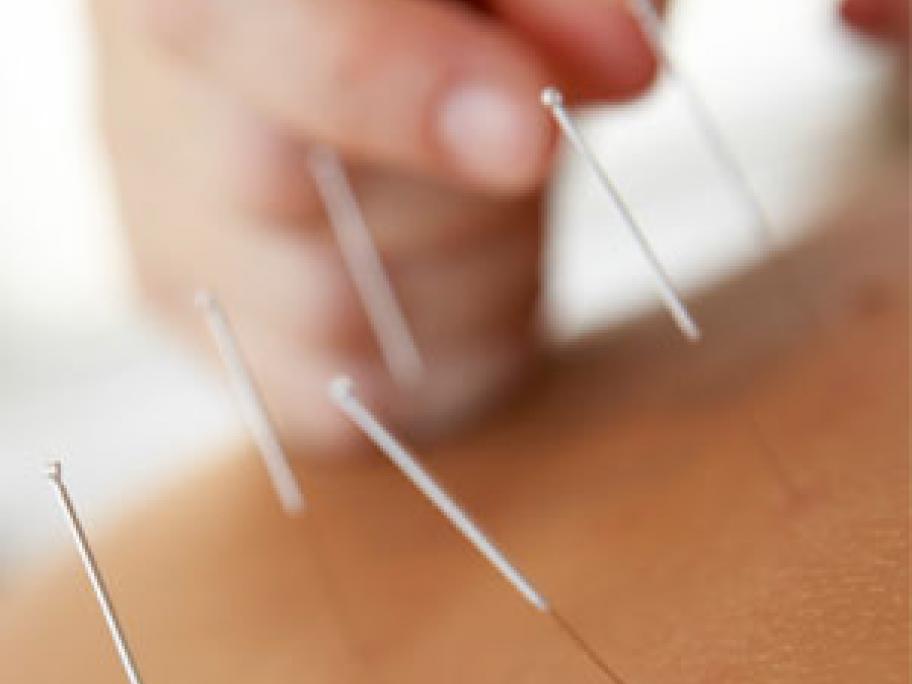
Dedicated items for acupuncture should be ditched, the report says. This would normally raise alarm bells, given some who question the evidence base behind the intervention. But again, it is about clearing the MBS clutter.
The number of services under the items (193, 195, 197 and 199) has slumped over the past decade from more than 500,000 a year to just over 200,000 a year.
The working group noted that attendance items paid bigger rebates than the equivalent acupuncture items. And the acupuncture items also did not attract the tripled bulk-billing incentives.
Medical Board of Australia endorsement or Chinese Medicine Board of Australia recognition in acupuncture is required to bill the MBS acupuncture items.
But even with the shift to the general attendance items, the working group said endorsed doctors would still be able to describe themselves as “acupuncturists” in accordance with medical board guidelines and get access to time-tiered items to deliver acupuncture services.
Bloodborne viruses and sexual and reproductive health
Telehealth items for bloodborne viruses and sexual and reproductive health (92715, 97244, 92737 …) are not subject to the MBS’ 12-month rule, where patients have to have at least one face-to-face consultation each year with a doctor to receive a rebate.
The working group also wants these standalone items scrapped. Again, it is about the care being delivered and funded under the telehealth time-tier items.
But the working group wants to ensure that if that happens, they all get an exemption from the 12-month rule.
Antenatal care

This too is another area where GPs are increasingly not using condition-specific items and instead following incentives which encourage them to use general attendance items, the report explains.
The main item is 16500 (there are also the telehealth equivalents 91853/91858). It offers a $48 rebate, about 6% more than a level B general attendance. It was introduced 30 years ago. However, it is untimed, so it quickly becomes a relative loss-maker when the care gets complex.
And obviously this is the reason why GPs are using C, D or E.
According to the report, the number of uses of the antenatal items in primary care fell from about 650,000 in 2018/19 to 450,000 in 2022/23.
Antenatal attendances also do not attract the tripled bulk-billing incentives. Nor are they eligible for the bulk-billing Practice Incentives Program payments.
The report recommends making practitioners in general practice ineligible for antenatal care items while keeping them available for obstetricians, in effect formalising a split that is already taking place.
There are some complications.
During the consultation, stakeholders flagged that if antenatal items are removed, they will not be able to co-claim these services with other attendances.
The report said that MBS data showed that item 16500 was rarely co-claimed.
It then said its recommendation to increase long consults would reduce the risk of any losses. In addition, practitioners would still be able to co-claim other items in accordance with MBS billing rules.
Therefore, the report authors said they considered that its recommendation would allow better access and more appropriate rebates for patients.