Wake Me Up Before You Go-Go! Power politics and the operating theatre playlist
It is potentially one of the most divisive issues in medicine: the music on the surgeon’s operating theatre playlist.
The often-cited justification for allowing them to make the selection is that it improves their mood, helps them deal with mental fatigue and can reduce the stresses and strains of a complex procedure.
But what happens if their taste in music is bad — say, Beethoven’s late string quartets or Boney M?
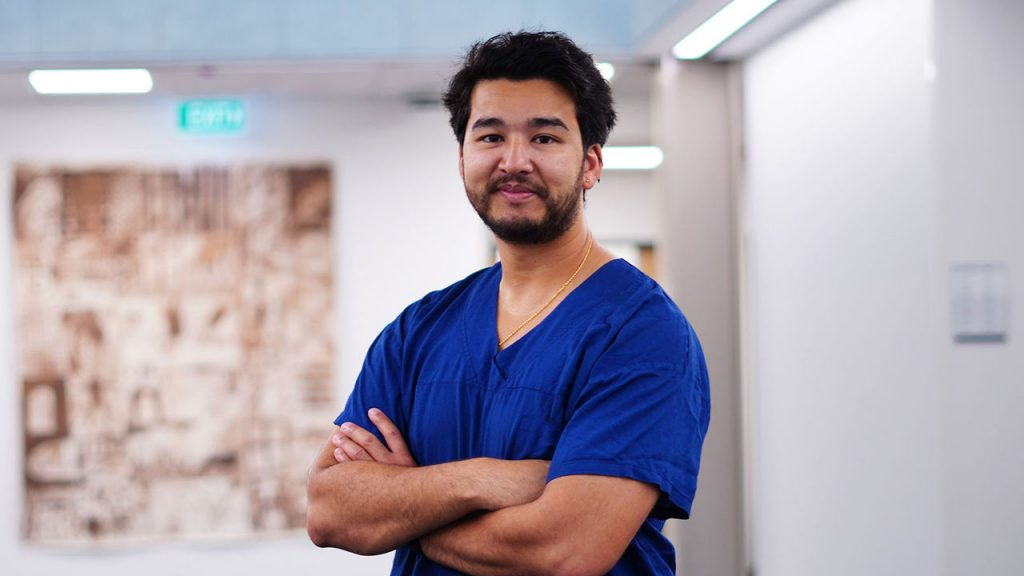
Trainee vascular surgeon Dr Anantha Narayanan has explored the issue in his Background Auditory Conditions in Healthcare (BACH) study, interviewing three surgeons, two anaesthetists and two theatre nurses to find out what the surgical team thought and how they coped.
One participant — clearly no fan of Maria Callas or her mastery of agilità — said: “The surgeon who used to play classical opera… No-one else liked it. He did. And it sounds terrible… It’s all that screaming women stuff. Soprano… And after a while, you just turn it down or turn it off.”
Without naming names, another participant reported an aversion to ’90s female ballads being played in theatre on repeat.
“And country music from an American surgeon was also quite painful when it was on for about 15 hours.”
Dr Narayanan’s study, published in Scientific Reports, examined the way decisions around music selection reflected underlying hierarchies, where the “authority to choose, change or control the music frequently aligned with seniority or the operating surgeon”.
“The more arrogant will just turn it on, straight on, like they own… It’s sort of a power thing,” one participant said.
Given this, some staff felt reluctant or unable to express their own preferences or discomforts: “You suck it up, and it’s fine. I’m an assistant, and I’m there to assist. I’m not there to be in charge. It is what it is, and I accept it graciously.”
But the author did report there were those who encouraged shared decision-making. And there were also examples of the power of music bringing teams together.
“There was a point in the afternoon where three circulating nurses were all having a little dance in the back and everyone was just having a good time and it was pleasant. Everyone was on board, things were on track and it was a nice time.”
Patients under local anaesthetic have also benefited, the interviewees reported. However, caution needed to be exercised when embracing too much patient-centred care.
One doctor described a young teenage boy undergoing a minor procedure who asked for a rap track.
“And it was quite appalling in terms of the language that was going on. And I was quite shocked while he was going off to sleep,” the doctor noted.
What were the conclusions? Unfortunately, there were no top ten track suggestions to ensure harmony among the team nor suggestions as the procedures became more complex and mistakes risky, say during thoracic aortic dissection repairs.
But Dr Narayanan, himself a saxophonist, said the results showed the need for “thoughtful and contextual” use of music.
“This is especially important when led by those who have environmental authorship, who should act with sensitivity to situational factors, team dynamics and individual auditory needs.”
AusDoc’s top 10 operating theatre classics:
- Wake Me Up Before You Go-Go — Wham!
- Pump It Up — Elvis Costello
- I’ve Got You Under My Skin — Frank Sinatra
- I Still Haven’t Found What I’m Looking For — U2
- Stayin’ Alive — Bee Gees
- Blood on the Tracks — Bob Dylan
- The Barber (surgeon) of Seville — Rossini
- The First Cut Is the Deepest — Cat Stevens
- Comfortably Numb — Pink Floyd
- You’re So Vein — Carly Simon
More information: Sci Rep 2026; 7 Jun.