‘They told me I was throwing my career away’: Dr Nick Lintzeris on his cinderella specialty
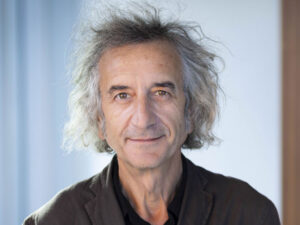
As part of our tributes to the doctors awarded honours today, we profile Professor Nick Lintzeris whose work over the last 30 years has helped transformed lives of thousands of patients across Australia.
When Professor Nick Lintzeris chose addiction medicine, he was widely told he was throwing his medical career in the bin.
It was the early 1990s. Addiction medicine was not a recognised specialty, there was no clear training pathway and drug and alcohol services back then sat well outside medicine’s prestige economy.
Junior colleagues were openly horrified.
“’You only work with drug users?’ they said. But I was interested in that intersection between criminology and medicine, and clearly, that touched on drug addictions.
“A position came up at a government drug and alcohol service in Victoria. I was curious, so I applied. It turned out I was the first and only applicant, even though it was the third time they had put out the advert.”
He started work in 1991. Were these enlightened times? No, not really, he says.
By 1986, Australia was officially wedded to the concept of harm minimisation. In theory, needle exchange programs were legal. In reality, the treatment philosophy within the services remained deeply punitive.
“There was a moral logic where, if you ended up in trouble with your drinking or drug-taking, well, that was your fault.
“If you could not get clean, that was your fault, too. Even the language that we would often use reflected this mentality.
“Clean? What, as opposed to being dirty?
“And if people did not get better, then under the care model, you could be kicked out of the program. If you continued to use drugs or drink, then you would be discharged.”
This was strange medicine: “Unlike epilepsy or diabetes, addiction was treated as a problem of character rather than health.”
What surprised him most, however, the thing that seduced him when it came to his chosen vocation, was not the system but the patients.
“They were rational, they were not psychotic, they were not mad, sad or bad. They were usually people just with a drug problem, and clinically, they were easy to work with because you have those conversations about goals, work, families and futures.”
He talks of two revolutions in addiction medicine since he made it the heart of his professional life.
One was witnessing what happened in the context of HIV medicine during the darkness of the 1980s.
It, too, was marginalised, subjected to the deep prejudice of wider society against homosexuality and its entrenched moral prudery when it came to sex.
“The ’80s were pioneering for us,” Professor Lintzeris says.
“The changes in HIV medicine were led by a politically savvy, well-connected group of activists who knew how to press the buttons; they knew how to make things work.
“They were middle class and educated.
“But they started a domino effect in other areas of healthcare, like mine, where you are facing stigma and discrimination.
“It is still a very recent thing for us, the past 10 or 15 years perhaps. But it has echoed what happened in HIV.
“We got paid consumers working within services, people with lived experience of the issues those services were dealing with.
“They have had a much greater say as to the purpose of treatment, the aim of treatment and how we engage and connect with patients.”
They have also eroded (although certainly yet to eradicate) the moral judgements cast by society when it comes to treatment of alcohol and drug addictions.
The other change has been the medications, a change Professor Lintzeris has played a leading role in bringing about and one of the biggest reasons why he is in the AusDay honours list. The widespread use of new treatments like long-acting injectable buprenorphine.
This is not so much about radically new modalities in the medications themselves as seen in say oncology.
“It is the development of medication that allows patients with addiction issues to be treated in the community just like any other person.
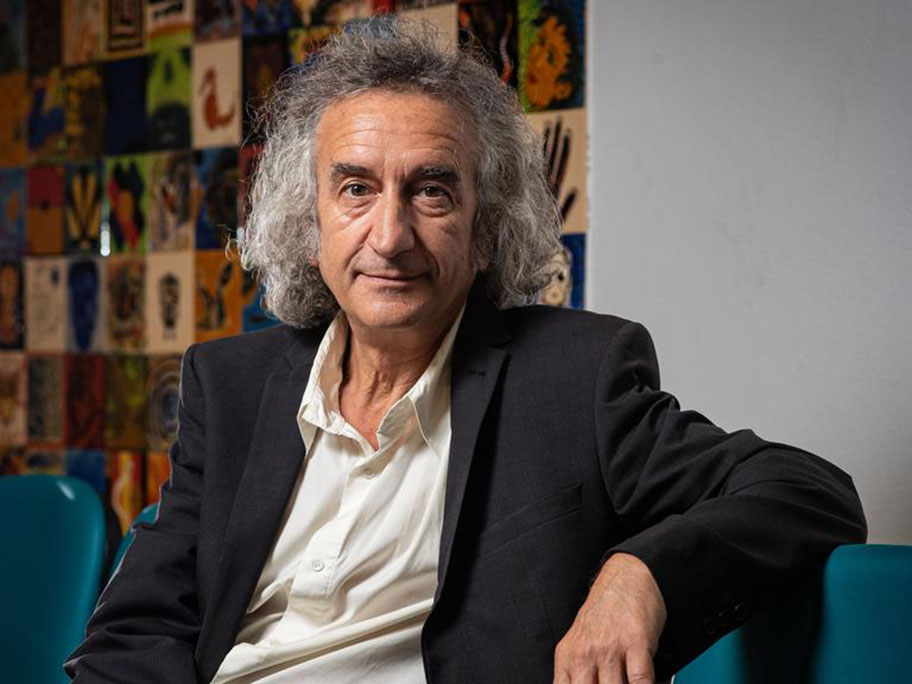
“These medications are safe and they work — treatments like methadone and buprenorphine, both medications used for either heroin addiction and chronic pain treatment.
“They allow patients to function, hold down a job or stay home looking after the kids. You can be a bus driver, a teacher or a reporter for a medical magazine. That is something new.
“The dominant model of drug and alcohol, historically, has been similar to mental health models described by the philosopher Michel Foucault: a means of protecting society from the so-called mad and bad.
“So as a drug addict, you need to be detoxed, cleaned and then you need to go to rehab.
“I will send you far, far away because you need to be re-educated and reprogrammed before you can come back as a normal person into society.”
He says, when he started work in the sector, about 5000 people were in methadone treatment. Now, between 65,000 and 70,000 people are being treated in the community with methadone and buprenorphine.
“There are more people in methadone and buprenorphine treatment on any given day than all other forms of treatment for drug and alcohol combined. That is a paradigm shift to me.
But enticing junior doctors to the so-called Cinderella specialty? What is the pitch?
“You know, a lot of people say, ‘How can you work with drug addicts? That must be exhausting. You know they do not get better.’
“Actually, our outcomes for patients are as good as, if not better than, most chronic disease outcomes. When was the last time a rheumatologist cured someone?”
He laughs as he says this, but the point is serious.
“Often, when chronic conditions do get better, it is because they have resolved spontaneously or a surgeon came along and cut something out — to get rid of that inflamed gallbladder.”
So when it comes to the young generation of doctors, he says he tells them that addiction medicine sits at the crossroads of everything medicine claims to value.
It is deeply clinical: you see patients, build relationships and make tangible differences. It is also public health medicine, grounded in equity, social determinants and justice. It allows doctors to move between clinical care, research, teaching and policy.
“You cannot prescribe your way out of addiction,” he says. “And to me, that complexity — far from being a drawback — is the field’s greatest strength.”
Given the role of health’s social determinants on the lives of his patients, Professor Lintzeris does not shy away from the politics.
You suspect it would be impossible for it to be otherwise.
He is blunt. The prohibition approach to drugs, still the dominant ideology, has failed.
“The whole premise of prohibition, the whole fundamental philosophy underlying the axiom of prohibition is one of stigma and discrimination.
“You need to make the drug user ‘the other’. There are normal people, and then there are drug users.
“Decriminalisation does not change the narrative, either. Yes, it is legal to use the drug, but it is illegal to buy it, and it is illegal for you to access it. So you still have to engage with illegal communities.
“We have taken the approach that the best way to regulate drug use is to leave all manufacturing of the drugs to criminal gangs. We will then leave the marketing up to criminal gangs, and we will leave the distribution to criminal gangs.”
He adds: “Criminal gangs selling some cocaine might add in fentanyl, causing some people to die. As a society, we do not generally think that is a good idea. Cocaine should just be cocaine.
“We should not have huge dose fluctuations either so people are not accidentally overdosing.
“Do we have the technology to do that? Absolutely we do. Can we make drugs? Of course we can. Can we distribute the drugs? Yes, and we can think about ways to do that.
“But at the moment, we are leaving these issues to criminal gangs.”
Until the overriding ideology changes, he says society is stuck in a punitive loop: “Criminal gangs are profiting, and we are having to spend all this money in society chasing people because they use drugs rather than healing them.”
Conjoint Professor Lintzeris was awarded an AM today in the Australia Days Honours list for his significant service as a clinical researcher in addiction medicine.