‘You don’t heal, you don’t recover’: Emergency doctor on the death of his teenage son
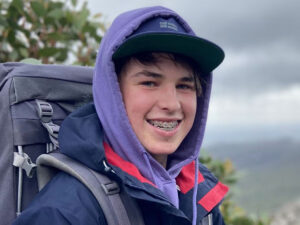
The story of what emergency specialist Dr Ben McKenzie and his family have endured with the death of their teenage son is tragic.
Four years ago, Max accidentally ate walnuts, provoking an anaphylactic response that would have a fatal outcome 15 days later.
The 15-year-old arrived at Melbourne’s Box Hill Hospital critically ill in August 2021, yet delays in securing his airway and missed opportunities for earlier intervention quickly raised questions about the emergency care he received that day.
In fact, as we will explain, Dr McKenzie found himself trying to save his son’s life, taking part in his resuscitation, assisting in a cricothyroidotomy and carrying out CPR in a hospital ED bay.
“You don’t heal,” he tells AusDoc about what happened. “You don’t recover. You have to learn to live with it. It’s a lifelong burden and a lifelong pain.
“It’s the trauma of being there, the trauma of having to resuscitate Max and then work in that same environment. It’s lifelong for me.”
On the day Max developed an allergic reaction, Dr McKenzie was doing a retrieval shift with Ambulance Victoria in South Melbourne. He received a phone call from his wife Tamara saying Max was starting to have a reaction.
Knowing his son had anaphylaxis and asthma, Dr McKenzie told Tamara to call triple zero and Max gave himself his own EpiPen.
Not long after, another message came from Tamara, saying Max was in pre-cardiac arrest as the ambulance approached the hospital.
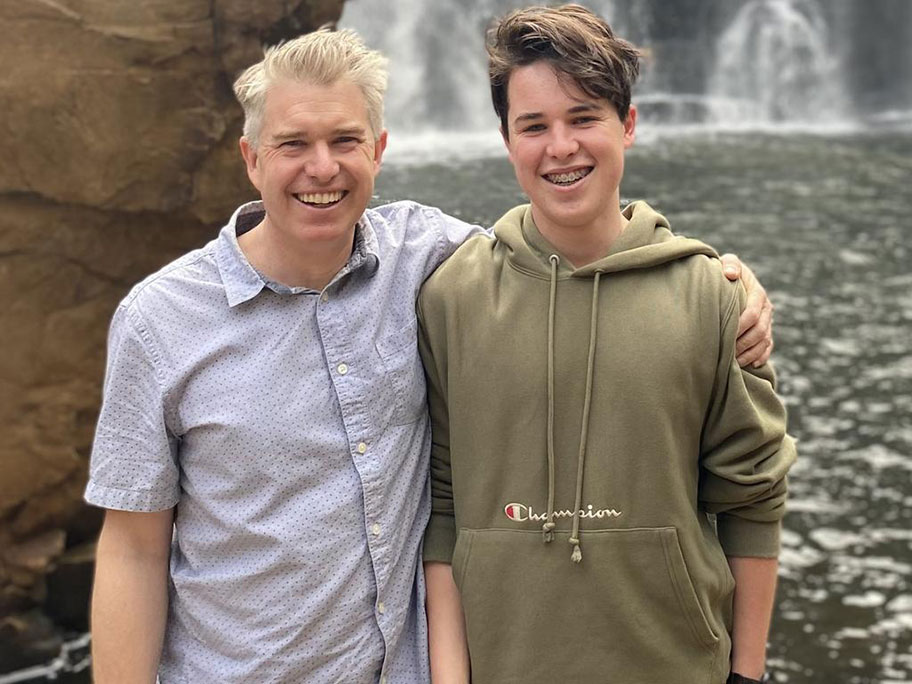
Dr McKenzie said the records showed his son had a normal heart rate and blood pressure as he arrived in the ED cubicle, but had become unconscious from asthma symptoms shortly before.
It took him 20 minutes to travel from South Melbourne to the hospital and when he arrived Max was still not intubated.
“Max didn’t have a heartbeat. They were doing CPR and I couldn’t quite believe that there was no endotracheal tube in,” he said.
“It was chaotic. The team leader had swapped around, they’d called a code blue instead of acting, and there were so many people in the room.”
An intensivist began a cricothyroidotomy from over the top of Max’s head and with no-one helping to the side, Dr McKenzie helped achieve the airway by pushing his finger through his son’s cricothyroid membrane.
The bougie was passed through and a tube was inserted, and following the cricothyroidotomy, Max’s circulation returned.
“Guidelines say intubate early after an asthma arrest and preferably before, so the treatment wasn’t controversial. It’s just that they took a long time to do it,” Dr McKenzie says.
“It was 23 minutes in total from the time Max arrived to the time the breathing tube was inserted. That’s longer than Max’s favourite TV show, Brooklyn Nine-Nine.”
The coroner’s report on Max’s death was handed down earlier this month, and while it highlighted deficiencies in his care, it is important to stress that it did not deliver the closure Dr McKenzie and his family were hoping for.
The coroner David Ryan found that Max had arrived at the hospital critically ill — unconscious, not breathing and in peri-arrest.
He said that medical staff did not attempt to intubate for 15 minutes after he went into cardiac arrest. A number of attempts then failed, and a video laryngoscope was never used.
Immediate intubation was Max’s best chance of survival, but the clinicians prioritised stabilising him as they were “legitimately” concerned the procedure could trigger a cardiac arrest, coroner David Ryan said.
“However, I consider that the risks associated with intubation were outweighed by the risk of delaying the procedure, which was the only treatment option that was likely to be effective given Max’s perilous condition,” Mr Ryan wrote.
The coroner identified other clinical issues in Max’s care, including that Ambulance Victoria paramedics should have delivered more adrenaline sooner.
But he said he was still not satisfied that Max’s death was preventable — a view that Dr McKenzie rejects.
Mr Ryan also disputed the timing of Tamara’s recollection of her final words with Max.
She was in the front seat of the ambulance when it pulled away from their house for the five-minute journey to the hospital.
“Tamara has a vivid and recurring memory that around this time, Max screamed out that he was going to die and she sought to reassure him,” the coroner said.
For the coroner, this interaction occurred earlier, before the ambulance had left the house.
This is important because it has a crucial impact on exactly when Max was considered to have lost consciousness — and whether his death could have been prevented, Dr McKenzie says.
“Tamara was devastated that the coroner didn’t believe her,” he says.
“Both Tamara and the graduate paramedic both say the same thing, which aligns perfectly with the ambulance monitor showing when Max had his respiratory arrest and brief bradycardia that resolved 49 seconds before it pulled into Box Hill Hospital.
“The coroner unfortunately isn’t medically trained and it’s unclear why he didn’t believe the women who were there and supported by objective monitoring,” Dr McKenzie says.
As the inquest found, despite the various failures in care, Max’s circulation was restored and he was transferred to The Alfred’s ICU on ECMO, which was weaned.
He was then transferred to the Royal Children’s Hospital when it became apparent he had a hypoxic brain injury.
At this stage, Max could hear and follow simple directions, such as sticking out his tongue, but he had lost the use of his arms and legs because of the injury to his basal ganglia.
“We were filling out the disability paperwork for Max. We thought we were going to be living with a child with a disability,” says Dr McKenzie. “And then he died unexpectedly.”
Max had a fatal cardiorespiratory arrest two weeks after he arrived at Box Hill Hospital.
Given what happened, does Dr McKenzie feel anger at the clinicians involved in his son’s care?
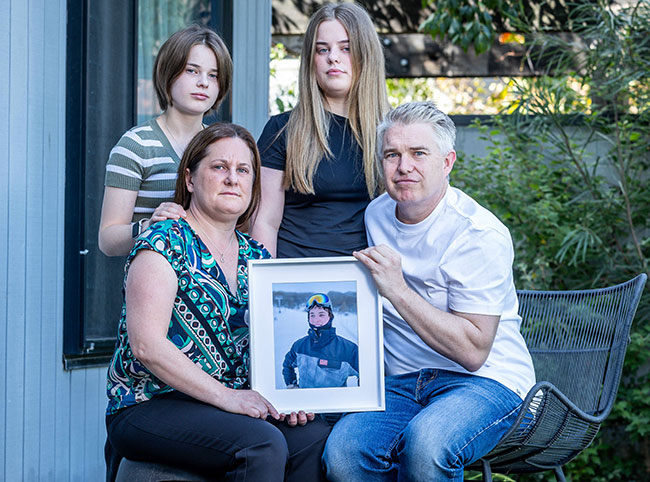
He says he has sympathy for most of the doctors. He also believes meaningful change depends on acknowledging errors.
“As clinicians, we need to be really good at owning our mistakes, for everyone’s sake — for the next patient and for ourselves — because it’s the only way you can heal,” he says.
“If you just try and justify it, then you’ll never heal as a clinician, and the system will never get better”
It was this desire to improve critical care that drove Dr McKenzie to his next step.
“It wasn’t until 18 months after Max died that I could get out of bed and even contemplate doing something to make the system better,” he says.
His answer was to launch a campaign aimed at reducing preventable deaths from anaphylaxis and asthma which focused on offering clearer guidance for clinicians managing severely hypoxic unconscious patients.
He developed the ‘AMAX4 — every second counts’ algorithm. It sets out a time-critical sequence for patients who arrive in the ED unconscious and needing assistance with breathing.
The ‘4’ refers to the maximum of four minutes to secure an airway and avoid brain injury. The other aspects are: adrenaline, muscle relaxant, airway with endotracheal tube, and oxygenation within that time frame.
Dr McKenzie has since presented the algorithm at emergency colleges and conferences around the world.
“It gives doctors a strategy to say, ‘I gave adrenaline, I secured an airway, I oxygenated quickly and safely — I did everything I could for the patient, and hopefully I will get a good outcome when they wake up,’” he says.
“Already I’ve had some amazing messages from people who’ve saved a life using AMAX4. That makes it more validating.”
But losing Max has also given Dr McKenzie insights into the painful experience faced by patients and their families.
“We all make mistakes. Doctors are only human,” he says.
“But I think we should remember that our suffering as clinicians when we make mistakes is minuscule compared to what the family goes through.
“I’ve seen it from both sides — as a doctor who’s made mistakes and as a father who’s lost a son.”
Dr McKenzie has returned to one shift a week in ED and is midway through a PhD examining cases like Max’s.
He has reviewed every anaphylaxis death in Australia over the past two decades, saying that he has found that most young patients die from bronchospasm, including all food allergy cases.
He is also researching barriers to time-critical intubation in EDs and ambulance services, hoping the work spares another family similar grief.
“Max was a great kid,” he says. “He was such a good person to chat to and he loved life. If he could fit more days into a week and more hours into a day, he would love that. He threw himself into everything.
“He had beautiful friends, and they’ve all stayed close. It’s really hard watching those kids grow up, but it also reminds us what a good kid Max was.”
Speaking of his struggles to return to his emergency work, he says: “After the past few years, in some ways I feel I have as much in common with PTSD patients in the ED who are trying to cope with life.
“Now I understand how damaged we can become as human beings after life-changing trauma.
“I relate to them in a way I never did before.”
More information: AMAX4 Every Second Counts website