Dr Max Kamien: GPs do not truly know their patients until they see inside their homes

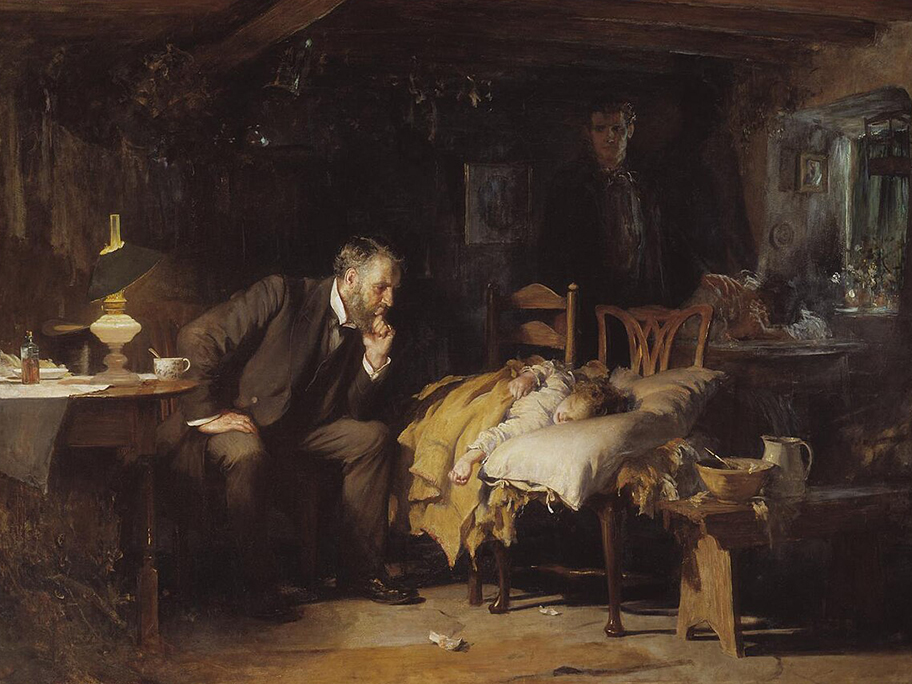
GP home visits seem to be reaching endangered status, falling by 85% in 30 years, a recent review of Medicare data has revealed.
While telehealth has partly filled the gap, can it replace in-person care for vulnerable patients, or replace the insights for GPs simply from seeing the real world circumstances of their patients’ lives for themselves?
Here, Emeritus Professor Max Kamien, one of Australia’s most respected GPs, explains the consequences of the collapse for GPs and patients.
I graduated in 1960. House calls were part of every GP’s day.
Even specialists would occasionally visit patients at home if requested by a GP, and the AMA issued guidelines on the etiquette to be followed on such occasions.
In my 59th year of doctoring, I was still making house calls. I regarded them as a rare privilege.
What other profession is welcomed into so many people’s homes?
I visited places that even the police and Mother Teresa (who was in Bourke only four months before I arrived) hesitated to enter: humpies on the Bourke Aboriginal Reserve and bikies’ clubhouses.
I visited the homes of the ultra-rich who, worryingly, “liked the cut of my cloth”. I would be guided past CCTV cameras and security doors designed to defeat the most professional thieves.
I have long maintained that a GP cannot truly claim to know a patient unless they have made at least one home visit.
Poverty and family dysfunction are easy to diagnose. Insecurity and pretension among the nouveau riche are less so.
I once visited a wealthy woman with recurrent episodes of acute anxiety. She had left school at 14, grown up poor and was now financially rich. The walls in every room were lined with books. I took one down. It was a block of wood covered with a dust jacket.
Another patient I diagnosed with Munchausen syndrome. Her daughter was a frequent attendee because of recurrent episodes of blurred vision in one eye or the other. The pupil of the affected eye was always dilated, yet she seemed curiously unconcerned.
One day the mother requested a house call for renal colic. In the front garden stood a tree with black berries: Atropa belladonna, the deadly nightshade. The daughter remained a regular patient but never again presented with a dilated pupil.
In 1978, I established a practice in a housing commission suburb of about 7000 people that had been unable to attract a GP for seven years. I made many house calls, drank many cups of tea, ate desserts such as baklava and listened to people’s stories.
Their adherence to my prescriptions was high.
I once complimented a Mauritian woman on her beautiful purple and orange bougainvillea vines. She told me that tea made from the coloured bracts was traditionally used to treat type 2 diabetes. I found I achieved better results with Mauritian patients when we agreed to combine their traditional treatment with my more modern one.
Patients were grateful for home visits and rarely abused the service. A GP’s reputation was enhanced by availability and demeanour.
I recall a 2am home visit to a febrile five-year-old boy with acute tonsillitis.
His grandmother told me that when her daughter had been five, she too had been seriously ill, and she had called Dr Peter Tunbridge. He diagnosed tonsillitis and left penicillin. She apologised for disturbing him because he was due to play league football for Claremont later that day.
He replied that if a mother was worried about her child, she was usually right — and that was more important than football.
So what happened to house calls?
GPs — and their wives, who in past decades often took the calls — grew tired of doing out-of-hours visits then fronting up to work the next day.
On-call rosters were introduced, sometimes involving several practices, but these rarely worked well. Properly organised locum services gradually replaced them, and by about 1990 most after-hours visits were handled by deputising services.
The demographics of general practice also changed.
Many women were attracted to the specialty because it allowed more control over working hours, but their safety concerns about making house calls were also real.
Another factor was the growing emphasis on work–life balance. US data showed that doctors — particularly family physicians and surgeons — had high rates of burnout, alcoholism, self-medication and suicide. Advocates argued that doctors protecting their own wellbeing was a professional responsibility.
I think the pendulum has swung too far.
It is now rare to find a GP willing to make a house call even for a long-standing patient living nearby, even for patients with a walking frame or a mobility scooter.
There are many competent GPs within five kilometres of my home, including former students who kindly say they would be delighted to look after me.
None would commit to a house call if I were in real need.
But the main reason for the decline is financial.
House calls — like visits to aged-care homes — are time-consuming and often physically demanding. In the time it takes to travel to and see one patient at home, a GP might consult with 10 patients in the surgery.
If reimbursements for home visits were to exceed the hourly income from clinic consultations, I suspect house calls would return.
I can readily imagine federal Health Minister Mark Butler and his predecessors laughing at that conclusion. For governments, Medicare is not about high standards of medical care. It is cynical politics — a way to win votes on the backs of frustrated, underfunded and long-suffering GPs.
Just before my wife prevailed on me to retire, I visited a patient I had cared for over 48 years.
I had looked after four generations of his family, including his wife, who lived for a decade with motor neurone disease and described herself as “a talking head”.
Ten days earlier he had suffered an epileptic seizure. A scan revealed an inoperable grade 4 glioblastoma. He asked if there was any chance of a cure. I told him there was not.
He shook my hand and said, “Thank you. You were always there for us.”
We both shed a tear.
Sadly, experiences like that are becoming rare.
Emeritus Professor Max Kamien is a senior honorary research fellow at the University of WA.
Read more: ‘Being an aged care doctor is not about being a saint — the rewards are there in front of you’