Specialist fees don’t buy a gilded life — just opening my clinic doors costs $500,000
Every few months, the same refrain returns, polished for maximum effect and delivered with a confidence that suggests it must surely be true.
Specialist fees are out of control, doctors are overcharging, the system is being gamed.
It is a seductive narrative. It is also profoundly detached from the lived reality of those of us inside the system.
Running a specialist practice in Australia in 2026 is not a gilded existence; it is a relentless exercise in staying afloat against a tide that has been rising for more than a decade.
By the time indemnity insurance is paid, rent is met, staff are remunerated properly, accreditation and compliance boxes are ticked, technology is maintained, and the thousand small but essential costs of modern medicine are absorbed, you are staring down something approaching half a million dollars a year simply to keep the doors open.
That is before a patient walks through the door.
Against that reality sits an MBS that has effectively stood still. Inflation has hollowed it out to the point where it no longer reflects the cost of providing contemporary care.
So a gap emerges, and it is immediately framed as greed.
Not as arithmetic.
Not as the predictable consequence of a funding model that has been allowed to drift further from reality.
What is rarely said is that the overwhelming majority of doctors charge at or below the AMA’s recommended rates, a schedule that reflects an attempt to define what safe, sustainable, high-quality care should cost.
There are outliers, and they should be dealt with firmly, but to build an entire narrative around a small number of egregious examples is not reform, it is theatre.
We now practise under a level of scrutiny that has lost its sense of proportion, where judgement is interrogated in isolation from context.
I was recently asked to account for issuing a prescription on Easter Sunday in a rural setting, an emergency script for my mother-in-law’s Parkinson’s disease and dementia medication. She is not technically my patient, and by the strictest interpretation of the code, I had crossed a boundary.
But medicine does not occur in the sterile confines of codes; it unfolds in real time, in imperfect circumstances that demand both knowledge and humanity.
In that moment, I did what any reasonable doctor would do. And yet even those moments now carry a low-grade tension, a sense that acting in good faith may still require justification.
Doctors and nurses do not arrive at work calculating margins; they arrive because they care. That care manifests in missed family dinners and interrupted sleep, in the emotional residue of days that do not end when the clinic closes.
On Tuesday night, it was my eldest daughter’s birthday. We were at the table, candles lit, the small rituals that families cling to in busy lives playing out as they always do. And then the phone rang several times, and both my wife and I had patients in hospital who needed to be seen. We left.
There is no softer way to say it.
When we returned later, the cake was cut, the moment had passed, and my daughter, with tears running down her face, said words that will stay with me: “You care more about your patients than you do about us. They will not be at your funeral … we will be there.”
It is a brutal sentiment. It is also understandable.
Those patients we saw that night were not billed. Not because of policy or optics, but because it never even entered our minds. We were there because they needed us at a time when they were vulnerable and alone.
That is the part of this conversation that never seems to make it into the headlines.
My father-in-law practised as a GP for more than half a century. He spoke for years about owning a Mercedes-Benz as a reward for a life of service.
When he finally bought one, he would park it streets away from his own clinic, even into his 80s, because he was concerned about what his patients might think.
That is the profession being discussed. A profession that has internalised scrutiny to the point of self-consciousness, that has absorbed rising costs, expectations and oversight without protest for longer than is sustainable, that continues to show up because the alternative is unthinkable.
This is not a plea for sympathy. We chose this life. We chose to carry responsibility, to practise our craft properly, to be there when it matters most.
There is honour in that choice.
But there must also be honesty.
There are limits, and we are approaching them.
If we continue to cast doctors as adversaries while leaving the underlying funding model untouched, we should not be surprised when the system begins to fray. We invest millions in training specialists only to risk losing them to systems that recognise their value rather than question it at every turn.
There is a better way to do this, one that acknowledges complexity, addresses genuine excess without tarring an entire profession, and restores honesty to the conversation about what modern healthcare actually costs.
Because turning the public against its doctors may offer a momentary political advantage, but it comes at a price paid slowly and far from the headlines.
We are better than this.
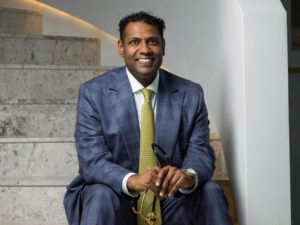
Associate Professor Vinay Rane is an obstetrician, gynaecologist and lawyer based in Melbourne.
He is a founding director of Melbourne Mothers and Thrive Fertility and holds leadership roles on the councils of AMA Victoria and the National Association of Specialist Obstetricians and Gynaecologists.