We’ve made academic research the ticket to specialty training — it’s costing us top doctors
It’s been accepted, mostly without question, that completing a research project or presenting at a conference is a must for junior doctors applying to join a specialty training program.
But with fierce competition for a handful of training places, some doctors are worried that a record in research is now valued higher than clinical skills.
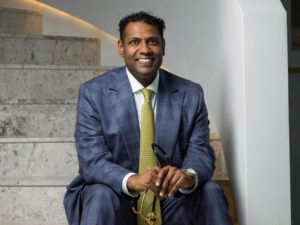
Obstetrician Associate Professor Vinay Rane says the requirement is scandalous.
We are currently exiling our best doctors from the bedside to satisfy an institutional obsession with lacklustre science.
The clinician–scientist is a rare and brilliant unicorn and represents a combined aptitude that is impossible to manufacture at scale. Yet, in a desperate rush to quantify excellence, we have treated this outlier as the mandatory standard, turning a noble ideal into a professional chokehold on the very people we need most at the bedside.
We have built a system that treats the act of healing as insufficient and the production of forgettable data as the only valid currency for promotion.
I want the doctor who looks after my family to be an expert in clinical medicine, a master of the physical exam, a keen interpreter of subtle symptoms and a steady hand in a crisis.
These are skills honed through repetition, presence and a relentless volume of patient encounters. They are the result of thousands of hours spent watching how a disease moves through a human body, not how it looks on a graph.
Yet, the current ‘publish or perish’ mandate forces these gifted clinicians out of the consulting room and into the laboratory, where they spend months wading through administrative sludge to draft posters for conferences they have no desire to attend.
We are effectively taxing them for their clinical focus, forcing them to pay in time and energy for the privilege of continuing to treat patients.
We have all encountered that one doctor, with diagnostic instinct, who stays late to talk a family through a terminal diagnosis but who somehow ‘missed out’ on their specialist training program.
When you pull back the curtain, the reason is almost always the same: they did not ‘have enough research’.
They were too busy at the bedside, too committed to the craft of care, and we punched them for it.
We have traded a generation of master clinicians for a mountain of forgettable PDFs and conference posters, effectively exiling our most empathetic healers because they refused to play at being part-time academics.
This mandatory dabbling is a period of forced deskilling that also undermines the work of those who are actually good at it.
We already have exceptional researchers with medical backgrounds, individuals with a natural gift for both the ward and the workbench. As a clinician, my job is to respect their expertise by implementing their high-quality findings into practice.
When we force every doctor to produce noise, we dilute the signal of the experts. We create a cluttered landscape where transformative work is buried under the weight of reluctant, average submissions.
Furthermore, we must face a modern reality, which is that the greatest breakthroughs of the next decade will likely come from technology whiz kids, the data scientists and algorithm experts who understand computational power in ways a medical degree simply does not cover.
These specialists possess the tools to solve the big data puzzles of modern pathology. By forcing every doctor to play at being pretend researchers, we ask them to do a secondary job that other minds are already doing better.
There is a profound, understated virtue in being an exceptional clinician. It is a pursuit that demands a lifetime of focus.
By making research a mandatory discriminator, we risk filtering out the people who possess the diagnostic grit and the essential soft skills that patients actually need.
We are signalling to the next generation that the vital work of saving a life is worth less than a line on a CV. It is time to decouple clinical progression from academic output.
Let the real innovators and visionaries pursue the breakthroughs, and let the clinicians focus on the cure.
Associate Professor Vinay Rane is an obstetrician, gynaecologist and lawyer, based in Melbourne.
He is a founding director of Melbourne Mothers and Thrive Fertility and holds leadership roles on the councils of AMA Victoria and the National Association of Specialist Obstetricians and Gynaecologists.