Measles immunisation for travel: how young should we go?
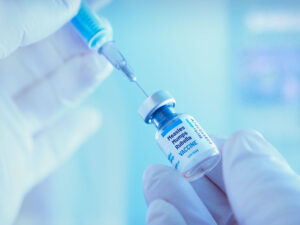
- There have been significant outbreaks of measles in Australia in 2025, predominantly in NSW, Victoria and WA.
- Australia is one of many countries globally that are falling short of optimal MMR vaccine coverage.
- Cases relating to travel to areas with higher rates of measles infection continue to be reported, with recent cases in SA and WA being linked to travel to South-East Asia.
- Early vaccination of infants travelling to high-risk regions can be considered, with Australian guidelines supporting vaccination from six months, and some expert discussion about vaccination from as early as four months.
- The pros of earlier protection from potentially lethal infection must be weighed against the cons of possible reduced immune response to future MMR vaccines.
- It is important to also ensure appropriate coverage has been provided to adult travellers to areas of risk.
Measles has been in the news with outbreaks occurring globally at levels not seen for decades.
Worldwide, there were an estimated 10.3 million cases of measles in 2023, a 20% increase from 2022, according to estimates from the WHO and the US Centers for Disease Control and Prevention.1
The WHO estimated that 107,500 people died from measles in 2023, with the majority of deaths occurring in low-income countries. However, with falling vaccination coverage in developed countries, measles outbreaks are possible when travel-related measles cases are in contact with at-risk populations.
In 2019, the US lost its status as a country where measles had been eliminated, following a large outbreak in New York (nearly 1300 cases) and cases in 30 other states.2
Australia experienced a significant measles outbreak in the early 1990s with over 2000 cases in both NSW and Queensland and smaller numbers in other states. Although not reaching these previous case numbers, 2025 has seen significant outbreaks, predominantly in NSW and Victoria, and more recently in the Pilbara region of WA.
Countries in our region where Australians like to travel, such as Vietnam, Cambodia, Laos and Malaysia, are also experiencing outbreaks, and recent cases in SA and WA have been linked to travel to Bali.3-5
Disrupted protection
The WHO recommends that two-dose vaccination coverage must be above 95% to prevent outbreaks.6 However, many countries, including Australia, are falling short of the optimal level of uptake.
Immunisation coverage has been falling since 2020. According to the National Centre for Immunisation Research and Surveillance Annual Immunisation Coverage Report 2023, the proportion of two-year-olds who had received two doses of the measles vaccine was 93%.7
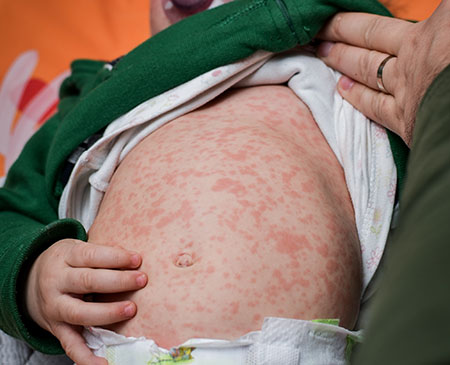
Decreased levels of on-time childhood vaccination are a worrying post-COVID-19 pandemic phenomenon. In 2024, one in three children was late to receive their first dose of the MMR vaccine.8
Given the falling and delayed vaccine coverage and the resumption of international travel, there are significant numbers of Australian children at risk of contracting measles.
Exposure can occur with travel to a high-risk destination, contact with an infected returned traveller, or from measles spreading in a suboptimally vaccinated community.
One of the complications of measles is sub-acute sclerosing panencephalitis (SSPE). The risk of this condition is higher (18 cases per 100,000) if the measles infection occurs in a child aged less than five. The latent period for development of SSPE after measles can be as long as 7-10 years, and the clinical course is devastating, with no prospect of survival.9
Timing of vaccination
In this context, there is lively discussion about the timing of measles vaccination.
Currently, the Australian schedule for routine measles vaccination is the MMR vaccine at 12 months and the MMR-varicella vaccine at 18 months. In the context of low risk of exposure prior to vaccination, this schedule makes sense.
The reasoning includes that immunisation may be less effective if given at a younger age. For example, a study from the Netherlands found that children vaccinated before 8.5 months of age exhibited faster antibody decay and lost their protective neutralising antibody levels over six years.
This led the authors to conclude that routine vaccination of infants under 8.5 months of age may lead to blunted measles-specific antibody responses to subsequent MMR vaccination.10 Possible explanations are suboptimal vaccine response at a younger age and/or persisting maternal measles antibodies that may interfere with vaccine response.
In relation to children aged less than 12 months and travel, the Australian Immunisation Handbook states that “infants travelling to countries where measles is endemic, or where measles outbreaks are occurring, may receive [the] MMR vaccine from as young as six months of age, after an individual risk assessment”.
A case for early vaccination
Dr Myra Hardy, a paediatric infectious diseases physician and postdoctoral researcher in the Tropical Diseases group of the Infection, Immunity and Global Health research area at Murdoch Children’s Research Institute, made the case for considering earlier immunisation at the Southern Cross Australasian Travel and Tropical Medicine Conference held in Melbourne in September 2025.
One of the questions raised by Dr Hardy was: are infants aged under six months really protected by maternal antibodies? The answer seems to be, frequently not.
A systematic review conducted in low- and middle-income participants found measles antibody seroprevalence declined to 30% at four months and 18% at seven months.11 This implies that children aged under six months can be susceptible to infection if travelling to an at-risk destination.
The consequences of measles infection can be devastating. In addition to SSPE, other serious complications include pneumonia and encephalitis.12
Given this, Dr Hardy questioned whether we should be recommending the first dose of MMR earlier than six months if children are travelling to areas of risk. Reasons not to do so include the possibility of reduced long-term immunity, even after boosting, but the counter argument is the need to provide timely protection from this potentially fatal disease in settings of increased risk.
Of note, in New Zealand the recommendation is that the first dose of MMR can be given from four months if the child is travelling to a measles endemic country. This recommendation followed a major outbreak in 2019-20, which infected more than 2000 people in New Zealand and spread to Samoa, where 5705 cases and 83 deaths occurred.13
In practice
Discussion among local travel medicine-interested practitioners following Dr Hardy’s presentation demonstrates that a substantial number of the Australian-based practitioners are presently offering off-label measles immunisation to children from the age of four months based on individual risk assessment and with informed consent from the parents. The cost to the family is $25-$30 per dose.
Do not neglect the adults
It is also important to remember and check MMR vaccination status for adult travellers. The Australian recommendation is that travellers born during or since 1966 should have received two doses of measles-containing vaccine. In New Zealand, that recommendation is also for two doses of measles-containing vaccine, but for adults born on/after 1 January 1969.13
Professor Nick Zwar is a GP and executive dean at the faculty of health sciences and medicine, Bond University, Gold Coast, Queensland.
References on request from Dr Kate Kelso.