A career less ordinary: Dr Warwick Middleton’s dive into a sewer trench to save a life
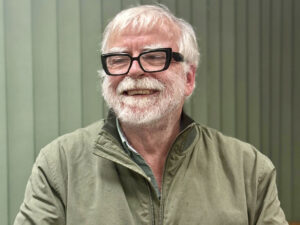
The King’s Birthday Honours were announced today.
Here, we profile a pioneering psychiatrist with a fascinating life story — Professor Warwick Middleton, who received an AM for his service in the treatment of complex traumagenic dissociation.
Professor Warwick Middleton’s psychiatry career started with a trip to the movies and a dive into a sewer trench to rescue a patient.
It was his first week as a psychiatry intern in the late 1970s, and he had been asked to accompany a group of patients to see the comedy Uptown Saturday Night.
It seemed a good way to earn a pay cheque.
But just as the opening credits rolled, one patient jumped from his seat declaring he was “going to end it all”.
“He ran out of the theatre, with me in hot pursuit across the ticketing area,” recalls Professor Middleton, who has been recognised with a Member of the Order of Australia (AM) for service to psychiatry and in the research and treatment of complex traumagenic dissociation.
“Outside, workmen had dug a great hole to repair a sewer pipe.
“The next thing, the patient dived headfirst into it.
“I realised I would have to go in after him, so within 15 seconds of opening my popcorn, I was at the bottom of a sewer pit.”
The experience did not put him off his chosen vocation.
He has become a leader in the study and treatment of trauma, including groundbreaking work on dissociative identity disorder (DID).
His journey began in the hills around Cowra in central western NSW, which he describes as a “mini Appalachia”.
It was a childhood so free-range that he barely wore shoes and did not start formal schooling until he was eight-and-a-half, entering in grade three.
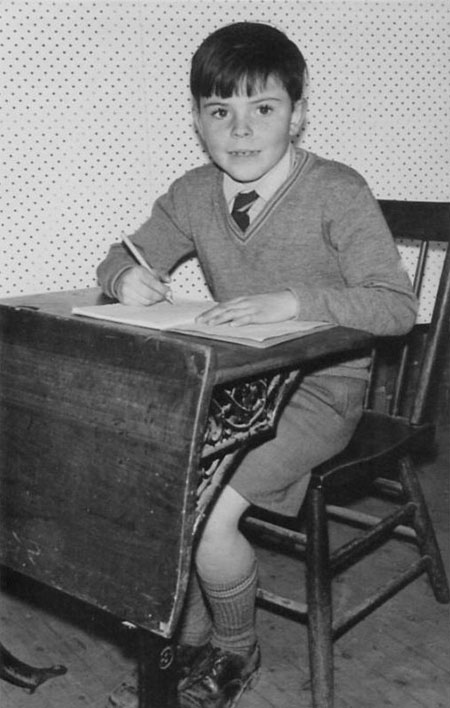
With four family members having served in the military, his first career move was the Australian Naval College at Jervis Bay, NSW.
This vocation lasted, he claims, “precisely four months, eight days and three hours”.
Having realised a military life was not for him, he was standing in the naval canteen contemplating his future when his eye was caught by a door-stopping biographical novel of Sigmund Freud, The Passions of the Mind by Irving Stone.
“Somewhat amazingly, gathering dust on the top shelf was this enormous tome on the life of Freud, which is a most unusual thing to find in a naval academy,” Professor Middleton says.
He bought it, read it and, by the following year in 1974, was studying medicine at the University of Sydney for his goal of becoming a psychiatrist.
After an intern year at Wollongong Hospital, he joined Morisset Hospital, working as a registrar at the large psychiatric facility, which included the notorious Ward 21.
“This was the state’s high-security ward for the criminally insane, and it was filled with psychotic murderers, mainly,” Professor Middleton says.
“It was about half a kilometre away from the rest of the wards, on the edge of bushland, with high brick walls, electric fences and barbed wire.”
Apart from the challenges of working in Ward 21, he was concerned about abuse, corruption and poor governance within the institution.
He made an official complaint, detailing his concerns in a lengthy submission to the regional director of health.
The complaint ultimately led to an inquiry and the dismissal of the hospital’s medical superintendent and director of nursing.
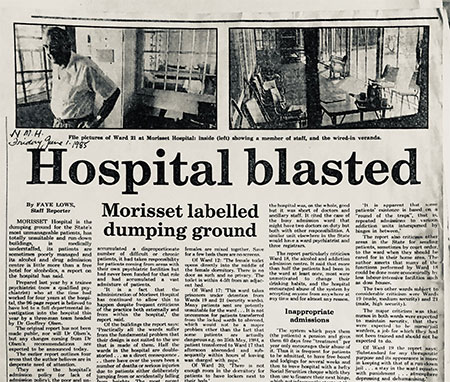
“I think I am probably the only registrar in Australia who triggered a commission of inquiry that resulted in the dismissal of the administration of the hospital in which I trained.”
In 1987, he took up a staff psychiatrist role at Royal Brisbane Hospital before moving into full-time private practice in 1994.
His interest in trauma and DID began early when he encountered patients whose experiences were not explained by his psychiatric training.
“People compartmentalise trauma when they have no way of escaping or processing it,” he says.
“Where trauma happens later in life, you may still dissociate, but you do not usually take on separate identity states.
“But if you are a child under the age of eight and things are happening that you cannot escape, it is natural to use imagination as part of that compartmentalisation.”
In recent years, inquiries — including the Royal Commission into Institutional Responses to Child Sexual Abuse — have highlighted the circumstances that can give rise to dissociative disorders and complex trauma.
Professor Middleton accompanied a number of people with DID as they gave evidence to the commission.
“At no stage did any commissioner show any doubt about their diagnosis or the abuses that had led to it developing.”
Having heard so many stories of abuse and trauma, Professor Middleton’s own coping mechanisms include exploring his creativity.
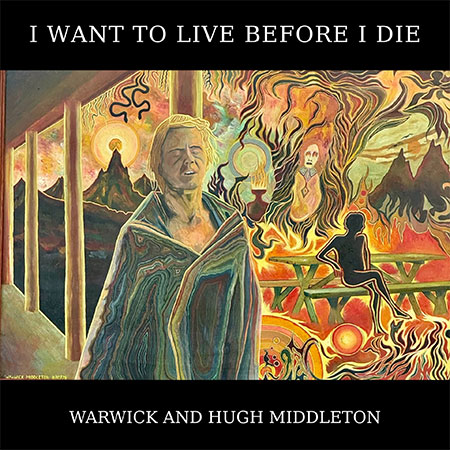
“I have always encouraged creativity in my patients, and in my children, and have always tried to be creative myself,” he says. “Over the years, I have engaged with painting, drawing, poetry, songwriting, humour, memoirs and, of course, with more academic writing.”
And what of the book that first captured his attention in psychiatry as he pondered his future five decades ago?
The Passions of the Mind tells the story of Sigmund Freud’s life, from his student days in Vienna, through the patients and clinical work that shaped his psychoanalytic theories, to his eventual flight from Austria amid the growing Nazi menace.
“Of course, when you get down to it, The Passions of the Mind is largely about dissociative conditions,” he says
“It is interesting the way your unconscious works to figure things out before you are consciously aware of it.”
Read more: