‘For the want of a $240 Medicare rebate, my daughter lost her life’: Grieving mother on the Joel Cauchi killings
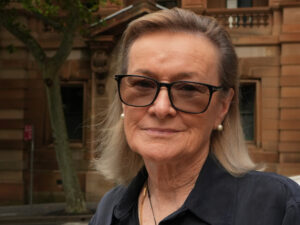
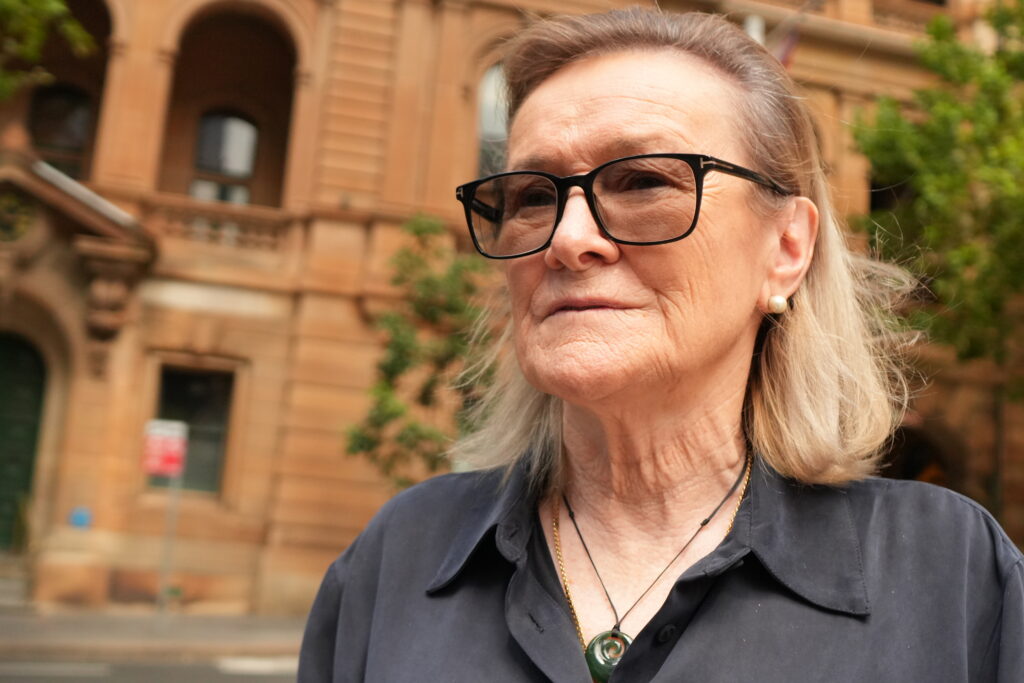
Elizabeth Young is the mother of Jade, one of the six victims of Joel Cauchi’s psychosis-fueled killing spree at Bondi Junction in Sydney.
On Saturday, she spoke at the inaugural Australian Society of Psychiatrists symposium about the aftermath of the inquest into the deaths. Many in the audience were in left in tears.
In what follows, she talks about the system failures: the collapse of a mental health system for those at the margins — largely the product of political indifference and conscious neglect.
And she talks about what that leads to.
“I don’t believe in a god, or the hereafter. I will not see Jade in the hereafter. She is not at peace or gone to a better place.
“She is dead. My funny, gentle, warm, loving daughter has been reduced to inorganic residue.”
I stand before you as a secondary victim of the attack that began at the Sourdough Bakery, on level 4 of Westfield Bondi Junction; an attack that started at 3.32pm and 55 seconds on 13 April 2024, and ended at 3.35pm and 40 seconds.
Six murders, 10 attempted murders. All in under three minutes or two minutes 45 seconds to be precise.
This month, the inquest findings were revealed, and on the 19th we were informed by the coroner’s office that case 2024/00138781, the inquest into the death of Jade Andrea Young, was closed.
Closed. The legal process is complete. End of story.
But what of the long-term, hidden human consequences of that awful day?
I am one of those consequences, a living consequence of what happened that Saturday.
I am one of what must be hundreds of people, men, women and children affected in varying degrees by one man’s psychosis.
I know there are many people like me who have experienced terrible trauma as a result of a violent crime; I acknowledge their grief and pain, but this is my moment.
After 75 years of being an ordinary, garden-variety, reasonably healthy, reasonably stable person I stand here, a trauma-affected, disheartened, angry mother.
The end result, the consequence of people’s indifference, complacency, neglect, fallibility, arrogance, intransigence, moral myopia and incompetence.
Having sat through five weeks of the Bondi Junction inquest, read her autopsy report, scrutinised witness statements and followed the timeline of her death, thanks to forensically useful CCTV coverage, I know a lot about the background to my daughter’s murder and the moments of her dying.
Jade was the first grandchild in my husband’s Chinese family and was given a carefully chosen name, Meh Yuk, Beautiful Jade.
My Beautiful Jade’s life began in Wollongong Hospital on 18 February 1977 (exactly when? I can’t remember); but I do know she was born surrounded by loving and caring people.
However, I do know when her life ended aged 47, when she fell to the level 4 floor of Westfield Bondi Junction at 3.33pm and nine seconds on 13 April 2024, surrounded by shoppers.
On the cusp of a full mid-life, as a mother, wife and architect, my daughter became part of Australia’s history.
Nearly two years on, I still can’t believe she is gone, that my gentle, cautious girl was killed by a stranger with one of his carefully selected knives; killed on a brilliant Saturday afternoon, her little girl alongside, surrounded by people, all enjoying the delights and ‘security’ of an upmarket shopping centre.
On that lovely autumn afternoon, at about 4.30pm, just as I was thinking of making a cup of tea, a nightmare realm broke through our unremarkable retirement.
A muffled phone conversation, a raw shouted profanity, then my husband appeared at the bedroom door, ‘Jade’s dead.’
It is as if, with that phone call from our son-in-law, a grotesque parallel universe, a Henry Fuselian Nightmare world, broke through, a parallel world, alongside my ordinary one. This, I must return my library books, what are we having for dinner, we need more milk world.
Somehow, in the instant of being told of her murder, we have had to live with a shadowed horror realm that intrudes persistently. From that moment of knowing, we have had to come to grips with an alternative universe with its arcane language of homicide: post-mortem, forensic pathologist, cremation, trauma porn, inquest, section 61, crowded places, high footfall, active armed offender, risk appetite and tolerance, threat landscape, iterative process, red flags, red books, chronic schizophrenia.
It is a nightmare language of alien words uttered by police and barristers, journalists, psychiatrists, politicians and corporates, words mostly expressed genuinely and sincerely but, from some quarters, laced with prevarications and mendacity and slick catchphrases.
This language persists like a sardonic commentary on the mundane Wollongong existence my husband and I have built over the last 50 years.
My heart breaks anew every day. The excruciating waves of grief that used to engulf me have mostly mellowed into something quieter but infinitely sadder, a bone-deep sorrow, an acceptance, in my very core, that she has gone and that I will long for her for the rest of my life.
One thing that makes me rally momentarily, is the urge to advocate for a national mental health strategy that is consequential: I speak out partly from a need to ensure no other seriously mentally ill person, in moving around Australia, is able to ‘detach’ from care.
But I speak out mostly because my son, PJ, living in a 7000 postcode, cannot access the same wrap-around mental health support freely available to me living in NSW.
We are both victims of the same violent crime, but Tasmania’s mental health system has failed in the support of one of Cauchi’s very needy secondary victims.
The truth is, this Lucky Country doesn’t have an effective national mental health strategy.
As an eminent psychiatrist said to me, in that regard, federalism has failed.
In other words, my advocacy is not altruistic, it is mainly selfish.
There is another reason why I speak of my loss.
Something in me cannot allow the beauty of Jade’s existence to be subsumed in the horrific circumstances of her death; for her life and death to have become merely part of yesterday’s news.
I cannot allow for her to be remembered, not for her generosity, her skills as an architect, her gentle humour, her love of her family and friends, her kindness, her lovely smile, but just as one of the Bondi Junction victims, absorbed into the Australian mythos along with those souls remembered only as tragic victims in the Port Arthur massacre or the Lindt Cafe siege and now, of course, the Bondi Beach shooting.
Those of you before me, in different ways, have a vested interest in the management and support of the mentally unwell members of our society, one of whom became a critical part of my family’s history on 13 April.
So you are about to hear what I believe was the outcome of failed systems, multiple ‘missed opportunities’, bureaucratic insouciance, human fallibility (that euphemism for failings).

These are the end results when an institution’s moral calculus places profit over people.
In 1977, when Jade was born, there was no national mental health strategy, but significant mental health legislation was being introduced at the state level as a result of groups of people such as you, psychiatrists, lawyers, law enforcement officers and carers working together.
When Jade was a charming, funny two-year-old in 1979 with a new baby brother, Janet Meagher, legendary the mental health advocate, was just released from Gladesville Hospital and was encouraged to use her lived experience to develop a report which was subsequently delivered to Brian Burdekin, the federal Human Rights Commissioner.
In 1983, when NSW’s Richmond Report was released arguing for the closure of large institutions and the funding of community-focused care, Jade was a bright, chatty six-year-old who loved being a big sister; she loved swimming and school, ballet and Sesame Street.
When she was 10, busy with practising her piano pieces and playing with our schnauzer pups, NSW introduced the Guardianship Act 1987 which protected the rights of people with decision-making disabilities.
It promoted a community-based approach over institutionalisation, and recognised an evolving understanding of mental illness.
Jade was 16 in 1993 when the Burdekin report was finally released pushing for community care treatment.
She was a mostly sweet, studious teenager whose slightly rebellious nature was expressed in her insistence on wearing Doc Martens as part of her rather conservative school uniform.
When, in 1997, Jade, aged 20, was a carefree architecture student, Australia’s first National Survey of Mental Health and Wellbeing showed that mental disorders were common in Australian adults, but that many affected people did not get treatment, leading to concerns about the ‘treatment gap’.
In 2006 came the [Council of Australian Governments’] report, the National Action Plan on Mental Health 2006-2011.
This declared that Australian leaders “recognised that mental health is a major problem for the Australian community and committed to reform the mental health system … so that people with mental illness are able to participate in the community”.
I saw my lovely girl marry dear Noel beachside in Wollongong.
In 2010, when Jade, aged 32 and working in London, welcomed her first child, our M, we saw the emergence of a new consensus from the federal Parliament in its support for mental health reform across Australia and Mark Butler was appointed as Australia’s first Commonwealth Minister for Mental Health.
In 2014, a state mental health act ensured the universal human rights of those suffering [from] mental illness.
Jade, back in Sydney now, gave birth to our Auds.
In 2018, as Jade turned 40, the Australian Bureau of Statistics revealed [that] 4.8 million Australians had a mental or behavioural condition.
But now I move closer to that hideous day.
Just after we had celebrated Jade’s 47th birthday for the last time (not that we knew), the perpetrator, an unmedicated, unmonitored chronic schizophrenic with near 20 years of support behind him was preparing his calculated attack.
On 25 February, the day after he purchased his [KA-BAR] USMC knife, this man had searched the internet: ‘What did the most deadly mass murderers have in common?’
In the following weeks, while Jade was organising site meetings, swimming lessons and school lunches, her murderer was organising potential locations.
While Jade was checking site plans with clients, he was reminding himself to check with a knife sharpener that his blade of choice was sharp enough for ‘mall use.’
On 13 April while Jade would have been seeing to breakfast, I know, again thanks to CCTV, that Cauchi was seeing to his knife.
At 8.19am, Cauchi ‘took knife and placed it in and out of [sheath], inspected the knife’.
Then at 8.31am, for approximately 20 minutes, he paced back and forth, ‘placing knife in and out of different bags’.
Thanks to iCloud’s timestamp, I know that at 9.56am I sent Jade an image of a fairy ring of mushrooms I had come across on my way to the Wollongong shops.
I know, also, thanks again to IT, that 10 minutes before that, at precisely 9.46am, Joel Cauchi had ‘boarded train 664E to Bondi Junction railway station’.

A little later, at 11.09am, while Cauchi back at Waterloo, sorted his weapon and managed the chosen backpack, Jade would have been sorting the washing and squabbles between her girls and managing her afternoon.
She never knew her murderer, but their lives finally intersected, in an act of shocking intimacy at 3.33pm and one second, when he stabbed her.
One ruthless, barbaric thrust through her back, ‘a single stab wound to the left mid-back located at the level of the 10th rib, just left of midline’.
At 3.33pm and nine seconds, Jade kneels, picks up her phone, looks at it, then lies down … dead.
Now, near two years on, as Jade, forever 47, is ashes in a ceramic container high in a cupboard of her home, Professor Pat McGorry, the noted psychiatrist writing about the National Disability Insurance Scheme situation in The Australian, noted that $2181 per Australian per year is spent on defence, compared with $183 per person on mental health care.
Among the inquest’s recommendations handed down last month, was for the NSW Government to meet the need for accommodation for those experiencing mental health issues and homelessness, with attendant care.
Another was that the NSW Government over the next 12 months obtain advice on the decline of mental health outreach services and obtain advice on additional resources to meet the need for outreach psychiatric services.
I’m sorry, it’s the cynic in me, and it’s not a criticism of the coroner or the inquest, but haven’t we heard this before?
Aren’t they echoes of recommendations from years past … don’t I hear Janet Meagher’s voice, Brian Burdekin’s? David Richmond’s?
But, perhaps, this time, the true human impact of the deaths of Dawn, my Jade, Yixuan, Ashlee, Faraz and Pikria will finally impel the ‘whoevers’ to act on a recommendation, to do something other than defensively spouting anodyne words and setting up another inquiry.
There have been 32 separate statutory inquiries on mental health between 2006 and 2012. This shows earnest intent, but there seems to have been little political will for truly significant action and spending in the field of mental health in comparison with, say, finding $368 billion for submarines.
This belief was confirmed when a wise person said to me in Canberra, when I spoke at a roundtable meeting of mental health practitioners, ‘Elizabeth, there aren’t too many votes in the mentally ill.’
Speaking in the House of Representatives, November 2024, as a result of a meeting with one of his Hobart constituents, my PJ, the MP Andrew Wilkie said: “We need a nationally co-ordinated mental health system underpinned by well-resourced services that are both accessible and responsive regardless of postcode.”
Yes, Mr Wilkie. That’s what I want. And isn’t that what the [Council of Australian Governments’] National Action Plan on Mental Health promised in 2006?
Instead of lunching and laughing and roaming the world like my friends, I find myself, at near 76, driven to speak out about the inequities in the current national mental health system, about the inadequate or non-existent information-sharing between public and private systems, between states.
On behalf of my beloved girl who lost her life at the hands of an unsupported, homeless schizophrenic from Queensland, I need to speak out about too few beds in NSW, insufficient housing, too few mental health practitioners, insufficient funds.
I am a changed person, my husband is changed, our lives have changed.
After 53 years together, quietly settled into retirement, while navigating the abyss of grief that each day presents to us, we are having to learn anew how to live with each other, two damaged, fragile, suddenly different people, each traumatised by our girl’s murder, each struggling to deal with day-to-day events, struggling to adapt to recent changes in our own abilities, changes triggered by trauma.
From active, perceptive, independent oldies, I fear we are rapidly slipping into decrepitude.
I drink more chardonnay than my lovely Dr Jan would like and both my husband and I seem to be losing our marbles.
As we approach our golden wedding anniversary, I fear my marriage is imperilled as we navigate the obstacles — physical, psychological, financial and emotional — encountered through the grieving process.
And then there’s PJ, my lovely boy, Jade’s little brother, her DeeDee, a husband and father now who struggles with what his wife calls The Beast that emerges as stress builds, I fear and grieve for him.
Then, of course, there is Noel, that stalwart man who has truly lived a nightmare.
Alerted by a screamed call from our Auds as he was parking the car, a call made leaning over her mummy’s body using the phone Jade had just dropped as she died.
Think about that. A child, nine years old who saw her mother’s face distort as she was stabbed.
And now think about this: rushing to find them, Noel came face to face with Cauchi, he was confronted by his wife’s killer, threatened with that carefully chosen, bloodied, fit for ‘mall use’ blade raised at him.
Exactly how am I changed?
I sleep fitfully, medicated. I startle easily, I am always agitated, I become emotionally exhausted easily, I find I stumble over words, doing a Donald Trump ‘oranges/origins’ kind of thing.
I am reclusive.
I can’t manage bustle and noise, restaurants and big shopping centres unnerve me.
Christmas shopping with M was a nightmare mixed with the lovely, but heartbreaking, knowledge that, in her mum’s absence, we, Grammy and granddaughter, were sharing a special occasion.
Every 3-4 days, after functioning almost normally, or if I’ve had a challenging situation, like today, or even socialising with old friends, I have a period of misery and emotional exhaustion.
It is as if my prefrontal cortex just can’t hold me together anymore and I descend into John Bunyan’s Slough of Despond.
There seems to be part of me that didn’t exist before or I wasn’t aware of, that is there, just under the surface, a primitive me that is so bitter, so angry, so sad, so resentful.
It is that, a kind of malignant energy source, that drives me to speak out.
Now, with time passed, the excruciating adrenaline and cortisol-driven days are, thank goodness, vague memories of flowers and lasagne and the kindness of strangers.
However, the descent into full grief mode can still take me unawares; a photo, her voice in an old family video clip, or discovering her last shopping list: ‘white bread, Cheerios, apples for M, vanilla yoghurt’.
Or a loving birthday note in her handwriting.
My naive belief in the relative essential benevolence of life has been smashed.
Once doctoral candidate, then English teacher, I spent my days contemplating and exploring the wonder of words but, as yet, I haven’t found a poem or a Shakespearean quote, or a song’s lyrics that comes close to signifying the eviscerating sense of absolute loss, abysmal heart-wrenching sorrow, the overwhelming sudden surge of hopelessness and despair suffered since losing Jade.
While I love the works of the Romantics, I am a pragmatist.
I don’t believe in a god, or the hereafter. I will not see her in the hereafter. She is not at peace or gone to a better place.
She is dead. My funny, gentle, warm, loving daughter has been reduced to inert matter, inorganic residue.
Before I finish, I do want to say this.
Since losing one of the loves of my life I have been embraced by open expressions of kindness and compassion that I would probably not have experienced otherwise, from a coroner, from police and lawyers, barristers, politicians, journalists and medicos, neighbours, strangers, old friends and new … mainly women, but men, too.
The impact of her shocking death has allowed these people, especially the men, to overcome natural reserves, to say things they, perhaps, wouldn’t normally say.
So, with that recent seed of insight growing out of a depraved act that came from the very darkest recesses of a man’s mind, I have been reminded of the wonderful human capacity for tenderness, empathy and fellowship.
It helps a little.
As was observed on the first day of the inquest, the perpetrator of my daughter’s murder, was ‘completely detached from the mental health system’.
Yes, completely detached. Joel Cauchi’s very own ‘treatment gap’ with its fatal consequences bequeathed to him by his psychiatrist of eight years.
I might be very wrong, but my understanding is that, ultimately, his ‘treatment gap’ was created because there was no rebate for his doctor, a private psychiatrist, under Medicare’s billing for Skype or telehealth calls to consult with him when he moved away [*].
So essentially the man, diagnosed as chronically schizophrenic, was released from care, unmedicated, detached, for $240?
This ‘lapse’, with its hideous fatal consequence affecting so many people, reminds me of that old proverb; ‘For the want of a nail … a kingdom was lost.’
That childhood refrain came back to me as I reflected on the litany of mistakes, missed opportunities, omissions, misjudgements, miscalculations that littered Joel Cauchi’s journey from Toowoomba to Westfield Bondi Junction.
In my mind, for the want of $240, Dawn, Jade, Yixuan, Ashlee, Faraz and Pikria lost their lives.
I believe Australia has not been serious about the mental wellness of its people and so I speak out again about what, to me, is a history of bureaucratic inertia regarding improving the welfare of the one in five Australians identified as needing support.
But I’m not kidding myself, I doubt things will change, and at the end of the day, chardonnay in hand, I’m still left longing for her.
[*] Back in 2019 there was no MBS funding for telehealth consults. Given his financial predicament, it would have been impossible for Cauchi to pay for the consult. The issue was highlighted during the Bondi Junction inquest.
This piece was based on a speech delivered by Ms Young at the conference hosted by the Australian Society of Psychiatrists. It was edited for length.
Read more: Westfield stabbings: Could any doctor have intervened before Joel Cauchi killed six people?