Nobel Prize committee rewrites scientific paper after battle over Aussie immunologist’s T-cell discovery
The Nobel Committee has quietly revised its scientific background paper for this year’s Nobel Prize in Physiology or Medicine after a leading Australian immunologist accused it of misrepresenting scientific history.
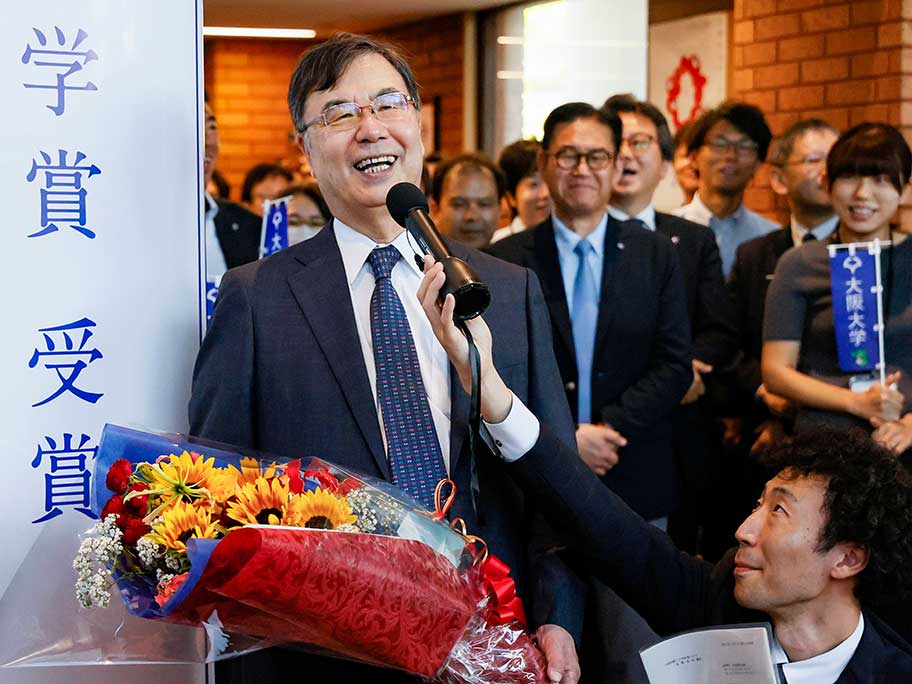
Among the three scientists honoured last month was Professor Shimon Sakaguchi, the author of a 1995 paper that identified, for the first time, regulatory T-cells — known as Treg cells — that play a fundamental role in preventing the immune system from attacking the body’s own cells.
The discovery sparked a paradigm shift in understanding how the immune system works, and combined with a clearer picture of the genetics involved, it is now paving the way for new treatments for cancer and a raft of autoimmune diseases.
However, UNSW Sydney immunologist Professor Bruce Hall rejects the originality of Professor Sakaguchi’s research, pointing to a paper he and colleagues from the department of renal medicine at the Royal Prince Alfred Hospital in Sydney published in 1990.
The paper identified exactly the same population of Treg cells at work, but in the context of transplant rejection rather than peripheral immune tolerance.
Professor Hall says that the Treg cells that control transplant rejection are the same as those that prevent autoimmunity: “There is only one immune system.”
He lodged a complaint with the committee last month, claiming that this year’s prestigious award had disregarded his team’s pioneering work.
The committee has now changed sections of its background paper which outline the chronology of scientific discovery relating to T-cells, as well as the reasons for bestowing the Nobel prize.
The original version included sections referring to Professor Hall’s work in renal transplantation, but it claimed there had been little overlap in “the fields of transplantation biology and immune tolerance”.
“[The] investigators in the two respective fields did not exchange information or consolidate their results on a frequent basis,” it added.
The committee’s paper also declared that Professor Hall and his colleague at the Royal Prince Alfred Hospital, the leading Australian pathologist Professor Susan Dorsch, failed to investigate whether the Treg cells they identified “played a role in self-tolerance under normal physiological conditions”.
“Thus, definitive evidence to explain immune tolerance in a broader sense was still lacking.”
But Professor Geoff McCaughan, head of the Liver Injury and Cancer Program at the Centenary Institute in Sydney, said last month that the suggestion that suppression of autoimmunity and transplantation tolerance were thought to be largely separate fields back in the early 1990s “did not withstand intellectual scrutiny”.
As reported by AusDoc last month, in the 1990s, Professor Sakaguchi’s laboratory at Stanford University in California was based around the corner from Professor Hall’s.
Although not close colleagues, they were known to each other, and, according to Professor Hall, they met twice to discuss the findings of his 1990 paper published in the Journal of Experimental Medicine.
The committee, in response to Professor Hall’s complaint, has now removed several disputed passages, including the section claiming there was little overlap between transplantation biology and immune tolerance, describing it as “an unnecessary expression of opinion”.
It also removed the sentence saying that Professor Hall’s 1990 paper had lacked definitive evidence to explain immune tolerance.
However, the reason it gave for the deletion was not because the statement was disputed.
“We regret this phrasing, as it could be interpreted as directed at you specifically, which was not our intention.”
In his response to Professor Hall, Professor Thomas Perlmann, secretary of the Nobel Assembly and Nobel Committee, stated that the conclusion about the priority of Professor Sakaguchi’s work would not be changed.
“As a matter of policy, we do not engage in discussions or debate concerning our decisions, which are the result of careful and thorough deliberation.
“Your studies — representing excellent and important contributions — have been extensively reviewed by the committee during its deliberations on peripheral self-tolerance and self-antigen reactivity.
“But we continue to stand behind the text in the scientific background [paper] published on our website.”
Professor Mark Nicolls, head of respiratory medicine at Stanford University’s school of medicine, who was a medical student working in Professor Hall’s lab in the 1990s, acknowledged the committee’s revisions.
“But they still choose to say that Bruce did not investigate whether the cells they had identified played a role in self-tolerance under normal physiological conditions,” he said.
“You could argue that here Bruce’s position was similar to Alexander Fleming, who discovered penicillin.
“He, Ernst Boris Chain and Howard Florey jointly received the 1945 Nobel Prize in Physiology or Medicine for their work on penicillin.
“Alexander Fleming accidentally discovered penicillin in 1928 but did not isolate the active substance — that work fell to Chain and Florey, who laboured for years to figure this out (like Sakaguchi).
“But Fleming shared the Nobel with them, unlike Bruce, who did not share the Nobel for the discovery of [Treg cells].
“If the collective wisdom is that the self-tolerance aspect of this discovery trumps transplant tolerance, that is a defensible position in my opinion.
“It could be debated, for sure, but it’s not a black-and-white issue.
“[But that doesn’t change the fact that Bruce] was a critical link for the discovery and characterisation of the cells.”
Professor Hall told AusDoc: “The committee [also] claims I could not be considered for the prize as I had not been nominated.
“I would suggest that the committee should have the ability to seek nominations for people who may have a claim to original discoveries to ensure they do not make inaccurate decisions.
“Such a policy change would greatly increase confidence in its processes.”
Read more: AusDoc special report: Professor Bruce Hall, excommunication and the Nobel prize for medicine