Practice nurses will soon be allowed to prescribe if they undergo training — is a revolution coming?
In late 2024, Australia’s health ministers gave the green light for registered nurses to train to prescribe S4 and S8 medications — a long-anticipated shift in scope.
Now, the first cohort of aspiring RN prescribers has begun study in newly accredited postgraduate programs, with some expected to start prescribing before the end of the year.
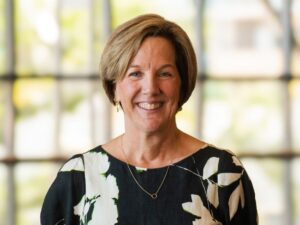
Denise Lyons, president of the Australian Primary Health Care Nurses Association, has spent more than a decade advocating for the change.
She spoke with AusDoc about what the new rules actually mean – are we talking about independent prescribing? What involvement will GPs have?
AusDoc: Where are we up to with the rollout?
Denise Lyons: To be clear, there are no designated registered nurse prescribers yet.
But nurses have started doing the university programs this year, so the first designated RN prescribers will be finishing their six months of training mid-year.
Four university-based programs have been accredited — one each at La Trobe University, Queensland University of Technology, University of Melbourne and University of Tasmania.
I think we will see designated nurse prescribing start by late 2026.
AusDoc: How is this going to work. To what extent is this independent prescribing?
Denise Lyons: Specially trained RNs will be able to prescribe scheduled medicines for a limited range of conditions, under a prescribing agreement with an authorised prescriber.
This authorised prescriber can be a GP, a nurse practitioner or other doctor specialist, who makes a written agreement that lays out the exact conditions and medications the RN is allowed to prescribe for.
That person will understand the designated RN prescriber’s scope of practice.
The prescriber agreements will be very individualised.
AusDoc: When did the push for RNs to be given prescribing rights begin?
Denise Lyons: It has been a 10-year journey to get to this point.
The Nursing and Midwifery Board of Australia started developing the new standard for prescribing back in 2016. They did a lot of consultation with medical bodies and other peak bodies, including APNA.
Health ministers approved that registration standard for endorsement for designated RN prescribers in December 2024.
RNs also must have general registration and the equivalent of at least three years of full-time post-registration clinical experience — 5000 hours in the last six years.
They need to complete NMBA approved or equivalent units of study, apply to the nursing board and receive endorsement.
They then need to enter and complete a six-month period of clinical mentorship, enter a clinical governance framework with an authorised health practitioner, operate under an active prescribing agreement.
AusDoc: What does that mean in reality? Where do you see nurse prescribing having the most impact?
Denise Lyons: I don’t think it’s going to revolutionise general practice.
I can see it taking off more quickly in rural and remote settings, justice health, palliative care, aged care, all the other places that are primary care where it’s maybe not so easy to access a GP.
There are nurses who do homeless outreach, go to domestic and family violence shelters, work in justice health settings, nurses who work in palliative care, aged care.
Nurses are everywhere, and if we give them the capability to meet the needs of the communities they serve, that’s only a good thing.
AusDoc: What are concrete examples of situations in which RNs will be prescribing?
Denise Lyons: One example is in aged care facilities where patients are often on medications to control blood pressure, cholesterol, heart disease and other chronic conditions.
Maybe they’ve come to the end of a repeat prescription and they need a refill, but it’s a Friday and we can’t get in touch with the GP until Monday.
A designated RN prescriber could prescribe an ongoing dose of those medications for those conditions.
Another example would be if a patient in aged care develops symptoms of a UTI. The designated RN prescriber can get a urine sample, test the urine if there’s evidence of a urinary tract infection, and then initiate antibiotic therapy for the UTI.
Or in Aboriginal Community Controlled Health Services, the ratio of GPs to allied health is quite different from a typical general practice.
They tend to have more nurses and more allied health, and that means everyone is working to the top of their scope to meet the needs of the population.
AusDoc: So how is a prescribing registered nurse distinct from a prescribing nurse practitioner?
Denise Lyons: This is different from a nurse practitioner.
A nurse practitioner is endorsed by the NMBA and can autonomously diagnose and prescribe scheduled medicines within their scope of practice.
AusDoc: Will prescribing RNs face higher indemnity costs?
Denise Lyons: Because the clinical governance framework is so clear and so safe, I don’t think there’s going to be a huge increase in risk, but it will be interesting to see if the indemnity providers see this as an increase in risk.
I think often they evaluate risk based on how many claims they see, so that might be something that informs it over time.
AusDoc: How will nurse prescribing be tracked to ensure safety?
Denise Lyons: There is going to be the same systematic monitoring and tracking of nurse prescribing as GP prescribing, and they will have the same accountability as other prescribers in terms of how they are audited.
They will have to have a prescriber number, so that means that whatever is prescribed by that individual can be tracked and audited.
We now have real-time prescription monitoring systems for S8 and some S4 medications, so if a nurse is going to prescribe those medications, they have access to real-time prescription monitoring to try to make sure it’s safe.
AusDoc: Some doctors are not in favour of RN prescribing. What happens if a practice nurse wants to become an RN prescriber, but the practice GPs do not want to mentor them?
Denise Lyons: People are going to go to where their knowledge, skills and experience are valued and utilised, and they’re going to stay there.
So I think if you’re a nurse and you’re ready, willing and able to become a designated RN prescriber, and you are in an environment that is unsupportive for that, I imagine you’d look for a more supportive environment. That’s what I would do.
AusDoc: What are the circumstances when it would be okay for a nurse to prescribe drugs like oxycodone?
Denise Lyons: The framework does allow for prescribing S8 medications, and that’s reasonable given that a lot of registered nurses work in residential aged care and in palliative care services.
That’s where these kinds of medications become really important.
People at the end of life often do need medications to help to control their pain and their symptoms.
For example, imagine a patient with end-stage liver failure who deteriorates over the weekend.
As things stand now, the community palliative care nurse goes out there, but she’s pretty limited in her scope to provide treatment at home.
They then have no option but to call an ambulance and get the patient transported to the hospital where he then dies in the ED.
But if you have a designated RN prescriber, she can follow the agreed care plan developed by the treating team and develop a script for a syringe driver to deliver some morphine and send it to the local pharmacy.
The pharmacist dispenses the medicine, and the patient can stay at home as he wished.
Or take a residential aged care patient who sustains an injury in a fall, some bruising, and they’re now uncomfortable but don’t wish to go to the emergency room to be assessed.
Maybe they just need some appropriate analgesia pain medicine while they recover from that.
AusDoc: There are concerns about nurse prescribing in the setting of some telehealth clinics, where one doctor could supervise many nurses.
Denise Lyons: The model agreed by health ministers has multiple guardrails in place.
Nurses are highly trusted, science-based health professionals who provide high-quality care — and the data from insurance claims and complaints bears that out.
So there are significant safeguards for nurse prescribing, which we think is important.
AusDoc: What issues remain?
Denise Lyons: Legislation has yet to be passed that would fund scripts written by RNs on the PBS.
We’re really hoping that bill passes through the Senate, where it is currently sitting, because it would be a real shame to have designated RN prescribers whose patients then couldn’t access that $25 PBS subsidised medication.
There’s also work going on in the background trying to harmonise state and territory drugs and poisons legislation, because even once you’ve become a prescriber, what you can prescribe still does vary by state and territory.
AusDoc: How much will this change the landscape for nurses and how they work with GPs and other parts of the health system?
Denise Lyons: I’m a nurse practitioner in general practice. I love the holistic cradle-to-grave care that we provide in general practice.
I think RN prescribing is only going to help GPs, because GPs and nurses want the same thing. We want better access and better outcomes for our communities.
I think it’ll only improve how we work together. We already work together really well, so I think it’s only going to get better.
I don’t think we need to see it as competing for each other’s space.
Read more: