Dr Craig Lilienthal on the death of his wife and the goodbye VAD made possible
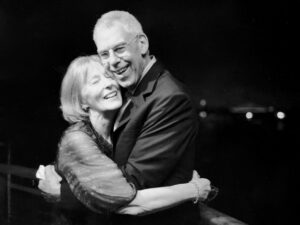
My wife, Shirley, and I had discussed voluntary euthanasia, impartially and objectively, on and off for some years.
Given our advancing years, we knew there was likely to be something debilitating if not terminal around the corner for one or both of us. And we felt that voluntary assisted dying (VAD) allowed at least some patients to relieve their suffering and die, as they say, with dignity.
But we never truly believed it would come any closer to us than that — a discussion.
Then my beloved was diagnosed with metastatic serous ovarian cancer.
Shirley was a strong-minded and successful woman. She was very much in control of her life, caring for family and her broad spectrum of friends with great humility and a wonderfully cheerful disposition.
When that diagnosis came five years ago, she held her head high and carried on. That, as we know as doctors, is not easy to do when confronted by the many complications the therapies bring.
She had survived initial surgery, chemotherapy, radiation therapy, an obstructed bowel and a bewildering list of side effects that included cardiomyopathy, renal failure and peripheral neuropathy. She suffered from chronic nausea, loss of appetite and was cachectic.
As her health deteriorated, we eventually decided to set up Hospital in the Home, and I became her full-time carer.
So it shouldn’t have been a surprise to me when she said she wished to go through the state’s VAD program. She talked it through with the family, and we all, some reluctantly, accepted her wish.
No-one held a contrary view. The choice was hers. She had a wonderful life, she said. She had looked at the alternatives, but she was so exhausted she could no longer think beyond her own distress.
Nevertheless, while it is easy to write these words to describe what happened, accepting the realities of a planned death was not easy for the family, even though she really did not have much longer to live.
So what happens when you apply for a voluntary assisted death?
We rang a 1300 number to contact the VAD care navigator service in NSW. A staff member told us about the 11 steps to be taken to complete the process, and that we would be supplied with the information and documentation when visited by a doctor tasked with completing the initial assessment.
That first visit was about ensuring Shirley met the criteria — terminal illness, intolerable suffering — and that she had capacity to consent. The questions are what you expect.
- Did you come to this decision on your own?
- Is there any pressure on you to do this?
- Do you understand what this means?
- Are you sure you want to proceed with this process?
Over the ensuing week, my wife was visited by four VAD doctors in total — two GPs, one geriatrician and one ED doctor — with family members involved in these consultations.
The service also contacted my wife’s GP, her oncologist and palliative care specialists to confirm her medical situation.
There was the inevitable paperwork and signatures. At every step, the good doctors would ask my wife if she still wished to continue the journey, that she could withdraw at any time.
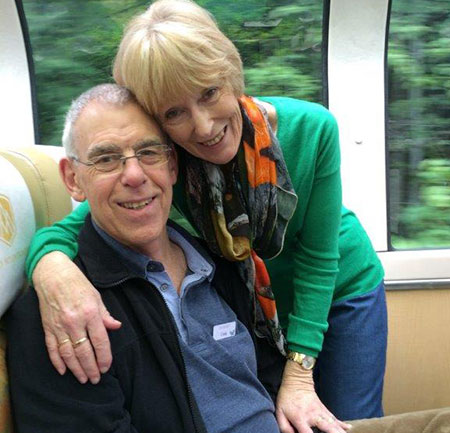
It was always stressed to her that people do hesitate after further consideration, even at the last moment, and that some re-engaged the service at a later date. This was all perfectly acceptable.
On the day of the procedure, the fourth doctor and a nurse arrived to insert intravenous lines.
My wife lay comfortably in her usual position on the lounge in her chosen, colourful clothes. We were all with her: sons, daughters-in-law, grandchildren and me.
We were told that we could come and go as we wished. We all stayed.
There was a delay in the proceedings because of equipment issues. For the procedure to take place, the attending doctor and nurse require two intravenous lines, one being a backup.
As it turned out, one intravenous line did fail, and they were unable to secure a second line, so we had to call for equipment to perform an intraosseous infusion.
This meant inserting a larger needle into the marrow of a large bone — tibia or fibula — to be able to infuse the patient this way.
It was a couple of hours’ delay, but we were grateful. It allowed for breaks, which punctuated the sombreness of the occasion with some gentle gallows humour. It drew us closer, and we were able to bond and accept the situation.
Before commencing the final injections, the VAD doctor again asked my wife if she really wanted to proceed. She responded loud and clear: “Yes, get on with it!”
She was first administered IV midazolam to induce anaesthesia, and when unconscious, the life-ending drug.
That sounds clinical because it is. But my wife went to sleep and did not wake up, that is how I saw it. And that was her wish. It was peaceful. We sat around deploying vast quantities of tissues while speaking of our love for her.
The funeral six days later was huge. Our sons conducted the service under the watchful gaze of their mother who was permanently asleep and, at long last, at peace under a cascade of yellow roses.
We all agreed she would have approved of the service but would have criticised us for under-catering for the large number of mourners.
We sent her on her way with much love, and we were very proud of her and her courage.
To say that VAD can be an emotional roller coaster is an understatement. However, seeing your beloved die peacefully on her own terms is rewarding. I guess it may help with our grieving too, but grieving we still do, even as I type these words.
Different realities come. At the funeral service, it was still possible to imagine she was asleep in the coffin. But taking possession of the urn containing her ashes was different; it became something else.
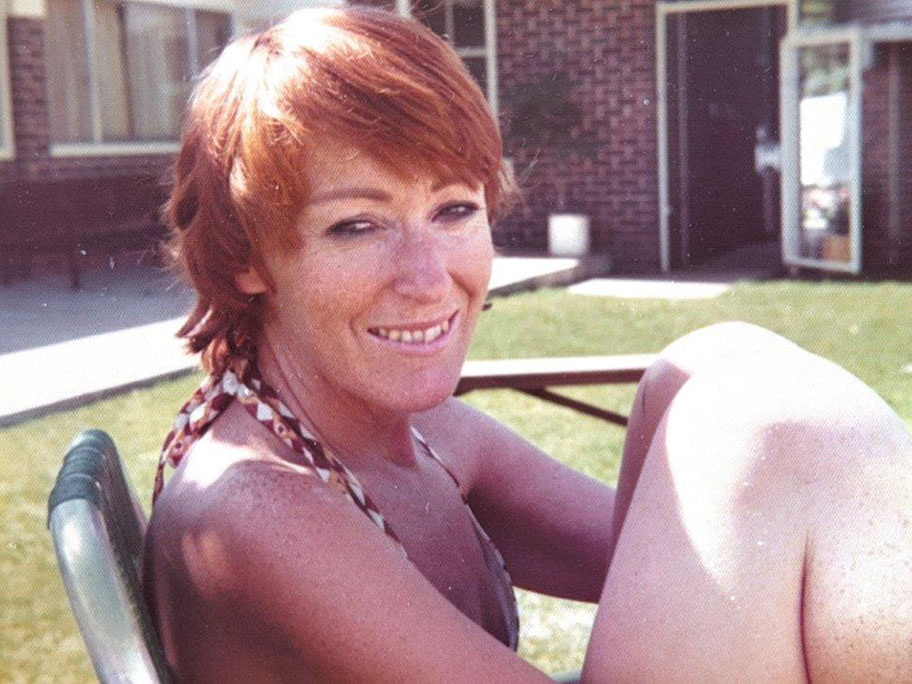
It was after the funeral that I realised I was so bound up in my own grief that I had forgotten to act as a father should and given more support to my family, especially my sons.
Fortunately, they are old enough and wise enough to understand my distress and my loss and accepted my apologies.
My view that VAD may not be for everyone remains unchanged. And I also understand the necessities of protective legal requirements, given the vulnerabilities of someone close to the end of their life.
But from my experience, assisted dying was thoughtful, considered, peaceful and respectful.
For these reasons, I think it’s a shame that no provision can be made for people who want to access VAD but lose the capacity to consent before their time arrives, leaving them excluded.
VAD should be an option in cases of advanced dementia, provided the person has given fully informed consent before reaching that point. It should be an option for advance care directives.
With the sophistication of modern medicine, we have developed the concept that we can put off dying, and that if we do die, it should be in a hospital.
I don’t think that is true. There is a much better way to die and a much better place.
It is complex and emotionally wrenching. How could it not be?
But it is also a beautiful process.
That is what VAD gave me and our family — a beautiful way to say our goodbyes to my beautiful wife.
Dr Craig Lilienthal is a later-career GP in Sydney.
Read more: Dr Craig Lilienthal: Marriage, loss and my right to fart in bed