‘Some doctors swear blind it does not exist’: Why this leading specialist is still focused on long COVID
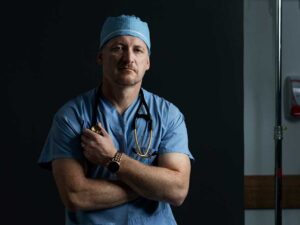
Associate Professor Anthony Byrne gets that some doctors are sick of COVID-19 and its sequelae.
“People probably have a bit of PTSD about it,” he says.
“It changed so many facets of everyone’s life that lots of people want to put that behind them, in the community, the media and, to some degree, medically.
“But it was also an amazing opportunity to learn about a new illness and discover, in real time, how to investigate and manage it.”
The Sydney respiratory physician has specialised in long COVID for five years.
He was part of a long COVID clinic at St Vincent’s Hospital in Sydney from its inception until this month, when hospital management decided to close it.
A hospital spokesperson said patients would transition to specialist respiratory and rehabilitation services.
Professor Byrne also plans to keep seeing patients with long COVID privately.
However, he worries about patients with long COVID struggling to find doctors with the skills, suitable appointment length and inclination to treat them.
“Unfortunately, some doctors will swear blind that long COVID does not exist, but this is not a made-up disease,” said Professor Byrne, convenor of the Respiratory Infectious Diseases special interest group at the Thoracic Society of Australia and New Zealand.
He said governments were failing to properly fund multidisciplinary clinics, which meant patients were often defaulted to being treated by whichever specialists were available to them.
“Hopefully, the specialists have an interest in listening to patients and identifying what their problems are, doing appropriate assessments to identify things they can treat: the person with undiagnosed diabetes, the person with undiagnosed ischaemia.
“That’ll be important and will help a lot of people.
“But for a certain percentage, it’s very difficult in a 30-minute specialist consultation to deal with the psychiatric aspect, the psychosocial aspect, the disability aspect, that they haven’t worked in six months, the can-you-fill-in-these-forms-for-me.”
He said the multidisciplinary approach at the St Vincent’s clinic involved different specialists reviewing the patient’s symptoms and trying to establish a phenotype for each patient.
“In people with an asthma-type phenotype, we found that when we prescribed them medications essentially for asthma, which had not been previously diagnosed or treated, they seemed to have an improvement in symptoms and trajectory.
“That’s one example.
“Another is when we have someone with poor sleep hygiene because one of the symptoms of long COVID is fatigue.
“People sleep when they’re tired during the day, but it puts out the circadian rhythm.
“So we give them advice on sleep hygiene and maybe prescribe melatonin where appropriate, and look to identify other sleep disorders.
“People with obstructive sleep apnoea are much more likely to have severe COVID disease, and there’s also an association with long COVID.
“As you can imagine, if people are fatigued and have severe sleep apnoea and don’t know about it, people get better if that’s diagnosed and treated.”
Without a multidisciplinary team, patients risked bouncing between expensive specialist appointments until they found the right path, Professor Byrne said.
For example, patients with long COVID could have chest pain and be referred to a cardiologist when the cause lies in other organ systems.
“No offence to my cardiologist colleagues, because the cardiologist would appropriately do investigations — ECG, maybe a stress test, maybe a CT coronary angiogram — and exclude important diagnoses like critical ischaemia, cardiomyopathy or arrhythmia,” Professor Byrne said.
“But the patient has spent their money, had two or three appointments with the specialist, lightened their wallet a lot, and still has this symptom of chest pain.
“So you look at the other contributing factors or organ systems: the brain, the respiratory system, the gastrointestinal system.”
Ultimately, the approach to long COVID was “just good medicine”, he said.
“You listen to patients, you do no harm, you look to identify those conditions that you know about and provide treatment for, then you reassess and follow up.”
Read more: